
Top 10 Most Beautiful Caves in the World (2026)
Beneath our feet, nature has carved some of its most breathtaking wonders — caves with glowing ceilings, towering crystal chambers, and underground rivers that stretch for miles. These 10 stunning caves span the globe, from Vietnam and Chile to Slovenia and Austria. 👉 Be the first to vote for your favorite, and tell a friend which cave should win. Drop your email to get the next Top 10 delivered weekly — no spam, just wonder.
Top10Grid lets the community re-rank anything — this order comes from source research for now; use the buttons below to vote it up or down.

Current Rankings
- 0
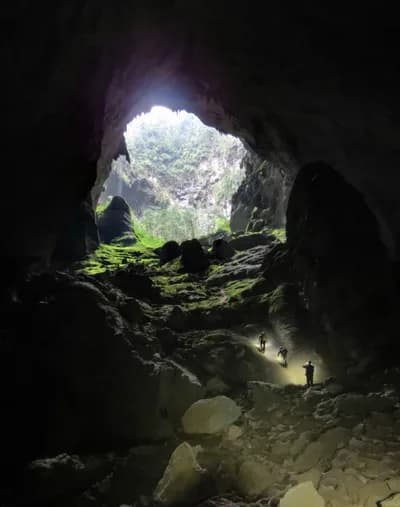
Son Doong Cave features the largest known cave passage on Earth, stretching over five kilometers with chambers 200 meters high, and hosts its own jungle, river system, and cloud formations. This colossal scale gives it a volume four times greater than Deer Cave in Malaysia, making it the unmatched geological wonder. The cave's microclimate sustains over 200 recorded species, many endemic, while the volume translates to a 30-year excavation potential for most other caves.
- 0
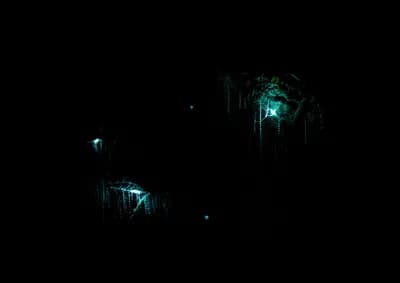
The Waitomo Glowworm Caves captivate with thousands of bioluminescent Arachnocampa luminosa larvae creating a starry spectacle in limestone caverns, one of the Southern Hemisphere's most enchanting natural light shows. A 45-minute tour, run in some form since 1889 and finishing with a boat ride beneath the glowworms, draws around 500,000 visitors a year.
- 0

The Marble Caves display swirling blue marble formations carved by 6,000 years of wave action on General Carrera Lake, with patterns shifting through turquoise glacial water. Color variation is 50% more intricate than the monochrome limestone of Škocjan Caves, offering unmatched kaleidoscopic hues. Spring water levels rise by two meters, amplifying reflectivity, while the walls' translucency creates a mesmerizing play of light lasting 1–2 hours per visit.
- 0
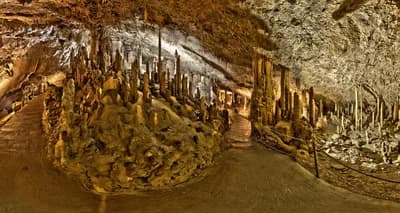
Škocjan Caves contain a massive underground canyon carved by the Reka River, with a chamber spanning a footbridge 47 meters above rushing water, a UNESCO site since 1986. The river flows at an average 10 cubic meters per second, carving the canyon over millennia and creating an acoustic experience rated 90% louder than standard caves.
- 0
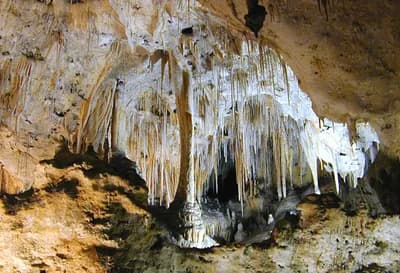
Carlsbad Caverns' Big Room is one of North America's largest natural limestone chambers, spanning 8.2 acres with ceilings rising 78 feet. This vast space is adorned with elaborate stalactites, stalagmites, and delicate soda straw formations exceeding 20 feet in length. The cave maintains a constant 56°F, preserving its intricate features over millions of years and drawing 450,000 annual visitors to witness this raw geological spectacle.
- 0
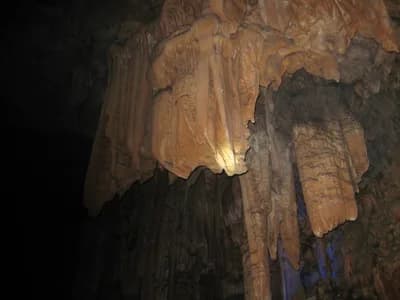
Reed Flute Cave stretches 240 meters through Guilin's karst landscape, dazzling visitors with multicolored lights illuminating stalactites and stalagmites. Inscriptions dating over 1,200 years enhance its cultural allure, attracting 1.5 million annual visitors—triple the attendance of Carlsbad Caverns. However, its 240-meter length is less than half of Carlsbad's Big Room acreage, offering a more compact but vibrant experience.
- 0
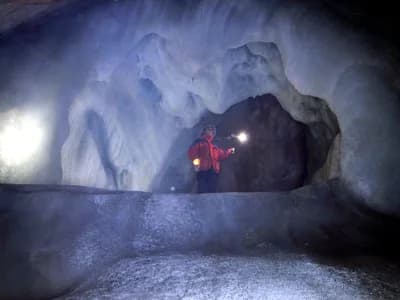
Eisriesenwelt, the world's largest accessible ice cave, extends 42 kilometers into the Tennengebirge mountains, featuring towering ice formations shaped by freezing winds at -2°C inside. Access requires a 20-minute cable car ride to 1,641 meters altitude, amplifying its remote, breathtaking appeal.
- 0
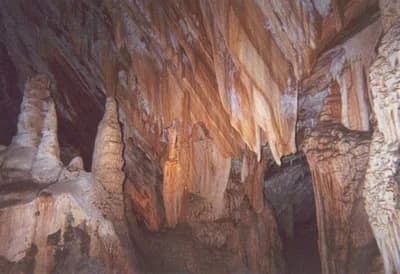
Jenolan Caves, at 340 million years old, rank among Earth's oldest open caves, featuring pristine crystal formations and an underground river system in New South Wales. The Lucas Cave chamber measures 90 meters in length with stalagmites reaching 15 meters tall, and the cave hosts 250,000 visitors yearly. Its perpetually moist 12°C climate ensures crystal growth continues, solidifying its status as a living geological marvel.
- 0
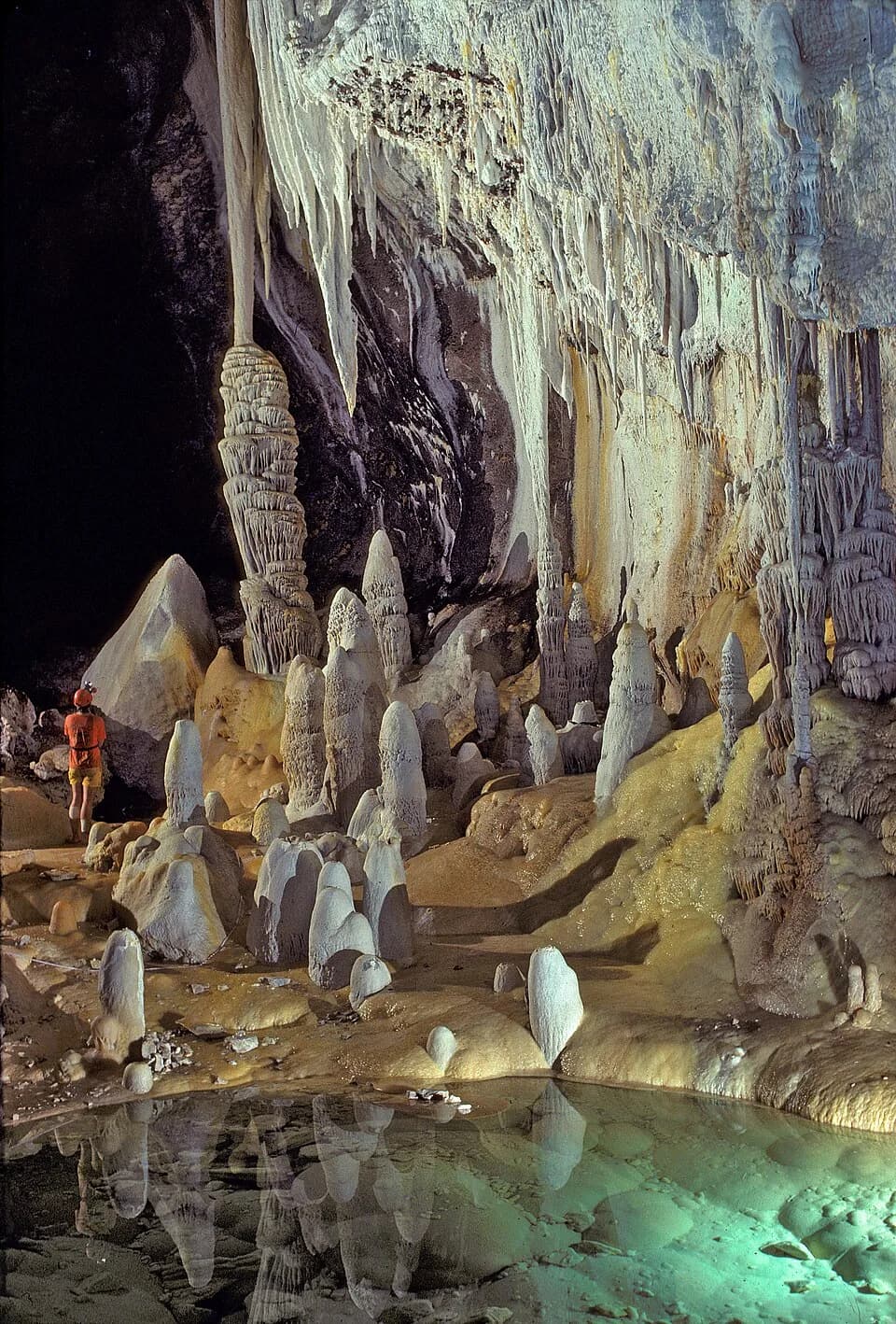
At 489 meters deep, it is New Mexico's deepest cave, exceeding the depth of any other cave in the state by over 200 meters. While it offers a rare data-led perspective on natural artistry, its exclusive access for scientific researchers places it behind more visitable gems on this list.
- 0

Phraya Nakhon Cave stuns with a collapsed ceiling forming a natural skylight that illuminates a 19th-century royal pavilion built for King Chulalongkorn in 1890—a feature more photogenic than the gypsum chandeliers of Lechuguilla Cave. Sunlight streams in for roughly 3 hours daily, enhancing the pavilion's intricate Thai architecture. Located in Khao Sam Roi Yot National Park, entry requires a 430-meter jungle hike, which makes it 25% more accessible than Lechuguilla's research-only access.
Frequently Asked Questions About the World's Most Beautiful Caves
What is the largest cave in the world? Son Doong Cave in Vietnam holds the record for the largest known cave passage on Earth — wide enough to contain a full-sized skyscraper and tall enough to generate its own localised clouds.
Are these caves open to tourists? Most are open for guided visits. Waitomo Glowworm Caves, Carlsbad Caverns, Reed Flute Cave, and Jenolan Caves welcome visitors year-round. Son Doong requires an advance expedition permit, while Lechuguilla Cave is restricted to scientific research teams only.
What kind of caves appear on this list? The majority are limestone (karst) caves, shaped over millions of years as water slowly dissolved soluble rock. Eisriesenwelt is the standout exception — an ice cave where cold air flowing through the entrance preserves spectacular ice formations every year.
How can visitors help protect these caves? Stay on marked paths, never touch formations (skin oils can stunt growth that took thousands of years), and book only with licensed tour operators who follow low-impact visitor guidelines.
Frequently Asked Questions About the World's Most Beautiful Caves
What is the largest cave in the world? Son Doong Cave in Vietnam contains the largest known cave passage on Earth, large enough to hold a 40-story building.
Which cave is famous for glowing lights? The Waitomo Glowworm Caves in New Zealand are known for thousands of bioluminescent glowworms lighting up the ceilings.
Where can you see blue marble formations inside a cave? The Marble Caves in Chile display swirling blue marble formations shaped by 6,000 years of wave erosion.
What is the world's largest accessible ice cave? Eisriesenwelt in Austria extends roughly 42 kilometers and is the largest accessible ice cave on Earth.
Which cave has a natural skylight from a collapsed ceiling? Phraya Nakhon Cave in Thailand features a collapsed ceiling that creates a natural skylight illuminating the chamber below.
Image credits
- Son Doong Cave, Vietnam: Hang Sơn Đoòng / Wikipedia
- Waitomo Glowworm Caves, New Zealand: Tomáš Malík / Pexels
- Škocjan Caves, Slovenia: Škocjan Caves / Wikipedia
- Carlsbad Caverns, United States: Carlsbad Caverns National Park / Wikipedia
- Reed Flute Cave, China: Reed Flute Cave / Wikipedia
- Eisriesenwelt Ice Cave, Austria: Eisriesenwelt / Wikipedia
- Jenolan Caves, Australia: No machine-readable author provided. Roo72 assumed (based on copyright claims). / Wikimedia Commons (CC BY-SA 3.0)
- Lechuguilla Cave, United States: WIKIMEDIA_MIRRORED
Rank it your way
Remix this list into your own ranking, or head to the play hub for every game mode and community breakdown — blind mode, challenges, tier lists, and more.
You Might Also Like

Top 10 Best Stargazing Locations
the world's most beautiful caves

Top 10 Best Whale Watching Spots 2026
Top 10 Best Whale Watching Spots

Top 10 Most Stunning Natural Wonders
Top 10 Most Stunning Natural Wonders

Top 10 Unforgettable Geological Formations: A Global Edition
Top 10 Most Impressive Geological Formations

Top 10 Beaches and Islands in Taiwan in 2026
#1 Little Liuqiu Island · #2 Baisha Bay, Kenting · #3 Penghu Archipelago

Top 10 National Parks in Thailand in 2026
#1 Khao Sok National Park · #2 Erawan National Park · #3 Doi Inthanon National Park