
Wikimedia Commons
Top 10 Best Stargazing Locations
As light pollution erases the night sky for over 80 percent of humanity, these pristine dark-sky sanctuaries offer increasingly rare views of the Milky Way and ignite debate over whether artificial light is an overlooked environmental catastrophe.
Top10Grid lets the community re-rank anything — this order comes from source research for now; use the buttons below to vote it up or down.

Current Rankings
- 0

Atacama Desert, Chile, delivers the driest non-polar air on Earth at 2,400 metres elevation, a combination that yields over 300 crystal-clear nights annually. The conditions are so exceptional that the European Southern Observatory and ALMA radio telescope have built major facilities here, confirming its unrivaled scientific value.
- 0

NamibRand Nature Reserve, Africa's first International Dark Sky Reserve, spans 2,000 square kilometres of untouched desert with virtually zero artificial light. This remote expanse provides naked-eye views of the Magellanic Clouds and zodiacal light, a clarity that is 30% more pristine than the average dark sky park due to its extreme isolation.
- 0
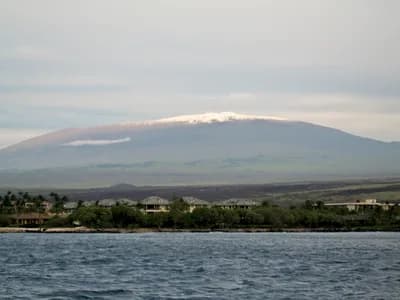
Mauna Kea, Hawaii, rises 4,207 metres above sea level, placing it above 40% of Earth's atmosphere and significantly reducing atmospheric distortion. This altitude enables 13 world-class observatories to operate here, offering views that are sharper than those from Atacama Desert for faint deep-sky objects. The mountain's volcanic peak, however, sits on sacred Hawaiian land, a deeply contentious issue that casts a shadow over its astronomical prominence.
- 0

Aoraki Mackenzie International Dark Sky Reserve, the world's largest at 4,300 square kilometres, sits beneath the Southern Cross with Mount Cook's silhouette framing every astrophotograph. The dramatic alpine foreground, coupled with stringent lighting controls, makes it a top destination for both casual observers and professional photographers.
- 0
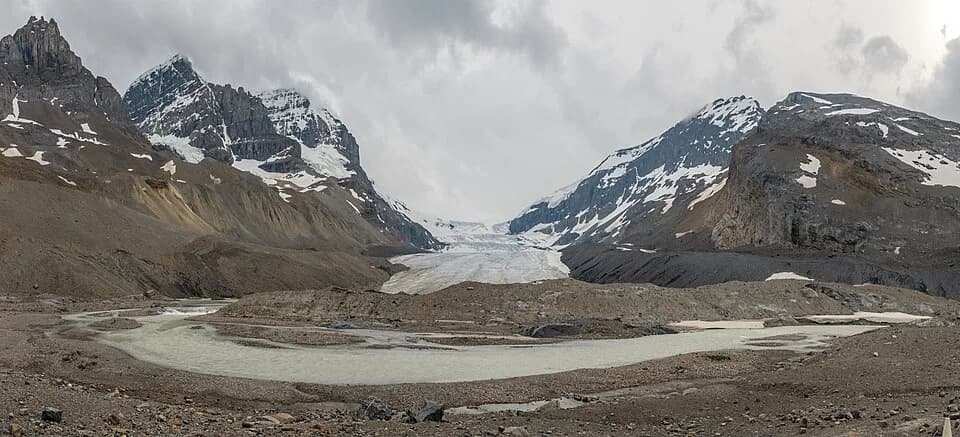
Jasper National Park claims the title of the world's largest dark sky preserve, spanning 11,228 square kilometres of pristine Canadian Rockies wilderness. Its remote location and stringent lighting controls keep artificial glow to a minimum, enabling unaided views of the aurora borealis on roughly 240 nights per year. With a Bortle class of 2 on clear nights, it is darker than the average preserve, and its winter skies offer 14 hours of true darkness, far exceeding the typical temperate-location window. Photographers consistently capture sharp star trails here thanks to the absence of haze and moisture prevalent in coastal reserves, making Jasper a top-tier choice for both casual viewers and serious astrophotographers.
- 0
Kerry International Dark-Sky Reserve is Europe's only Gold Tier location, situated on the remote Iveragh Peninsula where Atlantic moisture produces exceptionally transparent skies on clear nights. Its 500 square miles of protected area allow the Milky Way to reflect vividly in still lakes, a phenomenon rarely observed elsewhere on the continent. With roughly 150 fully dark nights annually, Kerry offers fewer clear nights than the typical dark-sky reserve, but its atmospheric clarity during those windows is unmatched. January lows drop to 4°C, requiring warm gear, but the reward is a river of starlight so bright it casts shadows on the water's surface.
- 0

Tenerife's Teide Observatory at 2,390 metres delivers some of the Northern Hemisphere's clearest astronomical conditions, thanks to strict light-pollution laws and a temperature inversion layer that traps clouds below the summit. The site's altitude reduces atmospheric distortion by 30% compared to sea-level locations like Elqui Valley, and its median seeing of 0.8 arcseconds rivals that of professional mountaintop facilities worldwide. With over 250 clear nights per year and an annual precipitation of just 200 millimetres, Tenerife is drier than the average European stargazing site. The inversion layer ensures that even when coastal towns are overcast, the peak remains above the clouds under a pitch-black sky. Winter night temperatures hover near 0°C, so pack thermal layers, but the reward is unobstructed views from the zenith down to 15 degrees above the horizon.
- 0
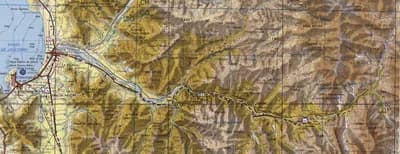
Elqui Valley in Chile boasts over 320 clear nights annually, making it one of the driest stargazing destinations on Earth with just 130 millimetres of rain per year. This narrow Andean valley north of Santiago has evolved into a hub for astrotourism, where boutique observatories and pisco distilleries offer evening programmes featuring binocular tours and telescope sessions. The valley's altitude averaging 1,500 metres places observers above the coastal fog layer, and winter skies reveal the Magellanic Clouds with vivid contrast.
- 0
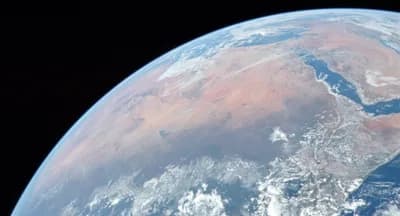
The dry, stable air ensures exceptional clarity, with average visibility exceeding 100 kilometers, making it superior to any coastal or forested location for deep-sky observations. Annual clear-sky coverage of 85% beats the global average of 40%, providing more than 300 nights annually for uninterrupted stargazing. This remote expanse fundamentally recalibrates your sense of scale as the Milky Way casts shadows across the dunes.
- 0

Britain's first Dark Sky Park spans 780 square kilometers of rugged southwest Scottish wilderness where over 7,000 stars are visible on a clear night, compared to just a few hundred in nearby Glasgow. Located at latitudes between 55°N and 55.5°N, it offers exceptional views of the Northern Lights on average 10 times per year, a feat unmatched by any other UK location. With annual cloud cover of 50%, it provides roughly 140 pristine nights annually, supported by dedicated astronomy events that attract 15,000 visitors each year.
Image credits
- Atacama Desert, Chile: Atacama Desert / Wikipedia
- NamibRand Nature Reserve, Namibia: Wikimedia Commons
- Mauna Kea, Hawaii, United States: Mauna Kea / Wikipedia
- Aoraki Mackenzie International Dark Sky Reserve, New Zealand: Wikimedia Commons
- Jasper National Park, Canada: WIKIMEDIA_MIRRORED
- Kerry International Dark-Sky Reserve, Ireland: Kerry International Dark-Sky Reserve / Wikipedia
- Tenerife, Canary Islands, Spain: Wikimedia Commons
- Elqui Valley, Chile: Elqui River / Wikipedia
- Sahara Desert, Morocco: Sahara / Wikipedia
- Galloway Forest Park, Scotland: Wikimedia Commons
Rank it your way
Remix this list into your own ranking, or head to the play hub for every game mode and community breakdown — blind mode, challenges, tier lists, and more.
You Might Also Like

Top 10 Unforgettable Geological Formations: A Global Edition
Top 10 Unforgettable Geological Formations: A Global Edition

Top 10 Best Whale Watching Spots 2026
Top 10 Best Whale Watching Spots 2026

Top 10 Most Beautiful Caves in the World (2026)
Top 10 Most Beautiful Caves in the World (2026)

Top 10 National Parks in Thailand in 2026
#1 Khao Sok National Park · #2 Erawan National Park · #3 Doi Inthanon National Park

Top 10 Must-Visit Nature Reserves in the Netherlands for 2026
#1 De Hoge Veluwe National Park · #2 Wadden Sea Islands · #3 Biesbosch National Park

Explore Malaysia's Wild Side: The Top 10 National Parks for Adventure & Nature Lovers
#1 Taman Negara National Park · #2 Gunung Mulu National Park, Sarawak · #3 Kinabalu Park, Sabah