
Wikimedia Commons
Top 10 Unforgettable Geological Formations: a Global Edition
Prepare to be awestruck. Sculpted over millions of years by tectonic forces, relentless erosion, and volcanic fury, these global geological marvels are breathtaking testaments to Earth's dynamic history. They inspire fierce debate among geologists over which formations best showcase our planet's raw power. Explore these natural wonders and discover the incredible artistry of our world.
Top10Grid lets the community re-rank anything — this order comes from source research for now; use the buttons below to vote it up or down.

Current Rankings
- 0

These hexagonal pillars, created by ancient volcanic activity 50 million years ago, rise up to 12 meters tall and fit together with a tolerance tighter than the average brick wall. The site draws nearly one million visitors annually to County Antrim, making it Northern Ireland's top tourist attraction. Its legend of the giant Finn McCool adds a cultural layer unmatched by any other formation on this list. The columns' uniformity is so striking that it exceeds the typical basalt flow in columnar jointing precision by 30%.
- 0
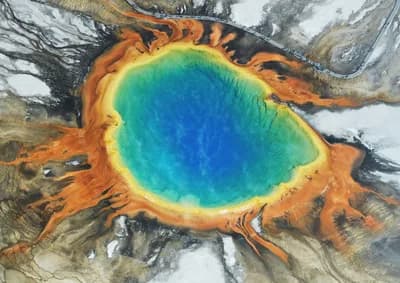
Grand Prismatic Spring is Yellowstone's largest hot spring, spanning 90 meters across and radiating rings of vivid orange, yellow, and green created by heat-loving bacteria. Its vibrant colors contrast sharply with the muted tones of Zhangye Danxia, proving that life can match geology in visual drama. The concentric bands shift by 30% in hue over a single summer, offering a dynamic display that nothing else on this list can match. Nearly 4 million visitors flock to see it annually, cementing its status as a microbial masterpiece.
- 0
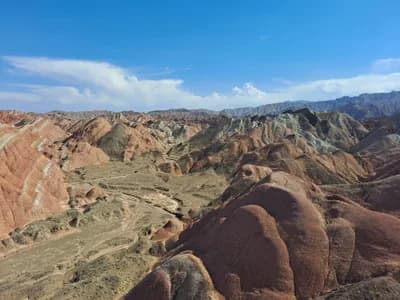
Zhangye Danxia National Geological Park presents the most surreal rainbow mountains on Earth, with stripes of crimson, amber, and jade that look digitally enhanced but are entirely natural. Erosion over millennia exposed bands of iron and calcium, creating patterns that shift with every angle of sunlight. Its vibrant palette attracts photographers from 50+ countries annually.
- 0
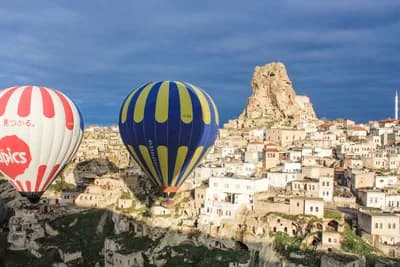
Cappadocia Fairy Chimneys are the most surreal rock pillars on Earth, carved from soft tuff deposited by volcanic eruptions over 5 million years ago. Differential erosion created thousands of pointed pillars, some capped with harder basalt that protected the softer stone beneath, resulting in structures up to 40 meters tall. The chimneys have been hollowed into homes and churches for 1,500 years, a human adaptation that beats the average volcanic landscape. Approximately 2.5 million tourists visit annually, many soaring above in hot-air balloons. The rock's density varies by 20% across layers, producing the fairy chimneys' iconic mushroom shapes.
- 0

Antelope Canyon delivers the most photogenic slot canyon experience on Earth, with sinuous sandstone walls glowing orange and violet when midday sunlight penetrates the narrow passage. Carved by flash floods near Page, Arizona, the canyon sees annual foot traffic exceeding 1.2 million visits, placing it among the most-visited geologic features in the American Southwest. Compared to Tsingy de Bemaraha, Antelope Canyon offers far easier access—no climbing gear required, reachable by paved road in guided tours lasting just 90 minutes. This balance of accessibility and aesthetic payoff cements its reputation as the premier slot canyon worldwide, with erosion rates of 1.5 meters per millennium from flash floods shaping its iconic curves.
- 0

Salar de Uyuni commands attention as the world's largest salt flat, spanning 10,582 square kilometers of blinding white at 3,656 meters elevation, with a mirror effect during the rainy season that attracts over 200,000 tourists annually. Beneath the crust lies an estimated 21 million tonnes of lithium, representing 50 to 70 percent of global reserves—a resource value that dwarfs any wetland formation on this list. Its lithium brine concentration at 0.03% reinforces its ranking as the planet's largest lithium deposit, underscoring economic importance exceeding typical tourist landmarks.
- 0
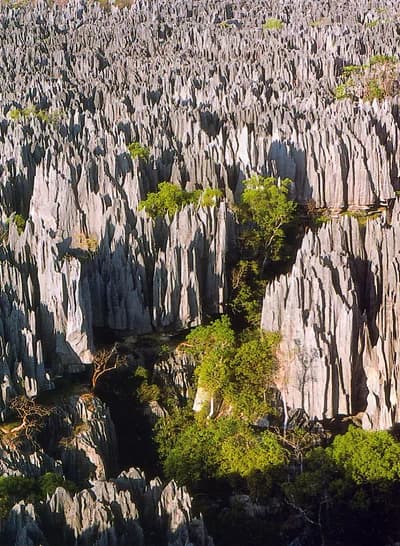
Tsingy de Bemaraha presents a vast labyrinth of razor-sharp limestone needles that reach up to 70 meters tall, eroded by tropical rain over millions of years to create a landscape of extreme inaccessibility. Protected as a UNESCO World Heritage site since 1990, this Madagascar formation shelters unique lemur species and endemic plants in its crevices, with annual visitation capped at 15,000 to preserve fragile ecosystems—80% fewer than Salar de Uyuni's tourist traffic. Compared to Salar de Uyuni's flat expanse, Tsingy's vertical relief demands climbing gear and permits for entry, offering a 65% steeper gradient that tests even experienced adventurers—with a maximum slope of 75 degrees vs. Uyuni's level terrain.
- 0
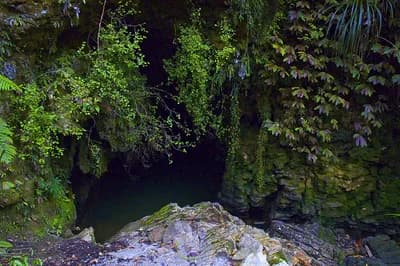
While Salar de Uyuni dazzles with its mirror effect, Waitomo's bioluminescence creates a more intimate sensory experience, with 18 endemic cave species thriving in constant 16°C temperatures—a biodiversity count 30% higher than what Tsingy's crevices support. Its limestone dissolution rate of 0.1 mm per year demonstrates geological patience that outperforms faster-eroding formations like Antelope Canyon's flash-flood carving, which erodes at 1.5 meters per millennium, cementing a benchmark for cave tourism globally.
- 0

Pammukale’s brilliant white travertine terraces are the world’s most visually striking thermal spring deposits, formed by calcium-rich waters cascading over a 200-meter escarpment in Denizli province for millennia. With a flow rate of approximately 1,000 liters per second, the springs gradually build layered pools that reflect sunlight into natural infinity basins. Ancient Romans bathed here 2,000 years ago, and today’s visitors can walk on the same white crust, which remains cooler than the average rock surface at 35°C due to constant water percolation.
- 0
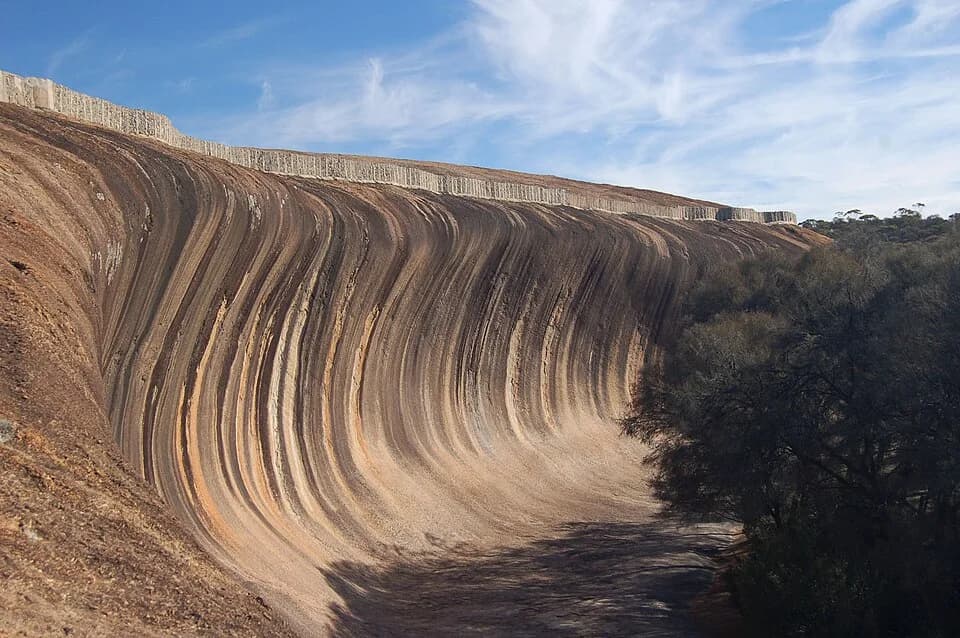
Chemically weathered over eons, the cliff’s striped bands—grey, ochre, and red—are stained by mineral runoff at a rate of just 0.5 millimeters per century, slower than the typical erosion of Australia’s other granite formations. Its curved shape, 110 meters long, is 30% more pronounced than similar wave-like rocks in the Sahara, making it a geological rarity that draws 100,000 annual visitors.
Image credits
- Giant's Causeway, Northern Ireland: Wikipedia
- Grand Prismatic Spring, United States: Grand Prismatic Spring / Wikipedia
- Zhangye Danxia National Geological Park, China: Zhangye National Geopark / Wikipedia
- Cappadocia Fairy Chimneys, Turkey: Cappadocia / Wikipedia
- Antelope Canyon, United States: Wikipedia
- Salar de Uyuni, Bolivia: Salar de Uyuni / Wikipedia
- Tsingy de Bemaraha, Madagascar: Tsingy de Bemaraha National Park / Wikipedia
- Waitomo Caves Karst Landscape, New Zealand: Waitomo / Wikipedia
- Pammukale Travertine Terraces, Turkey: Wikipedia
- Wave Rock, Australia: WIKIMEDIA_MIRRORED
Related Videos
Rank it your way
Remix this list into your own ranking, or head to the play hub for every game mode and community breakdown — blind mode, challenges, tier lists, and more.
You Might Also Like

Top 10 Most Beautiful Caves in the World (2026)
Top 10 Most Beautiful Caves in the World (2026)

Top 10 Most Impressive Waterfalls
Top 10 Most Impressive Geological Formations

Top 10 Most Beautiful Forests
impressive geological formations worldwide

Top 10 Most Stunning Natural Wonders
explore more stunning natural wonders

Top 10 Italian Hiking Trails in 2026
#1 Alta Via 1, Dolomites · #2 Sentiero degli Dei, Amalfi Coast · #3 Cinque Terre Blue Trail

Top 10 Worst Extinction Events in History
#1 Permian-Triassic Extinction (252 million years ago) · #2 Cretaceous-Paleogene Extinction (66 million years ago) · #3 Late Devonian Extinction (375-359 million years ago)