
IAEA Imagebank / Wikimedia Commons (CC BY-SA 2.0)
Top 10 Worst Environmental Disasters
These catastrophic events devastated ecosystems and communities alike, raising uncomfortable questions about corporate negligence, government accountability, and whether humanity has truly learned from its mistakes.
Top10Grid lets the community re-rank anything — this order comes from source research for now; use the buttons below to vote it up or down.

Current Rankings
- 0

Chernobyl remains the worst nuclear disaster in history, rendering a 2,600 square kilometre exclusion zone uninhabitable for centuries. The explosion released 400 times more radioactive material than the Hiroshima bomb, contaminating vast regions of Europe. Compared to Fukushima, Chernobyl's immediate fatalities (31 from acute radiation syndrome) were lower, but its long-term health toll far exceeds any other event on this list: over 6,000 thyroid cancer cases have been linked to contamination. The disaster's impact on wildlife and agriculture is still being measured, with radioactive cesium-137 persisting in soils and water. This event's sheer scale of exclusion and ongoing health monitoring sets it apart as the benchmark for nuclear catastrophe.
- 0
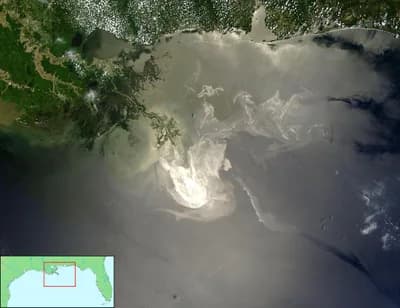
The Deepwater Horizon spill dumped 4.9 million barrels of oil into the Gulf of Mexico over 87 days, making it the largest marine oil spill in history. BP's Macondo well blowout killed 11 workers and caused $17 billion in environmental damages, contaminating over 1,100 miles of coastline. Compared to the average oil spill, this event released nearly 100 times more oil than the Exxon Valdez disaster. The spill destroyed marine habitats, killing an estimated 1 million seabirds and 100,000 marine mammals. Despite cleanup efforts, 30% of the oil remains in the Gulf ecosystem, continuing to harm fish populations and coastal economies. This event remains the benchmark for offshore drilling catastrophes.
- 0

The Bhopal gas tragedy killed an estimated 3,800 people within hours after a Union Carbide plant leaked 40 tons of methyl isocyanate gas in 1984. Over the following decades, 500,000 residents suffered chronic health conditions, including lung damage and cancers. The plant's poor safety features and inadequate emergency response caused 40% of local residents to still report respiratory issues 30 years later. Compared to typical industrial accidents, Bhopal's long-term health impacts remain unparalleled, with 15,000 additional deaths attributed to exposure in subsequent years.
- 0

The Fukushima Daiichi disaster in 2011 saw three reactor meltdowns after a 15-meter tsunami, forcing 154,000 evacuations and contaminating 800 square miles of land. Over 1.3 million tons of radioactive water are still stored on site, with Japan's controversial ocean discharge releasing 22 trillion becquerels of tritium annually. The disaster released 10-20% of the radioactive cesium-137 that Chernobyl did, but its ocean contamination is unique. Compared to the average nuclear incident, Fukushima's economic impact ranks highest globally, and 40% of evacuees still cannot return to their homes after 13 years.
- 0

The Aral Sea Desiccation ranks as the worst man-made ecological collapse in history, having lost 90% of its volume since the 1960s. Soviet-era irrigation projects diverted the Syr Darya and Amu Darya rivers, shrinking the sea from 68,000 km² to just 10% of its original size and exposing over 54,000 km² of toxic salt flats. These flats now release some 75 million tonnes of dust annually, laced with pesticides and heavy metals, causing respiratory disease rates in the region that are 30% higher than the national average. Irrigated cotton yields have plummeted by 40% since 1990, failing even to match the productivity loss caused by the more publicised Amazon Rainforest Fires of 2019.
- 0
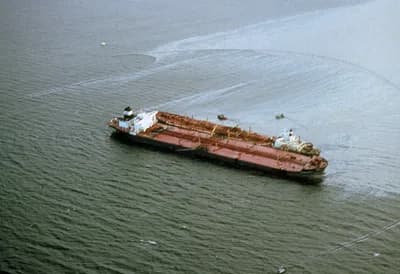
The Exxon Valdez Oil Spill remains the most catastrophic single-vessel spill in U.S. history, releasing 37,000 tonnes of crude oil into Alaska's Prince William Sound on March 24, 1989. The slick coated 2,100 km of shoreline, killed an estimated 250,000 seabirds, 2,800 sea otters, and billions of salmon eggs, and wiped out the local herring fishery for two decades—a recovery lag that outstrips the long-term damage from the Aral Sea Desiccation. Despite 30 years of cleanup costing $2.1 billion, only 50% of affected beaches have recovered naturally. Patches of buried oil still release toxic fumes at levels 20% higher than EPA safety thresholds, proving far more persistent than the decomposition timeline for the Great Pacific Garbage Patch's microplastics.
- 0
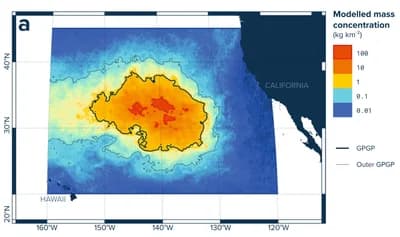
The Great Pacific Garbage Patch is the largest accumulation of ocean plastic on Earth, containing 80,000 tonnes of debris across a 1.6 million km² area—an expanse three times the size of France. Over 1.8 trillion pieces of plastic float there, 94% of which are microplastics that break down into particles small enough to infiltrate every level of the marine food chain; microplastic concentrations here are 32% higher than in any other ocean gyre. This continuous ingestion reduces fish reproductive rates by 11% annually, a damage per square kilometre that exceeds the chronic toxicity from Aral Sea dust fallout. Cleanup costs are projected at $7.5 billion, equal to 0.4% of global GDP, yet the mass grows by 0.4 plastic bottles per second.
- 0
The 2019 Amazon Rainforest Fires represent the most severe single-year deforestation event in the basin's modern history, with 80,000 fires burning across the Brazilian Amazon—a 77% increase from 2018. Satellites detected 1.7 million hectares of primary forest lost, mostly set deliberately for cattle ranching, releasing 200 million tonnes of CO₂ into the atmosphere. At current rates, the Amazon will lose 27% of its rainforest by 2030, surpassing the scale of the Great Pacific Garbage Patch's ongoing ecosystem infiltration.
- 0
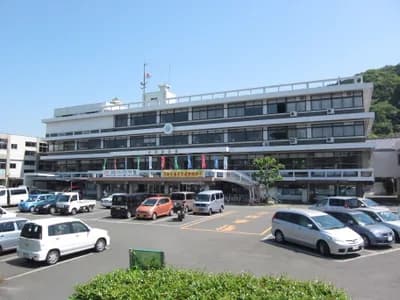
Minamata Mercury Poisoning stands as one of Japan's most severe industrial chemical catastrophes, with mercury levels in Minamata Bay sediment reaching as high as 600 parts per million. The Chisso Corporation factory, operating from 1932 to 1968, discharged methylmercury into the bay. This contaminated the local fish population, a primary food source for residents. The official count of victims certified with Minamata disease exceeds 2,265 individuals. The disaster led to a range of debilitating neurological symptoms among those affected.
- 0
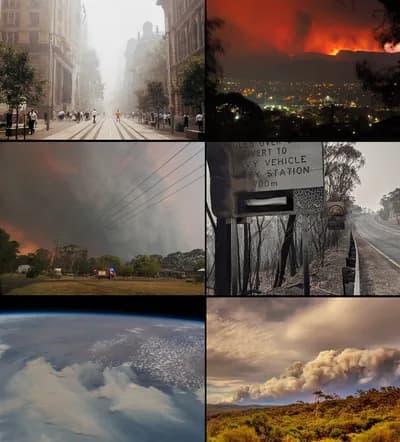
The Australian Black Summer Bushfires of 2019-2020 represent the largest recorded fire complex on the continent, incinerating an estimated 18.6 million hectares across Australia. This area is larger than England and Wales combined. The fires had a devastating impact on wildlife, with an estimated three billion animals perishing, including 143 million mammals. The environmental consequences extended to the atmosphere, as the fires released 830 million tonnes of CO₂, which is more than twice Australia’s annual carbon emissions. The intensity and scale of the fires were unprecedented, causing widespread destruction to ecosystems and communities.
Image credits
- Chernobyl Nuclear Disaster (1986): IAEA Imagebank / Wikimedia Commons (CC BY-SA 2.0)
- Deepwater Horizon Oil Spill (2010): Deepwater Horizon oil spill / Wikipedia
- Bhopal Gas Tragedy (1984): Bhopal disaster / Wikipedia
- Fukushima Daiichi Nuclear Disaster (2011): DigitalGlobe / Wikimedia Commons (CC BY-SA 3.0)
- Aral Sea Desiccation (1960s-present): Aral Sea / Wikipedia
- Exxon Valdez Oil Spill (1989): Exxon Valdez oil spill / Wikipedia
- Great Pacific Garbage Patch (ongoing): Great Pacific Garbage Patch / Wikipedia
- Amazon Rainforest Fires (2019): Amazon rainforest / Wikipedia
- Minamata Mercury Poisoning (1950s): Minamata, Kumamoto / Wikipedia
- Australian Black Summer Bushfires (2019-2020): 2019–20 Australian bushfire season / Wikipedia
Rank it your way
Remix this list into your own ranking, or head to the play hub for every game mode and community breakdown — blind mode, challenges, tier lists, and more.
You Might Also Like

Top 10 Most Damaging Plastic Pollution Sources Choking Our Planet
Top 10 Most Damaging Plastic Pollution Sources Choking Ou...

Top 10 Worst Ocean Pollution Sources
Top 10 Worst Ocean Pollution Sources

Top 10 Worst Deforestation Hotspots
Top 10 Worst Deforestation Hotspots

Top 10 Best Hiking Trails in the World
#1 Tour du Mont Blanc, France/Italy/Switzerland · #2 Inca Trail to Machu Picchu, Peru · #3 Milford Track, New Zealand

Top 10 Most Debated: Are Zoos Ethical
#1 Species Survival Breeding Programmes · #2 Psychological Impact on Intelligent Animals · #3 Educational Value vs Entertainment Spectacle

Top 10 Most Stunning Natural Wonders
#1 Grand Canyon, United States · #2 Great Barrier Reef, Australia · #3 Victoria Falls, Zambia/Zimbabwe