
Wikimedia Commons
Top 10 Wildlife Encounters in Taiwan in 2026
Taiwan's geographic isolation created unique endemic species. From mountain bears to coral-reef fish, the island teems with life.
Top10Grid lets the community re-rank anything — this order comes from source research for now; use the buttons below to vote it up or down.

Current Rankings
- 0

Fewer than 1,000 Formosan Black Bears (Ursus thibetanus formosanus) survive in the wild — and that scarcity is precisely what earns this subspecies the top rank among Taiwan's wildlife encounters. Confined to mountain forests above 1,000 metres across the Central Mountain Range, the animal has been legally protected since 1989, yet illegal snaring remains the primary recorded cause of mortality. Taiwan's Forestry and Nature Conservation Agency logged just 742 confirmed camera-trap sightings across all monitored zones in 2023, making a live encounter one of the rarest wildlife experiences in East Asia — significantly rarer than spotting a Green Sea Turtle on Little Liuqiu, which has over 90% sighting success. Guided multi-day expeditions into Yushan or Taroko's backcountry offer the best odds, though no operator can guarantee a sighting; dawn vigils near stream corridors and fruiting fig trees yield the most results. The bear's distinctive white V-shaped chest marking — giving it the Chinese name 月熊, or moon bear — is unmistakable in the brief seconds a forest crossing usually allows.
- 0

Little Liuqiu Island hosts Taiwan's most reliable marine wildlife encounter: over 200 resident green sea turtles (Chelonia mydas) inhabiting shallow reefs just metres from shore, with local operators consistently reporting sightings on more than 90% of guided snorkel sessions year-round. These turtles feed on seagrass beds at depths of 2–8 metres — well within reach of snorkelers and beginner freedivers — and remain unhurried around calm swimmers, allowing extended observation at close range. Each individual is numbered and tracked by National Sun Yat-sen University researchers who have followed some turtles for over 15 years; knowledgeable guides can often identify individuals by name and share their histories. Water temperature averages 26°C from May through October. The Liuqiu Marine Ecology Conservation Association enforces a strict no-touch, no-flash code that keeps disturbance minimal. Half-day snorkel packages including equipment rental typically cost NT$600–900, making this one of Taiwan's best-value wildlife experiences.
- 0
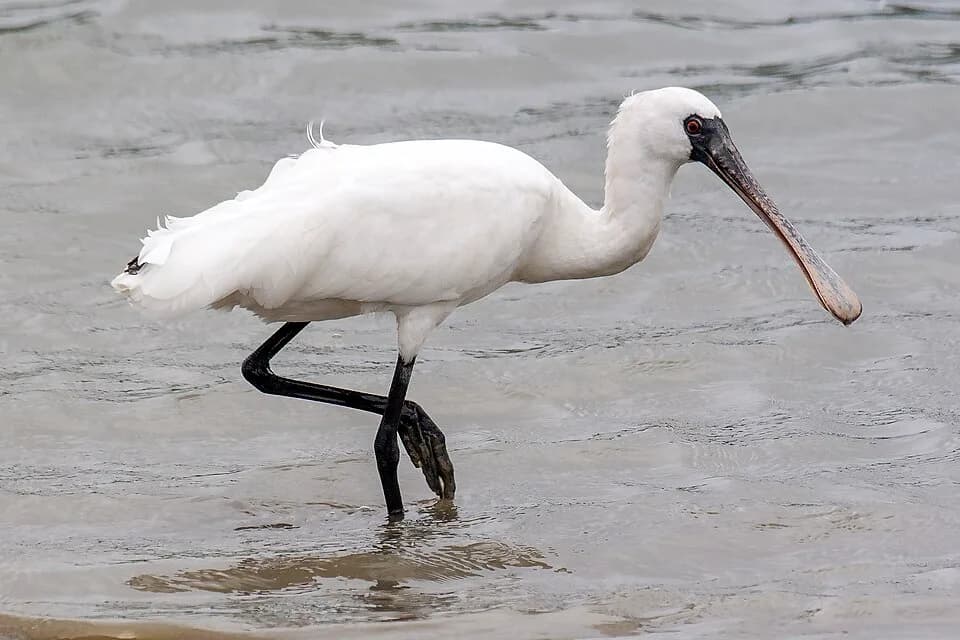
Taijiang National Park holds a statistic that defines its global importance: each winter, its coastal wetlands host more Black-Faced Spoonbills (Platalea minor) than all other wintering grounds on Earth combined. The 2025 global synchronised census counted 6,162 individuals worldwide; Tainan’s lagoons sheltered approximately 3,200 of them — a concentration that makes this single park the decisive site for a species that numbered just 288 birds in 1990. Spoonbills arrive from late October and remain through March, feeding in shallow water with the distinctive side-to-side bill sweeps that give the species its name. The Siwaogu Ecological Reserve’s purpose-built observation towers, equipped with fixed spotting scopes, allow views from within 50 metres without disturbance. Taijiang charges no entry fee, making the quality of a visit a function purely of timing rather than budget. Dawn sessions in December and January offer the densest bird concentrations and best photographic light.
- 0

Shoushan Nature Park delivers one of Taiwan’s most immediate wildlife encounters: approximately 1,400 Formosan macaques (Macaca cyclopis) distributed across more than 20 troops on a forested ridgeline overlooking central Kaohsiung. These endemic primates — found nowhere else on Earth — have been studied continuously by National Sun Yat-sen University since 1986, producing one of Asia’s longest-running urban primate datasets. Despite living alongside a city of 2.7 million, the macaques receive no supplemental feeding and retain fully wild behaviour: territorial disputes, infant-rearing, and foraging all unfold metres from the main trail. The most productive observation window is 6–8 a.m., when troops descend to lower slopes and early light suits photography. Park entry is free; the main trailhead near Longevity Mountain car park places visitors in macaque territory within ten minutes of arrival — a quicker access than the multi-day expeditions required for the Formosan Black Bear. Maintain a minimum distance of 5 metres, keep food out of sight, and avoid direct eye contact to prevent defensive responses.
- 0
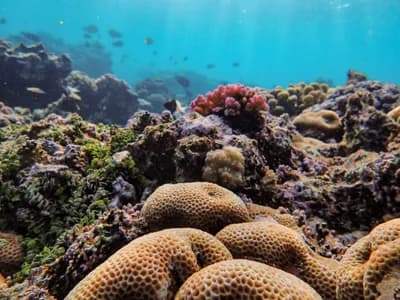
Kenting National Park's reefs harbour over 330 coral species — approximately 30% of all coral species recorded across the entire Indo-Pacific — placing this park among the world's most species-dense reef systems per unit area. The 24-kilometre reef belt along Taiwan's southernmost coast supports more than 1,200 fish species and presents sites for every skill level: snorkel gardens at 3 metres, sloping walls to 20 metres, and deep pinnacles to 30 metres draped in sea fans. Visibility averages 15–20 metres on calm days, and whale sharks appear during spring upwelling months between March and May. Unlike the Green Sea Turtles, Little Liuqiu experience — which centres on a single species in shallow water — Kenting delivers layered encounters that reward divers across dozens of mapped sites at every depth. PADI open-water courses are available from NT$8,000 through reputable operators such as Kenting Dive Center, making the reefs accessible within a single visit.
- 0
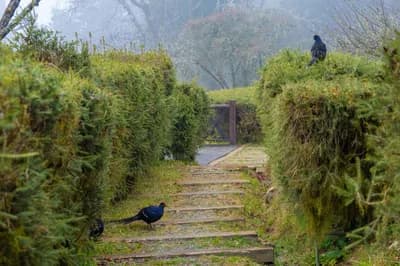
Taiwan's most visually striking endemic bird has earned a place on the NT$1,000 banknote — the highest-denomination note in everyday circulation — through the sheer impact of its iridescent blue-black plumage and white-barred tail feathers reaching up to 50 centimetres in length. The Mikado Pheasant (Syrmaticus mikado) exists solely in Taiwan at elevations between 2,000 and 3,300 metres, with a wild population estimated at 10,000–25,000 individuals; sightings remain exceptional due to the bird's shy, forest-floor habits. The Tatajia trailhead area in Yushan National Park and the high trails of Shei-Pa are the most consistent locations, best visited during early-morning hours in May and June. Most sightings last under 30 seconds as the pheasant crosses a trail and retreats into undergrowth. Compared to the Formosan Landlocked Salmon, which is confined to a 5-kilometer stream, the Mikado Pheasant's wider high-elevation range provides more varied viewing spots.
- 0

The Formosan landlocked salmon (Oncorhynchus masou formosanus) is the world's southernmost salmonid population — a glacial relic stranded in Taiwan's mountains at the end of the last ice age, surviving today in just 5 kilometres of viable stream habitat within Shei-Pa National Park. Conservation investment has delivered dramatic results: the population fell to approximately 200 individuals after Typhoon Herb in 1998, then recovered to over 3,000 fish by 2023 through a NT$200 million habitat restoration programme. Survival depends on the Cijiawan River remaining below 17°C year-round — a thermal ceiling nearly 10°C stricter than the upper heat tolerance of other Oncorhynchus masou subspecies in Japan and Korea, making this population acutely sensitive to climate warming. Wuling Farm's purpose-built viewing platforms allow close observation without entering the stream channel. The most productive viewing months are October through February, when fish are most active near the surface.
- 0
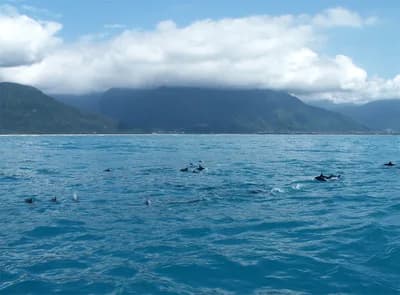
East of Hualien, the Pacific Ocean plunges to depths exceeding 3,000 metres within 15 kilometres of shore — an abrupt underwater topography that concentrates nutrients and supports at least seven resident cetacean species year-round. Sperm whales (Physeter macrocephalus), the world's largest toothed predator, are sighted on approximately 70% of trips between April and October, with bulls reaching 18 metres in length documented in these waters. Spinner dolphins form bow-riding pods of up to 300 individuals, with encounters routinely lasting 15–20 minutes. Taiwan's Cetacean Society has catalogued over 3,000 individual sperm whales in Pacific waters east of Taiwan since 1997, indicating a regional population far larger than earlier surveys suggested. Licensed operators depart from Hualien Harbour under 2024 guidelines requiring a minimum 50-metre exclusion distance from all cetaceans.
- 0

Every November, up to 10 million Purple Crow butterflies (Euploea spp.) descend on southern Taiwan's Maolin, Meinong, and Siaolin river valleys — a migration ranked second only to North America's Monarch overwintering event among all recorded large-scale butterfly aggregations worldwide. Peak monitoring by the Endemic Species Research Institute has logged over 10,000 butterflies per hour crossing a single highway transect during the November migration front. Daytime roosting sites concentrate hundreds of thousands of individuals per hectare in camphor and Mikania vine thickets, producing canopies of iridescent blue-black wings visible at a distance. Taiwan pioneered a butterfly corridor system on major highways: timed traffic slowdowns during peak migration have cut vehicle-strike mortality by 85% since 2007. The valleys are within 90 minutes of Kaohsiung by public transport, and all key roosting sites carry no entry fee. The overwintering period runs November through March, with January offering the densest concentrations.
- 0

With over 60 documented species, Taiwan harbours one of the highest concentrations of firefly diversity in East Asia — and Neiwan in Hsinchu County is the island's most celebrated venue for synchronous displays. Guided night walks cost NT$300–500 per person and use exclusively red-light torches, preserving the darkness that keeps bioluminescent courtship signals visible across 30-metre distances. The active season spans roughly 3–5 weeks between late March and early May; mid-April delivers the broadest species diversity. Taiwan's Forestry and Nature Conservation Agency enforces strict light-pollution controls in designated display zones, prohibiting vehicle headlights and commercial lighting within 200 metres of core habitat. Reserve Neiwan accommodation by early February — peak-night rooms fill weeks in advance.
Image credits
- Green Sea Turtles, Little Liuqiu: Wikimedia Commons
- Black-Faced Spoonbill, Taijiang: WIKIMEDIA_MIRRORED
- Formosan Macaques, Shoushan: Wikimedia Commons
- Coral Reefs of Kenting: Francesco Ungaro / Pexels
- Mikado Pheasant: Obo Teng / Pexels
- Formosan Landlocked Salmon: Wikimedia Commons
- Whale and Dolphin Watching, Hualien: MickeyDisney / Wikimedia Commons (CC BY-SA 3.0)
- Purple Crow Butterfly Migration: Wikimedia Commons
- Firefly Season, Neiwan: Wikimedia Commons
Related Videos
Rank it your way
Remix this list into your own ranking, or head to the play hub for every game mode and community breakdown — blind mode, challenges, tier lists, and more.
You Might Also Like

Top 10 Indonesian Wildlife Encounters in 2026
Top 10 Indonesian Wildlife Encounters in 2026

Top 10 Ethical Wildlife Encounters in Thailand (2026 Guide)
Top 10 Wildlife Encounters in Thailand in 2026

Top 10 Beaches and Islands in Taiwan in 2026
Top 10 Wildlife Encounters in Taiwan in 2026

Top 10 Best Wildlife Safari Destinations
#1 Serengeti National Park, Tanzania · #2 Masai Mara National Reserve, Kenya · #3 Okavango Delta, Botswana

Top 10 Worst Air Quality Cities
#1 Lahore, Pakistan · #2 Delhi, India · #3 Dhaka, Bangladesh

Top 10 Worst Ocean Pollution Sources
#1 Single-Use Plastic Packaging · #2 Agricultural Runoff and Fertilisers · #3 Industrial Wastewater Discharge