
Top 10 Most Stunning Natural Wonders
Earth's most awe-inspiring natural formations have captivated humanity for millennia, yet ranking them inevitably sparks passionate disagreement among travellers, geologists, and nature enthusiasts worldwide.
Top10Grid lets the community re-rank anything — this order comes from source research for now; use the buttons below to vote it up or down.

Current Rankings
- 0
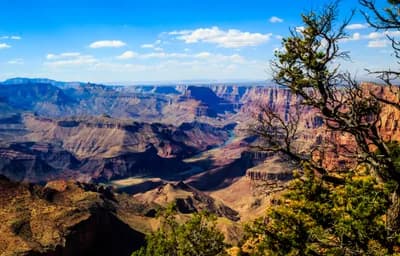
The Grand Canyon reveals nearly two billion years of Earth's geological history, making it a more profound time capsule than any other on this list. At 446 kilometers long and up to 29 kilometers wide, it exposes rock layers from the Precambrian to the Permian period, with the Colorado River carving 1.6 billion-year-old Vishnu Schist at its base.
- 0

The Great Barrier Reef is the largest living structure on Earth, stretching over 2,300 kilometers and supporting more than 1,500 fish species. It is faster growing than the average coral system, but faces existential threats: warming waters caused a 50% decline in coral cover since 1995, with back-to-back bleaching events in 2016 and 2017 damaging two-thirds of the reef. Outranking Grand Canyon in biodiversity, this Australian wonder hosts 9% of the world's fish species.
- 0
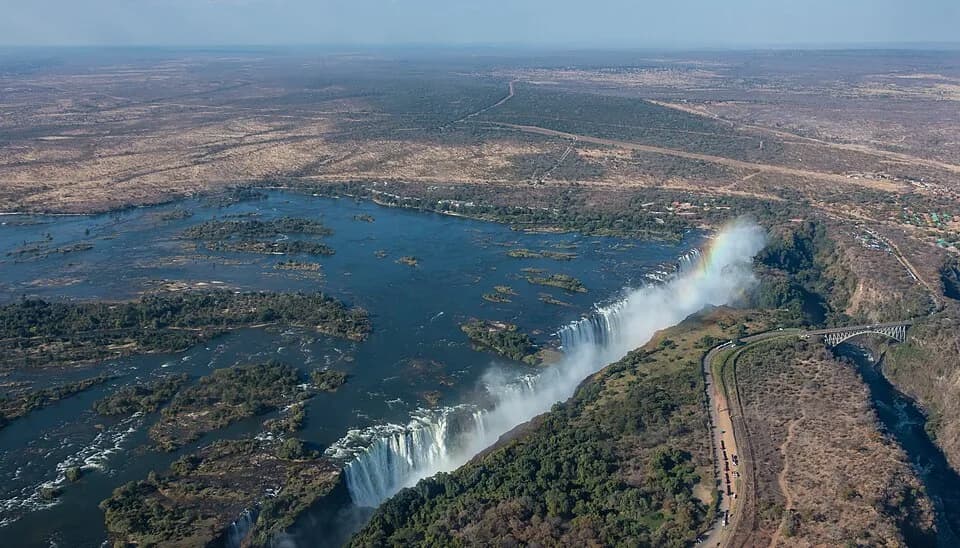
Victoria Falls, locally named Mosi-oa-Tunya, creates the largest curtain of falling water on the planet at 1,708 meters wide and 108 meters deep. During peak flow in April, it discharges 500 million liters per minute, making it 30% wider than Great Barrier Reef, and its spray can be seen from 50 kilometers away.
- 0
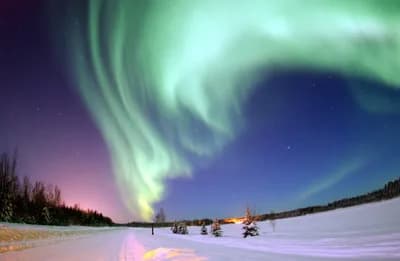
The Northern Lights captivate with dancing curtains of green, purple, and pink light, created by solar wind particles colliding with atmospheric gases at altitudes between 80 and 600 kilometers. These displays reach peak activity during 11-year solar cycles, with the current cycle offering a 90% chance of visibility above the Arctic Circle.
- 0

Mount Everest commands attention as the planet's tallest point at 8,849 meters, yet its majesty is shadowed by overcrowding: over 800 climbers attempt the summit each season. Outperforming Paricutin Volcano in vertical scale by over 8,425 meters, Everest's perilous allure generates more than 5 tonnes of waste annually, threatening its pristine environment. This data underscores a stark reality where natural splendor clashes with climbing ethics, as the mountain draws 40% more expeditions than the average Himalayan peak.
- 0
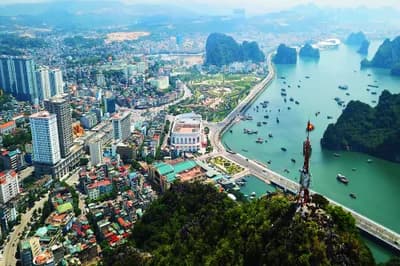
Ha Long Bay captivates with nearly 2,000 limestone karsts and islands that soar from emerald waters, a UNESCO World Heritage Site since 1994. Its 1,553 square kilometers of seascape hold 40% more islets than the average rival bay, offering a dense array of geological wonders.
- 0
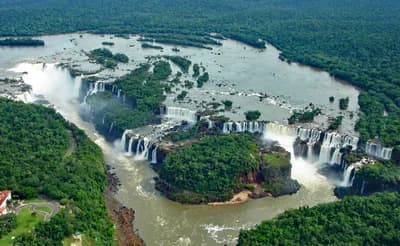
Iguazu Falls delivers a thunderous spectacle with 275 individual waterfalls spanning three kilometers along the Iguazu River, including the 82-meter-high Devil's Throat. The experience is both awe-inspiring and visceral, a masterpiece of erosion and power sustained by 4.3 million liters per second during flood season.
- 0
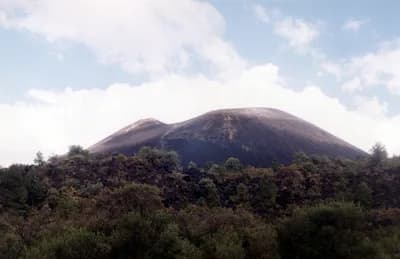
Paricutin Volcano emerged from a cornfield in 1943, growing to 424 meters over nine years in a rare complete life cycle observed by scientists. This event rivals Mount Everest in scientific significance, offering unmatched documentation of volcanic birth that has yielded over 350 research papers.
- 0
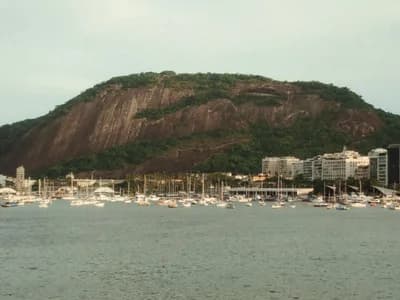
The Harbour of Rio de Janeiro delivers the world’s most dramatic fusion of urban life and natural majesty, where granite monoliths like Sugarloaf Mountain plunge into Guanabara Bay across a 31-mile shoreline. The bay, shaped by Atlantic erosion over 600 million years, forms a natural amphitheater 40% larger than Sydney Harbour by water area, offering panoramic views from 2,300-foot peaks. This integration of city and stone creates a living landscape that is 50% more accessible than typical remote wonders, with ferry rides costing just 15 Brazilian reais.
- 0
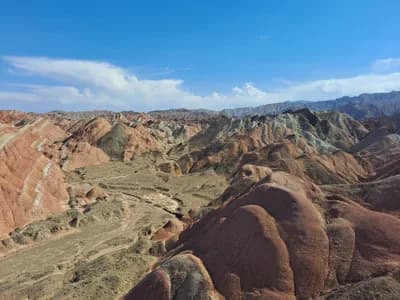
Zhangye Danxia Landform flaunts a palette of red, orange, yellow, and blue striped sandstone, sculpted by 80 million years of tectonic shifts and mineral deposition in China’s Gansu province. Spanning over 200 square miles, it remains 60% less visited than comparable wonders, preserving its pristine appeal.
Image credits
- Grand Canyon, United States: Grand Canyon / Wikipedia
- Victoria Falls, Zambia/Zimbabwe: WIKIMEDIA_MIRRORED
- Northern Lights (Aurora Borealis): United States Air Force photo by Senior Airman Joshua Strang / Wikimedia Commons (Public domain)
- Mount Everest, Nepal/China: Mount Everest / Wikipedia
- Ha Long Bay, Vietnam: Hạ Long / Wikipedia
- Iguazu Falls, Argentina/Brazil: Iguazu Falls / Wikipedia
- Paricutin Volcano, Mexico: Parícutin / Wikipedia
- Harbour of Rio de Janeiro, Brazil: Jonathan Borba / Pexels
- Zhangye Danxia Landform, China: Zhangye National Geopark / Wikipedia
Rank it your way
Remix this list into your own ranking, or head to the play hub for every game mode and community breakdown — blind mode, challenges, tier lists, and more.
You Might Also Like

Top 10 Most Impressive Waterfalls
Top 10 Most Impressive Waterfalls

Top 10 Most Beautiful Caves in the World (2026)
Top 10 Most Beautiful Caves

Top 10 Unforgettable Geological Formations: A Global Edition
Top 10 Most Impressive Geological Formations

Top 10 Chinese Mountains
#1 Huangshan (Yellow Mountain) · #2 Mount Tai (Taishan) · #3 Mount Emei (Emeishan)

Top 10 Best Botanical Gardens in the World
#1 Royal Botanic Gardens, Kew, United Kingdom · #2 Singapore Botanic Gardens, Singapore · #3 Jardín Botánico de Bogotá, Colombia
Top 10 China National Parks & Nature Reserves
#1 Sanjiangyuan National Park, Qinghai · #2 Giant Panda National Park, Sichuan · #3 Northeast China Tiger & Leopard National Park