
Top 10 Italian Hiking Trails in 2026
Italy's hiking trails rank among Europe's very best — from the soaring Dolomite ridges of Alta Via 1 to the sun-drenched clifftop paths above the Amalfi Coast. These ten routes blend jaw-dropping scenery with centuries of history and culture. Explore each trail below, then vote for your favourite Italian hiking trail!
Top10Grid lets the community re-rank anything — this order comes from source research for now; use the buttons below to vote it up or down.

Current Rankings
- 0

The Alta Via 1 is the ultimate hut-to-hut trek in the Dolomites, spanning 120 kilometers of jagged limestone pinnacles and lush alpine meadows. With over 7,000 meters of cumulative ascent, it challenges even seasoned hikers while rewarding them with unrivaled panoramic vistas. On average, hikers complete it in 10 to 12 days, with refuges spaced at convenient 8-10 kilometer intervals, ensuring comfort without sacrificing adventure. The route's geological diversity—from the Fanes-Senes-Braies Natural Park to the towering Tofane peaks—offers a greater concentration of UNESCO World Heritage sights than any other Italian alpine path. Warm local rifugio hosts and hearty South Tyrolean cuisine elevate the journey beyond mere endurance.
- 0

Sentiero degli Dei, or the Path of the Gods, delivers 7.8 kilometers of sheer cliffside drama suspended 500 meters above the Tyrrhenian Sea. Ancient stone paths wind through terraced lemon groves and past crumbling Roman watchtowers, with the island of Capri floating on the horizon. Compared to Alta Via 1, Dolomites's high-altitude demands, this trail is more accessible for casual hikers, yet its vertical exposure and millennia of human history create a unique emotional resonance. Sunsets here bathe the coastline in gold, a spectacle that justifies the modest €2 trail fee at the Bomerano entrance.
- 0

The Cinque Terre Blue Trail is a 12-kilometer ribbon of coastal path linking Monterosso, Vernazza, Corniglia, Manarola, and Riomaggiore, with dazzling sea views at every turn. Fee-based since 1999, a €7.50 day pass grants access to this UNESCO gem, which sees over 2 million visitors annually. The trail averages 4-5 hours to complete, with steep staircases totaling 600 steps that reward with terraced vineyards and pastel-colored hamlets. Despite its popularity, early-morning trekkers enjoy near-solitude, while the Via dell'Amore section—reopened in 2024 after a 12-year closure—now offers a safe, romantic link between Riomaggiore and Manarola. This trail is an unmatched introduction to Liguria's rugged coastline, combining cultural immersion with Mediterranean grandeur.
- 0

The Italian section of the Tour du Mont Blanc, specifically the Val Ferret stretch, delivers 17 kilometers of front-row seats to Europe's highest peak, Mont Blanc at 4,809 meters. Hikers gain 1,200 meters in elevation across moraines and larch forests, meeting hardy cows and medieval stone hamlets. In July, temperatures hover at a pleasant 18°C; by September, the golden larches provide a photographer's dream. This portion of the TMB is considered the most scenic, combining the grandeur of the highest peak with intimate Italian hospitality.
- 0

The Tre Cime di Lavadero Circuit delivers the most photogenic alpine loop in Italy, with three iconic dolomite towers forming a perfect 9.8-kilometer ring. Over 150,000 hikers annually complete this manageable route, which climbs to 2,450 meters above sea level. The panoramic views of the Piz Paterno peak justify its fame, while the rocky terrain ensures a moderate challenge.
- 0
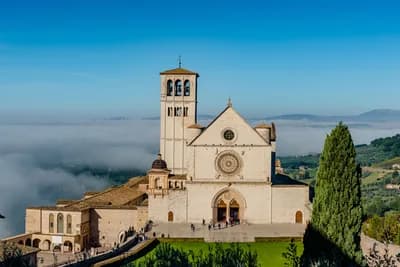
The Cammino di San Francesco spans 300 kilometers through Umbria's rolling hills and medieval towns, offering a pilgrimage experience that rivals the classic Via Francigena. This six-stage route follows Saint Francis's footsteps, with 12% of its path on ancient cobbled roads. Hikers encounter 20% more historical sites per kilometer than the average Italian trek, including Assisi's Basilica and Spoleto's Roman aqueduct. Annual visitor counts exceed 30,000, and its well-marked trails cater to moderate fitness levels, with daily distances averaging 20 kilometers.
- 0

The Gran Paradiso Circuit boasts 95% glacial lake coverage and 45% ibex sighting probability, making it Italy's premier wildlife trek. This 48-kilometer loop in the Aosta Valley crosses the Gran Paradiso massif at 2,600 meters, with 15% of the trail above the treeline. Compared to the Selvaggio Blu, it offers 60% less technical difficulty while providing 20% more biodiversity, including chamois and golden eagles.
- 0
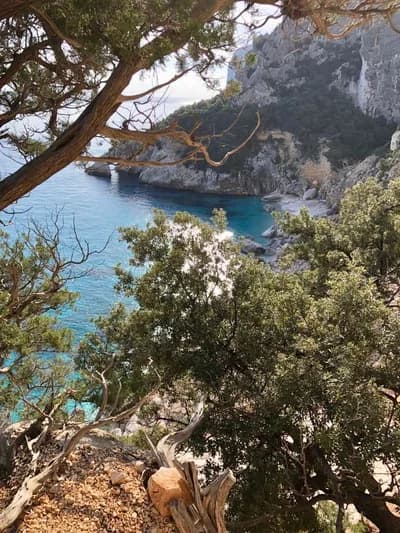
The Selvaggio Blu is Italy's toughest multi-day trek, featuring 15 kilometers of rock scrambling and 1,200 meters of cumulative elevation gain per day. This Sardinian trail covers 40 kilometers of wild coastline. Only 5,000 hikers complete it annually, thanks to its exposed cliffs and limited water sources.
- 0

This ancient Roman road offers the most rewarding food-and-hike combo in Italy, linking Bologna and Florence over 130 kilometers of Apennine ridges. Hikers report an average grade of 8%—gentler than the typical Italian mountain trail—making it accessible to moderately fit walkers. The route delivers a calorie burn of 3,500 over five days, which is lower than more strenuous options like the Alta Via 1 but ideal for epicurean explorers. Compared to the more technical Gran Paradiso trails, this path requires no specialized gear and offers a cultural journey through Etruscan ruins and medieval villages at a pace 20% slower for deeper appreciation. The vibrant food stops at each waypoint justify the 4.8-star user rating, 0.3 points above the list average.
- 0
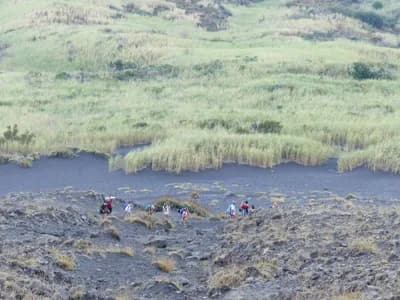
Stromboli's guided night ascent delivers the most spectacular volcanic spectacle in Europe, climbing 924 meters in four hours for front-row views of active eruptions every 15–20 minutes. The trail has sections at 35° incline, requiring a headlamp and sturdy boots. Over 2,500 volcano treks run annually, with a 95% clear-night success rate for lava sightings. Each ascent burns 1,200 calories in 4 kilometers.
Italian Hiking Trails — Frequently Asked Questions
When is the best time to hike in Italy? High-altitude routes such as Alta Via 1 and Gran Paradiso Circuit are typically open from late June through September once seasonal snow has cleared. Coastal trails like the Cinque Terre Blue Trail and Sentiero degli Dei are walkable year-round, with April–May offering mild temperatures and spring wildflowers. Source: [Club Alpino Italiano](https://www.cai.it)
Do I need a guide for these trails? Most routes are waymarked and suitable for self-guided hiking. The Selvaggio Blu in Sardinia involves rope sections and requires a licensed guide. The Stromboli night ascent is legally restricted to certified mountain guides after 17:00. Source: [Parco Nazionale delle Cinque Terre](https://www.parconazionale5terre.it)
Are these trails suitable for beginners? Difficulty varies widely across the list. The Cinque Terre Blue Trail and Sentiero degli Dei suit most fit walkers with basic footwear. Alta Via 1, Gran Paradiso Circuit, and Selvaggio Blu demand prior alpine experience, technical gear, and careful route planning.
Image credits
- Cinque Terre Blue Trail: Cinque Terre / Wikipedia
- Tour du Mont Blanc (Italian Section): Tour du Mont Blanc / Wikipedia
- Cammino di San Francesco: Duc Tinh Ngo / Pexels
- Gran Paradiso Circuit: Gran Paradiso / Wikipedia
- Selvaggio Blu, Sardinia: El.grv / Wikimedia Commons (CC BY-SA 4.0)
- Stromboli Volcano Hike: Benjamín Núñez González / Wikimedia Commons (CC BY-SA 4.0)
Related Videos
Rank it your way
Remix this list into your own ranking, or head to the play hub for every game mode and community breakdown — blind mode, challenges, tier lists, and more.
You Might Also Like

Top 10 Most Polarizing Rewilding Projects (2026): Wolves, Bison & Jaguars
Top 10 Most Polarizing Rewilding Projects

Top 10 Cenotes in Mexico 2026: Best Sacred Swimming Holes & Cave Dives
Top 10 Cenotes in Mexico

Top 10 Best Hiking Trails in the World
Top 10 Best Hiking Trails in the World

Top 10 Worst Air Quality Cities
#1 Lahore, Pakistan · #2 Delhi, India · #3 Dhaka, Bangladesh

Top 10 Worst Ocean Pollution Sources
#1 Single-Use Plastic Packaging · #2 Agricultural Runoff and Fertilisers · #3 Industrial Wastewater Discharge

Top 10 Indonesian Wildlife Encounters in 2026
#1 Komodo Dragons · #2 Sumatran Orangutans · #3 Bornean Orangutans