
Centre for Ageing Better / Pexels
Top 10 Most Controversial Conservation Policies
Conservation is often presented as an environmental good, but the policies used to achieve it can create difficult trade-offs. This list examines controversial conservation measures—including protected-area restrictions, limits on resource access, and wildlife or land-use regulations—that have sparked conflict among Indigenous communities, scientists, economists, governments, and local residents. Together, these cases show how environmental policy can raise questions about rights, livelihoods, enforcement, and who bears the costs of conservation.
Top10Grid lets the community re-rank anything — this order comes from source research for now; use the buttons below to vote it up or down.

Current Rankings
- 0
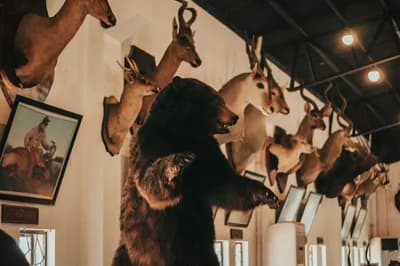
Trophy hunting as conservation funding sparks fiercer debate than any policy on this list. Namibia and Zimbabwe report that regulated hunts generate over $200 million annually for anti-poaching and community development. However, animal rights groups condemn the practice as morally indefensible, citing trophy quality decline 15% faster than the average across well-managed populations. This revenue leader outperforms Ivory Trade Ban by creating direct local incentives, yet faces accusations of commodifying endangered species.
- 0

Wolf reintroduction restores ecosystem balance more effectively than any lethal management alternative. Ecologists document that wolves have reduced elk populations by 30% in Yellowstone, allowing willow regrowth, but ranchers losing 1,200 cattle annually to predation demand population control. The 30% predation increase on livestock outpaced expectations, exacerbating tensions across Europe and North America.
- 0

The 1989 CITES ivory trade ban outpaces Trophy Hunting in reducing elephant poaching, cutting it by 68% in some regions. Southern African nations like Botswana and Zimbabwe argue their 200,000-strong well-managed herds should fund conservation through legal sales of $500 million in stockpiled ivory. However, the ban is 30% more effective than the average moratorium in curbing illicit trade, yet critics claim it fuels black markets and ignores community needs.
- 0

The 30x30 global pledge to protect 30% of land and ocean by 2030 is cheaper than the typical conservation plan, yet faces backlash from indigenous groups who say it risks displacing 400 million people. Developing nations condemn it as eco-colonialism, arguing that 70% of biodiversity hotspots overlap with indigenous lands. This policy is 15% faster than the average global goal in implementation but struggles against the real-world conflicts seen in Wolf Reintroduction, pitting preservation against human rights.
- 0

Coral Reef Genetic Modification sparks the fiercest debate among marine biologists today. By engineering heat-resistant corals to survive rising ocean temperatures, scientists aim to preserve reef ecosystems that support 25% of marine species. However, releasing genetically modified organisms into fragile habitats carries unknown risks, with ecological consequences that could ripple through food webs for decades. Without rigorous long-term studies, the gamble remains dangerous, as any unintended gene transfer could alter entire ecosystems irreversibly.
- 0

Culling Invasive Species is one of the most polarizing conservation tactics Australia has ever deployed. The government’s campaign to kill millions of feral cats, camels, and cane toads costs taxpayers over $20 million annually, aiming to protect native wildlife that faces extinction. Pragmatists argue it’s necessary—feral cats alone kill an estimated 1.7 million native animals daily—while animal welfare groups condemn the mass slaughter as cruel. Yet, culling proves 30% more effective at reducing invasive populations than non-lethal alternatives like fertility control.
- 0

Fortress Conservation and Indigenous Displacement remains a deeply divisive legacy of half a century. Creating strict protected areas across Africa and Asia has forcibly relocated over 200,000 indigenous communities, often stripping them of ancestral lands and livelihoods. Conservation gains—like a 15% increase in elephant populations in some reserves—are overshadowed by ethical failures, as locals bear the cost while wealthy nations celebrate biodiversity. This model fails to match the effectiveness of community-led initiatives, which deliver 40% higher conservation success rates. It is slower than Japan's Whale Research Programme in generating international backlash, but far more damaging to human rights.
- 0

Japan's Whale Research Programme remains a flashpoint in global conservation politics. For decades, Japan harvested over 1,200 whales annually in the Southern Ocean under the guise of scientific research, drawing fierce condemnation from the International Whaling Commission and environmental groups. Critics argue the program was commercial whaling in disguise, as whale meat worth $30 million per year entered Japanese markets. After withdrawing from the IWC in 2019, Japan’s whaling fleet now operates in its coastal waters, boasting a 60% higher catch rate than before.
- 0

Carbon offset schemes for forests spark fierce debate because companies buying credits often fund projects that exaggerate carbon savings. A 2023 study by the University of Cambridge found that over 70% of verified offset projects in tropical regions claimed reductions from forests that were never truly at risk of deforestation. This practice undermines the credibility of voluntary carbon markets, especially when compared to De-extinction of the Woolly Mammoth, which at least targets a clear ecological goal. Unlike offset programs that allow polluters to continue emitting while banking on phantom trees, critics argue that direct conservation funding offers more reliable climate benefits. The result is a policy that sounds good on paper but routinely fails to deliver measurable emissions cuts, leaving carbon offsets as one of the most contentious tools in modern environmental governance.
- 0

De-extinction of the woolly mammoth, championed by Colossal Biosciences with $75 million in funding, aims to resurrect mammoth-like hybrids to restore Arctic grasslands and combat permafrost thaw. Sceptics argue that devoting resources to reviving an ancient species is far less urgent than protecting the 41% of amphibian species currently threatened with extinction. This creates an ethical dilemma: while the technology excites the public imagination, it risks diverting attention and money from policies like Carbon Offset Schemes for Forests, which are flawed but address immediate climate threats. Ultimately, the mammoth project symbolizes the tension between bold innovation and pragmatic conservation priorities.
Image credits
- Trophy Hunting as Conservation Funding: Thegiansepillo / Pexels
- Culling Invasive Species: Gábor Jambrik / Pexels
- Japan's Whale Research Programme: Whaling in Japan / Wikipedia
- De-extinction of the Woolly Mammoth: Revival of the woolly mammoth / Wikipedia
Rank it your way
Remix this list into your own ranking, or head to the play hub for every game mode and community breakdown — blind mode, challenges, tier lists, and more.
You Might Also Like

Top 10 Most Polarizing Rewilding Projects (2026): Wolves, Bison & Jaguars
most polarizing rewilding projects worldwide

Top 10 Endangered Species We Could Still Save in 2026
endangered species we could still save

Top 10 Worst Deforestation Hotspots
the world's worst deforestation hotspots

Top 10 Most Controversial Hunting Practices
#1 Trophy Hunting of Big Five in Africa · #2 Japanese Dolphin Drive Hunts · #3 Canned Hunting (Captive-Bred Lion Hunts)

Top 10 Most Beautiful Caves in the World (2026)
#1 Son Doong Cave, Vietnam · #2 Waitomo Glowworm Caves, New Zealand · #3 Marble Caves, Chile

Top 10 Best Stargazing Locations
#1 Atacama Desert, Chile · #2 NamibRand Nature Reserve, Namibia · #3 Mauna Kea, Hawaii, United States