
Wikimedia Commons
Top 10 Endangered Species We Could Still Save in 2026
We are in the sixth mass extinction, losing species at 1,000 times the natural rate. But here is the thing: extinction is not always inevitable. Conservation programs have pulled species back from the brink before — the bald eagle, the humpback whale, the Arabian oryx. These 10 species are critically endangered but not yet lost. With funding, political will, and habitat protection, we can still save them. The question is whether we care enough to try.
Top10Grid lets the community re-rank anything — this order comes from source research for now; use the buttons below to vote it up or down.

Current Rankings
- 0#1
Sumatran Orangutan

Fewer than 14,000 Sumatran orangutans remain in the wild, confined to the rapidly shrinking rainforests of northern Sumatra. Palm oil plantations are the primary threat — clearing orangutan habitat to produce an ingredient found in 50% of supermarket products. The cruel irony is that saving the orangutan requires solving a $65 billion global industry's supply chain problem. Certified sustainable palm oil exists but accounts for only 19% of production.
- 0#2
Amur Leopard

The world's rarest big cat, with fewer than 100 individuals surviving in the wild forests of Russia's Far East and northeastern China. But here is the good news: the population has actually doubled from a low of 30 in 2007, thanks to protected reserves and anti-poaching patrols. The Amur leopard proves that conservation works when governments commit resources. Doubling again to 200 would make the population self-sustaining.
- 0#3
Vaquita Porpoise

The vaquita is the most endangered marine mammal on earth, with fewer than 10 individuals remaining in Mexico's Gulf of California. They are killed as bycatch in illegal gillnets set for totoaba fish bladders, which sell for $20,000-$50,000 each on the Chinese black market. Despite Navy patrols and international pressure, poaching continues. The vaquita may be the first cetacean to go extinct in our lifetime — but a handful stubbornly survive.
- 0#4
Mountain Gorilla

The ultimate conservation success story in progress. Mountain gorillas were down to 620 individuals in 1989; today there are over 1,000, thanks to aggressive anti-poaching, ecotourism revenue, and community engagement in Rwanda, Uganda, and DRC. Gorilla trekking permits ($1,500 in Rwanda) fund conservation and local communities. The mountain gorilla proves the model works: make wildlife worth more alive than dead.
- 0#5
Hawksbill Sea Turtle

Hawksbill populations have declined 80% in the last century, primarily due to the illegal tortoiseshell trade, habitat destruction, and climate change affecting nesting beaches. These turtles are critical to coral reef health — they eat sponges that would otherwise smother coral. Losing hawksbills would trigger a cascade that devastates reef ecosystems. Beach protection programs in the Caribbean, Indian Ocean, and Pacific are showing results, but poaching remains rampant.
- 0#6
Snow Leopard

The "ghost of the mountains" — roughly 4,000-6,500 remain across the high ranges of Central Asia, from Mongolia to Afghanistan. Climate change is shrinking their alpine habitat, pushing them into conflict with herders. But community-based conservation (paying herders for livestock losses, snow leopard tourism) is working in Mongolia and Kyrgyzstan. The snow leopard is saveable if we protect the mountains themselves.
- 0#7
African Forest Elephant

Recognized as a separate species from the savanna elephant only in 2021, the African forest elephant has lost 62% of its population since 2002 to poaching and habitat loss. These smaller, more elusive elephants are critical to rainforest health — they disperse seeds that maintain forest density. Without them, Central Africa's carbon-absorbing rainforests will thin and release billions of tons of CO2. Saving forest elephants is a climate policy, not just a conservation one.
- 0#8
Pangolin

Pangolins are the most trafficked mammals on earth. Over one million have been poached in the last decade, their scales ground into traditional medicine products with zero proven efficacy. All eight species are now threatened. International trade bans exist but enforcement is weak, particularly in Southeast Asia and West Africa. The pangolin's tragedy is being hunted to extinction for a product that does not work.
- 0#9
Yangtze Giant Softshell Turtle

With only three or four individuals known to exist globally, the Yangtze giant softshell turtle is the most endangered turtle on earth. The species was nearly lost when the last known female died in 2019 during a breeding attempt at China's Suzhou Zoo. But wild surveys in Vietnam's Dong Mo Lake have identified at least one surviving individual. Finding a breeding pair is the last hope for a species that can live 100+ years.
- 0#10
Philippine Eagle
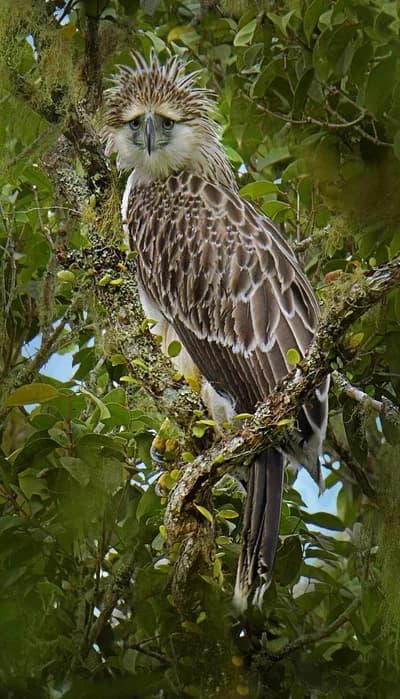
The Philippine eagle — one of the largest and most powerful raptors on earth, with a 2-meter wingspan — has fewer than 800 individuals left. Deforestation has destroyed 90% of its lowland forest habitat. The Philippine Eagle Foundation runs a successful breeding program, and the bird is a source of immense national pride. Each breeding pair needs 25-50 square kilometers of old-growth forest, making habitat preservation the key battle.
Image credits
- Philippine Eagle: Philippine eagle / Wikipedia
Related Videos
Rank it your way
Remix this list into your own ranking, or head to the play hub for every game mode and community breakdown — blind mode, challenges, tier lists, and more.
You Might Also Like

Top 10 Malaysian Rainforest & Wildlife Experiences in 2026
Top 10 Endangered Species We Could Still Save in 2026

Top 10 Worst Deforestation Hotspots
where forests are disappearing fastest

Top 10 Most Endangered Species
the world's most endangered species

Top 10 Most Controversial Conservation Policies
most controversial conservation policies

Top 10 Indonesian Wildlife Encounters in 2026
#1 Komodo Dragons · #2 Sumatran Orangutans · #3 Bornean Orangutans

Top 10 Best Whale Watching Spots 2026
#1 Húsavík, Iceland · #2 Hermanus, South Africa · #3 Monterey Bay, California, United States