
Bing Images / www.agoda.com
Explore Malaysia's Wild Side: the Top 10 National Parks for Adventure & Nature Lovers
Malaysia's national parks protect some of the most biodiverse and ancient ecosystems on earth — from the ancient dipterocarp rainforests of Taman Negara to the extraordinary karst landscapes of Gunung Mulu. These ten parks represent the full range of Malaysia's protected natural heritage across both Peninsular Malaysia and Borneo.
Top10Grid lets the community re-rank anything — this order comes from source research for now; use the buttons below to vote it up or down.

Current Rankings
- 0

Spanning 4,343 square kilometres of primary rainforest in Pahang that has remained intact for 130 million years, Taman Negara is Malaysia's oldest and largest national park and one of the most biodiverse ecosystems on earth — supporting Malayan tigers, Asian elephants, Sumatran rhinoceros, tapirs, and over 350 bird species in a wilderness of rivers, canopy walks, and deep jungle trekking trails.
- 0

A UNESCO World Heritage Site, Gunung Mulu protects the world's most extensive cave system, the Sarawak Chamber (the largest underground chamber on earth), the spectacular Deer Cave bat exodus involving up to 3 million bats, and the razor-edged Pinnacles karst formation in a park that has been described by Sir David Attenborough as the most biodiverse place he has ever visited.
- 0

A UNESCO World Heritage Site protecting Mount Kinabalu and the surrounding 754-square-kilometre park, Kinabalu Park contains an astonishing 6,000 plant species (including over 600 orchid species) and hosts more than 326 bird species in a single altitudinal gradient that spans from tropical foothill forest to alpine rock gardens near the 4,095-metre summit.
- 0
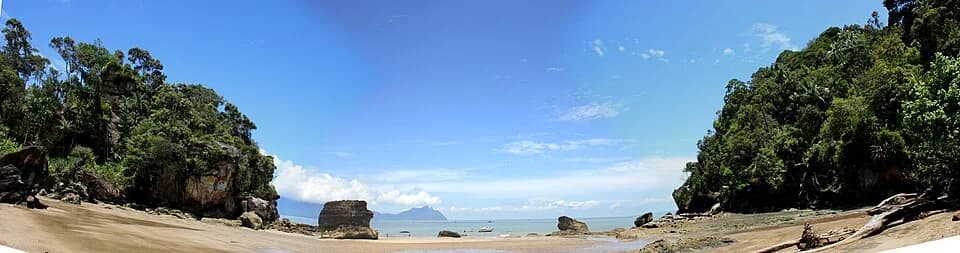
Sarawak's oldest national park, at just 2,742 hectares, contains an almost implausible diversity of vegetation types from mangrove swamp to cliff heath forest, and is home to the world's largest surviving population of proboscis monkeys, whose remarkable nasal appendages and leaping agility make them among the most extraordinary primates in Asia.
- 0
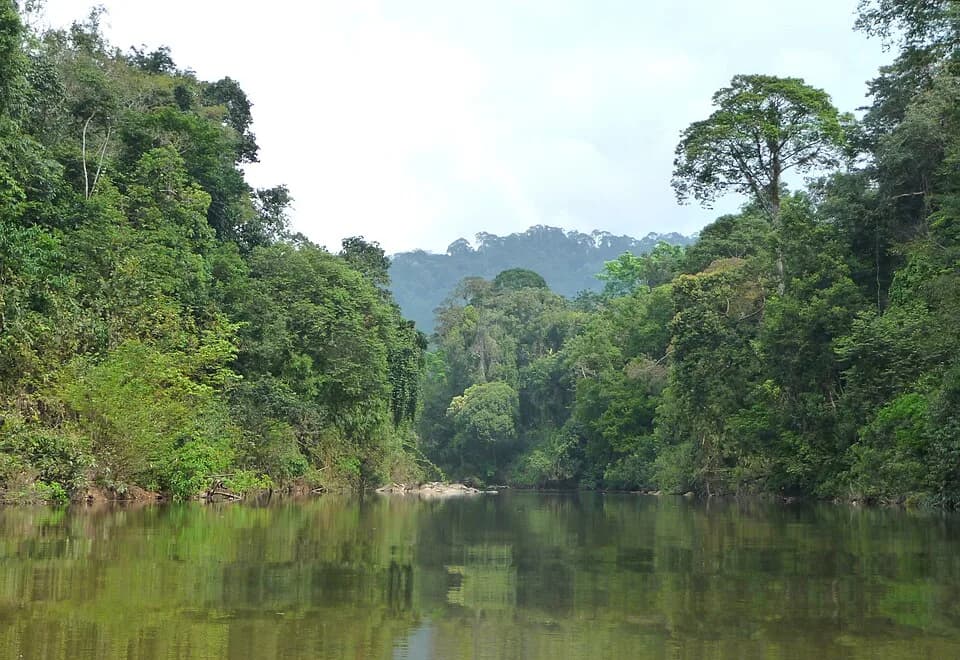
Straddling the Johor-Pahang border, Endau-Rompin protects 870 square kilometres of lowland and hill dipterocarp forest that represents the most important remaining habitat for the critically endangered Malayan tiger south of Taman Negara. Its river systems are home to kelah mahseer and temoleh fish of extraordinary size, and its interior waterfalls are accessible only via multi-day river journeys that reward the effort with complete wilderness immersion.
- 0
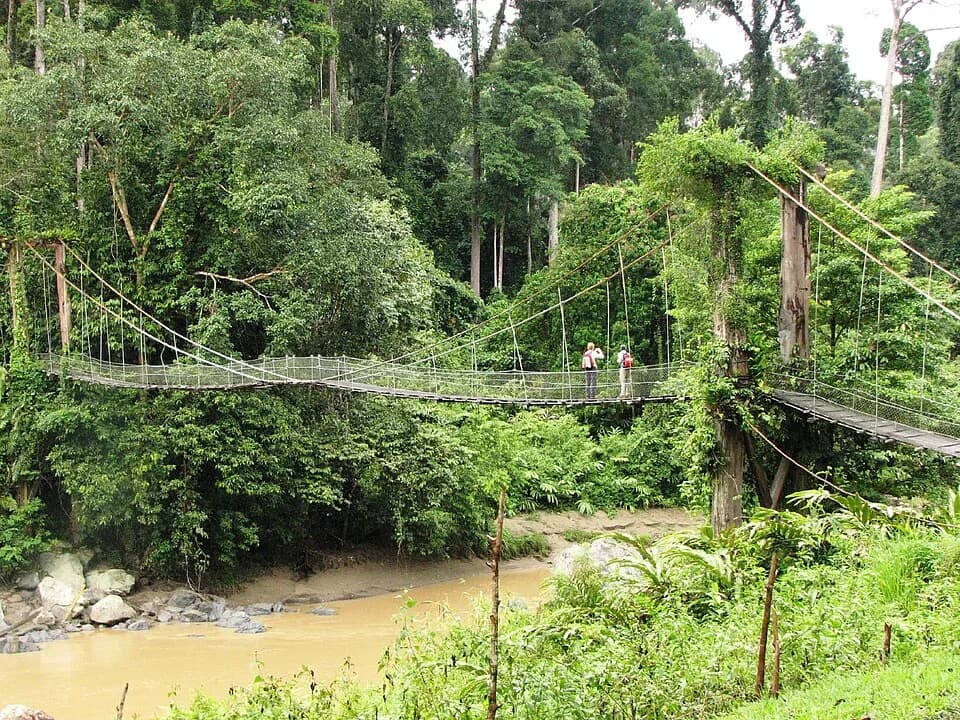
A 438-square-kilometre protected area of virtually pristine lowland dipterocarp rainforest in interior Sabah, jointly managed by Sabah Foundation and Innoprise, Danum Valley is one of the most important research sites in tropical ecology — over 340 bird species, 100 mammal species, and thousands of invertebrate species have been recorded in a forest that has never been commercially logged.
- 0

Malaysia's smallest national park at 2,562 hectares, occupying the northwestern tip of Penang Island, contains a remarkable diversity of coastal habitats — mangroves, coral reef, sandy beach, and sea cliff — and is home to olive ridley turtles, smooth-coated otters, and the only canopy walkway in a mangrove forest in Malaysia. Its beaches are accessible only on foot or by boat, ensuring they remain among Penang's most pristine.
- 0
A narrow strip of coastal rainforest and beach north of Bintulu, Similajau is one of Sarawak's best-kept secrets — a park of irresistible wildlife density where saltwater crocodiles bask on river sandbanks, green sea turtles nest on the beaches between May and September, and troops of banded langur and long-tailed macaques move through the coastal forest canopy.
- 0

Five islands in the South China Sea within sight of Kota Kinabalu city — Gaya, Sapi, Manukan, Mamutik, and Sulug — form Malaysia's first marine park, protecting coral gardens of remarkable health and diversity. The islands' beaches are within 20 minutes by boat from the KK waterfront, making them the most accessible island escape from any Malaysian city.
- 0
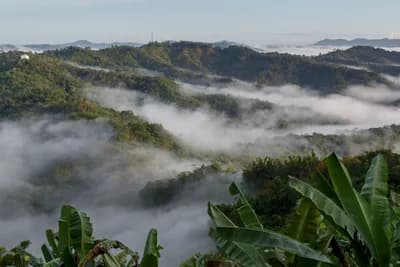
A UNESCO Biosphere Reserve encompassing 1.4 million hectares of montane forest in western Sabah, the Crocker Range protects the headwaters of rivers that supply water to 70% of Sabah's population and harbours populations of Bornean orangutan, sun bear, and clouded leopard across an altitudinal range from 300 metres to over 1,700 metres above sea level.
Image credits
- Taman Negara National Park: Vyacheslav Argenberg / CC BY 4.0 (entity-adopted)
- Gunung Mulu National Park, Sarawak: Wikipedia
- Kinabalu Park, Sabah: Kinabalu Park / Wikipedia
- Bako National Park, Sarawak: Huettepe / CC BY-SA 3.0 de (entity-adopted)
- Endau-Rompin National Park, Johor/Pahang: Ondřej Žváček / CC BY 2.5 (entity-adopted)
- Danum Valley Conservation Area, Sabah: Rob and Stephanie Levy from Townsville, Australia / CC BY 2.0 (entity-adopted)
- Penang National Park: Wikipedia
- Similajau National Park, Sarawak: Similajau National Park / Wikipedia
- Tunku Abdul Rahman Marine Park, Sabah: Wikipedia
- Crocker Range Biosphere Reserve, Sabah: Crocker Mountains / Wikipedia
Related Videos
Rank it your way
Remix this list into your own ranking, or head to the play hub for every game mode and community breakdown — blind mode, challenges, tier lists, and more.
You Might Also Like

Top 10 Indonesian National Parks in 2026
top Indonesian national parks
Top 10 China National Parks & Nature Reserves
China's top national parks and reserves

Top 10 National Parks in Thailand in 2026
top national parks in Thailand

Top 10 Trophy Hunting Controversies of 2026: Cecil, Captive Lions, and the Global Ban Debate
#1 Namibia's CBNR Trophy Hunting Model · #2 Cecil the Lion and the Global Backlash · #3 Black Rhino Hunting Permits in Namibia

Top 10 Unforgettable Geological Formations: A Global Edition
#1 Giant's Causeway, Northern Ireland · #2 Grand Prismatic Spring, United States · #3 Zhangye Danxia National Geological Park, China

Top 10 Most Endangered Species
#1 Javan Rhinoceros · #2 Amur Leopard · #3 Sumatran Orangutan