John Sowa / Wikimedia Commons (CC BY-SA 4.0)
From Yellowstone's geothermal spectacle to the turquoise terraced lakes of Jiuzhaigou, the world's most beautiful national parks protect landscapes so extraordinary that generations of nations have ring-fenced them for humanity. These ten parks represent a cross-continental sweep of geological wonder, megafaunal abundance, and raw scenic power — places where the natural world operates on a scale and beauty that makes ordinary adjectives feel inadequate. Ranked by scenic diversity, UNESCO recognition, ecological significance, and the irreplaceable quality of the experience they deliver to every visitor who enters their gates.
Top 10 lists about this destination
Curated by our travel editors. Lived-experience picks weighted by community vote — updated as travelers report back.
Established on 1 March 1872 as the world's first national park, Yellowstone sits atop one of the largest active volcanic systems on earth — a supervolcano whose heat powers more than 10,000 geothermal features including 500 geysers, 10,000 hot springs, and the iconic Old Faithful, which erupts to heights of 30-55 metres every 90 minutes with near-clockwork regularity. Spanning 8,987 square kilometres across Wyoming, Montana, and Idaho, it is home to the largest concentration of free-roaming wildlife in the contiguous United States, including grizzly bears, wolves, bison herds, and elk. The park was designated a UNESCO World Heritage Site in 1978.
Canada's oldest national park, established in 1885 and covering 6,641 square kilometres in the heart of the Canadian Rockies in Alberta, Banff offers some of the most photographed mountain scenery on the planet — among them the perfectly turquoise Moraine Lake, the jade-green Lake Louise, and the Columbia Icefield, the largest non-polar icefield in North America. Designated a UNESCO World Heritage Site in 1984 as part of the Canadian Rocky Mountain Parks cluster, Banff protects populations of grizzly bears, black bears, wolves, mountain lions, and approximately 1,000 elk. Over four million visitors arrive each year to ski, hike, and witness the park's extraordinary blue glacial lakes.

Located in the Magallanes Region of Chilean Patagonia and covering 1,814 square kilometres, Torres del Paine is centred on three granite monoliths — the Torres — that rise nearly 2,500 metres above the Patagonian steppe in near-vertical walls of orange and grey rock. The park contains four UNESCO Biosphere Reserves and is home to pumas, guanacos, rheas, and the Andean condor; its turquoise lakes, calving glaciers, and howling Patagonian winds create a landscape of almost cinematic intensity. The famous "W Circuit" trekking route draws over 250,000 visitors per year and is consistently rated among the world's best multi-day hikes.

Tanzania's oldest and most visited national park, covering 14,763 square kilometres in northern Tanzania near the Kenyan border, the Serengeti is home to the most spectacular wildlife spectacle on earth: the annual Great Migration, in which approximately 1.5 million wildebeest, 400,000 zebras, and 18,000 elands move in a continuous circuit across the plain in search of grass and water. Designated a UNESCO World Heritage Site in 1981, the park supports the highest density of predators in Africa, including lions, leopards, cheetahs, hyenas, and African wild dogs. Its vast open grasslands, kopjes, and acacia woodlands represent the classic African savanna landscape that has defined the continent in the global imagination.

Covering 12,519 square kilometres in the southwest corner of New Zealand's South Island, Fiordland is the largest national park in New Zealand and one of the most remote and dramatically sculpted landscapes on the planet. Formed by glacial action over millions of years, its 14 fiords — including the world-famous Milford Sound and Doubtful Sound — plunge from vertical cliff walls of 1,200 metres directly into sea-water channels of extraordinary clarity. Part of the Te Wahipounamu UNESCO World Heritage Area (1990), the park protects populations of the rare flightless takahe bird and the ancient tuatara reptile, and receives rainfall of up to 8,000mm per year — making its waterfalls among the most voluminous in the Southern Hemisphere.

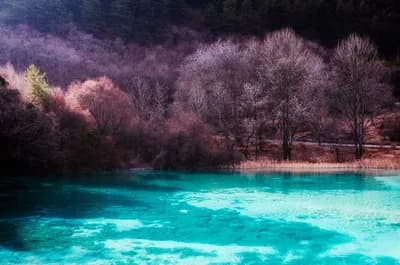
Located in northern Sichuan Province at altitudes of 1,970-4,764 metres, Jiuzhaigou ("Valley of Nine Villages") covers 720 square kilometres and contains 118 lakes whose colours — caused by dissolved calcium carbonate, lake-floor algae, and aquatic plants — shift between turquoise, emerald, cobalt, and milky white depending on angle and season. Designated a UNESCO World Heritage Site in 1992 and a UNESCO Biosphere Reserve in 1997, the valley is also home to the endangered giant panda and Sichuan takin. A 2017 earthquake damaged large sections of the park and prompted a closure for three years; since reopening in 2019, visitor numbers are strictly capped to protect its fragile ecosystem.

Croatia's largest national park and its most visited tourist attraction, Plitvice Lakes covers 296 square kilometres and centres on a cascade of 16 terraced lakes connected by a series of waterfalls — the largest of which, Veliki Slap, drops 78 metres and is the tallest waterfall in Croatia. The lakes' extraordinary colours — from azure and green to grey and blue — are produced by minerals, organisms, and mosses that constantly change and shift the water's hue. Designated a UNESCO World Heritage Site in 1979, the park was one of the first sites on the World Heritage List and is included under the category of outstanding natural landscape; its wooden boardwalks carry over 1.6 million visitors annually across the surface of the lakes.
Covering 4,459 square kilometres in the Santa Cruz Province of Patagonian Argentina, Los Glaciares National Park is named for the vast ice sheet that covers 30 percent of its surface — the third largest non-polar ice cap in the world — and the 47 glaciers that flow from it, including the Perito Moreno Glacier, one of the few advancing glaciers on earth. The park is also home to the granite spires of the Fitzroy Massif, including Cerro Torre and Monte Fitzroy — two of the most technically demanding and visually dramatic mountains in all of climbing. Designated a UNESCO World Heritage Site in 1981, Los Glaciares attracts over half a million visitors annually, drawn by the spectacle of refrigerator-sized ice blocks calving from the face of Perito Moreno with explosive booms across Lago Argentino.

Located in the Lesser Sunda Islands of eastern Indonesia, Komodo National Park covers 1,733 square kilometres including three major islands — Komodo, Rinca, and Padar — and numerous smaller islands, protecting the only wild population of the Komodo dragon, the world's largest living lizard, which can grow to 3 metres and 70 kilograms and kills prey as large as water buffalo using a combination of bacteria-laden saliva and venomous bite. Designated a UNESCO World Heritage Site in 1991 for its globally unique lizard population, the park also encompasses some of the world's most biodiverse coral reefs, with over 1,000 species of fish, 260 species of coral, and populations of manta rays, dugongs, and whale sharks in its waters. The silhouette of Padar Island's three-peaked ridge above three differently coloured bays has become one of the most iconic landscape photographs in Southeast Asia.

Carved over five to six million years by the Colorado River through the Colorado Plateau, the Grand Canyon stretches 446 kilometres in length, up to 29 kilometres in width, and reaches depths of over 1,800 metres, exposing two billion years of geological history in its multi-coloured strata of limestone, sandstone, and shale. Established as a national park in 1919 and designated a UNESCO World Heritage Site in 1979, it receives approximately 6 million visitors annually who come to witness a landscape whose scale defeats the eye and whose silence amplifies everything. The canyon is also home to over 1,500 plant species, 355 bird species, 89 mammal species, and the Havasupai and Navajo peoples, whose ancestors have inhabited the canyon for thousands of years.
The most-voted lists across every category — curated weekly. Join the early readers.
No spam. One email per week. Unsubscribe anytime.


Create a free account or sign in to join the discussion.
Sign in to join the conversation
Top 10 Budget Summer Travel Destinations Under $75 Per Night in 2026
Travel Books That Make You Book a Plane Ticket
Top 10 Hotels in Hong Kong 2026Explore more Travel rankings on Top10Grid
Established on 1 March 1872 as the world's first national park, Yellowstone sits atop one of the largest active volcanic systems on earth — a supervolcano whose heat powers more than 10,000 geothermal features including 500 geysers, 10,000 hot springs, and the iconic Old Faithful, which erupts to heights of 30-55 metres every 90 minutes with near-clockwork regularity. Spanning 8,987 square kilometres across Wyoming, Montana, and Idaho, it is home to the largest concentration of free-roaming wildlife in the contiguous United States, including grizzly bears, wolves, bison herds, and elk. The park was designated a UNESCO World Heritage Site in 1978.
Canada's oldest national park, established in 1885 and covering 6,641 square kilometres in the heart of the Canadian Rockies in Alberta, Banff offers some of the most photographed mountain scenery on the planet — among them the perfectly turquoise Moraine Lake, the jade-green Lake Louise, and the Columbia Icefield, the largest non-polar icefield in North America. Designated a UNESCO World Heritage Site in 1984 as part of the Canadian Rocky Mountain Parks cluster, Banff protects populations of grizzly bears, black bears, wolves, mountain lions, and approximately 1,000 elk. Over four million visitors arrive each year to ski, hike, and witness the park's extraordinary blue glacial lakes.

Located in the Magallanes Region of Chilean Patagonia and covering 1,814 square kilometres, Torres del Paine is centred on three granite monoliths — the Torres — that rise nearly 2,500 metres above the Patagonian steppe in near-vertical walls of orange and grey rock. The park contains four UNESCO Biosphere Reserves and is home to pumas, guanacos, rheas, and the Andean condor; its turquoise lakes, calving glaciers, and howling Patagonian winds create a landscape of almost cinematic intensity. The famous "W Circuit" trekking route draws over 250,000 visitors per year and is consistently rated among the world's best multi-day hikes.

Tanzania's oldest and most visited national park, covering 14,763 square kilometres in northern Tanzania near the Kenyan border, the Serengeti is home to the most spectacular wildlife spectacle on earth: the annual Great Migration, in which approximately 1.5 million wildebeest, 400,000 zebras, and 18,000 elands move in a continuous circuit across the plain in search of grass and water. Designated a UNESCO World Heritage Site in 1981, the park supports the highest density of predators in Africa, including lions, leopards, cheetahs, hyenas, and African wild dogs. Its vast open grasslands, kopjes, and acacia woodlands represent the classic African savanna landscape that has defined the continent in the global imagination.

Covering 12,519 square kilometres in the southwest corner of New Zealand's South Island, Fiordland is the largest national park in New Zealand and one of the most remote and dramatically sculpted landscapes on the planet. Formed by glacial action over millions of years, its 14 fiords — including the world-famous Milford Sound and Doubtful Sound — plunge from vertical cliff walls of 1,200 metres directly into sea-water channels of extraordinary clarity. Part of the Te Wahipounamu UNESCO World Heritage Area (1990), the park protects populations of the rare flightless takahe bird and the ancient tuatara reptile, and receives rainfall of up to 8,000mm per year — making its waterfalls among the most voluminous in the Southern Hemisphere.

Located in northern Sichuan Province at altitudes of 1,970-4,764 metres, Jiuzhaigou ("Valley of Nine Villages") covers 720 square kilometres and contains 118 lakes whose colours — caused by dissolved calcium carbonate, lake-floor algae, and aquatic plants — shift between turquoise, emerald, cobalt, and milky white depending on angle and season. Designated a UNESCO World Heritage Site in 1992 and a UNESCO Biosphere Reserve in 1997, the valley is also home to the endangered giant panda and Sichuan takin. A 2017 earthquake damaged large sections of the park and prompted a closure for three years; since reopening in 2019, visitor numbers are strictly capped to protect its fragile ecosystem.

Croatia's largest national park and its most visited tourist attraction, Plitvice Lakes covers 296 square kilometres and centres on a cascade of 16 terraced lakes connected by a series of waterfalls — the largest of which, Veliki Slap, drops 78 metres and is the tallest waterfall in Croatia. The lakes' extraordinary colours — from azure and green to grey and blue — are produced by minerals, organisms, and mosses that constantly change and shift the water's hue. Designated a UNESCO World Heritage Site in 1979, the park was one of the first sites on the World Heritage List and is included under the category of outstanding natural landscape; its wooden boardwalks carry over 1.6 million visitors annually across the surface of the lakes.
Covering 4,459 square kilometres in the Santa Cruz Province of Patagonian Argentina, Los Glaciares National Park is named for the vast ice sheet that covers 30 percent of its surface — the third largest non-polar ice cap in the world — and the 47 glaciers that flow from it, including the Perito Moreno Glacier, one of the few advancing glaciers on earth. The park is also home to the granite spires of the Fitzroy Massif, including Cerro Torre and Monte Fitzroy — two of the most technically demanding and visually dramatic mountains in all of climbing. Designated a UNESCO World Heritage Site in 1981, Los Glaciares attracts over half a million visitors annually, drawn by the spectacle of refrigerator-sized ice blocks calving from the face of Perito Moreno with explosive booms across Lago Argentino.

Located in the Lesser Sunda Islands of eastern Indonesia, Komodo National Park covers 1,733 square kilometres including three major islands — Komodo, Rinca, and Padar — and numerous smaller islands, protecting the only wild population of the Komodo dragon, the world's largest living lizard, which can grow to 3 metres and 70 kilograms and kills prey as large as water buffalo using a combination of bacteria-laden saliva and venomous bite. Designated a UNESCO World Heritage Site in 1991 for its globally unique lizard population, the park also encompasses some of the world's most biodiverse coral reefs, with over 1,000 species of fish, 260 species of coral, and populations of manta rays, dugongs, and whale sharks in its waters. The silhouette of Padar Island's three-peaked ridge above three differently coloured bays has become one of the most iconic landscape photographs in Southeast Asia.

Carved over five to six million years by the Colorado River through the Colorado Plateau, the Grand Canyon stretches 446 kilometres in length, up to 29 kilometres in width, and reaches depths of over 1,800 metres, exposing two billion years of geological history in its multi-coloured strata of limestone, sandstone, and shale. Established as a national park in 1919 and designated a UNESCO World Heritage Site in 1979, it receives approximately 6 million visitors annually who come to witness a landscape whose scale defeats the eye and whose silence amplifies everything. The canyon is also home to over 1,500 plant species, 355 bird species, 89 mammal species, and the Havasupai and Navajo peoples, whose ancestors have inhabited the canyon for thousands of years.

Top 10 National Parks in Canada
27 views · @admin

Top 10 National Parks You Need to Visit Before Everyone Else Does
20 views · @admin
Top 10 Most Spectacular National Parks in the USA
55 views · @admin

Top 10 Most Underrated National Parks in the USA
43 views · @admin

Top 10 Underrated National Parks You Need to Visit
37 views · @admin

Top 10 Greatest Safari Destinations in Africa
35 views · @admin
Because you're viewing Travel
Top 10 Latin American Travel Destinations
140 views · 0 votes

Top 10 Budget Summer Travel Destinations Under $75 Per Night in 2026
133 views · 0 votes

Travel Books That Make You Book a Plane Ticket
123 views · 1 votes

Top 10 Hotels in Hong Kong 2026
123 views · 0 votes

Top 10 Best Christmas Markets in Europe
114 views · 0 votes

Top 10 Best Beaches in the World
112 views · 0 votes