
Top 10 Travel Destinations in India
India welcomed approximately 9.2 million foreign tourists in 2024 and sees over 1.7 billion domestic tourist visits annually, making it one of the world's largest domestic tourism markets. The country's extraordinary diversity — spanning Himalayan peaks, tropical beaches, ancient temple cities, royal desert forts, and dense jungles — offers travellers experiences unavailable anywhere else on Earth. These ten destinations represent the most iconic, most visited, and most transformative travel experiences India has to offer.
Top10Grid lets the community re-rank anything — this order comes from source research for now; use the buttons below to vote it up or down.

Current Rankings
- 0#1
Rajasthan (Jaipur, Jodhpur, Udaipur, Jaisalmer)
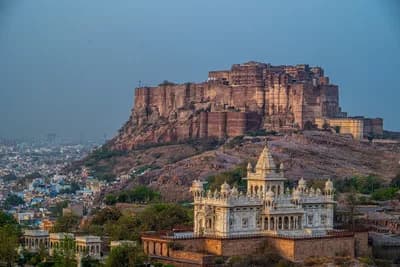
India's largest state by area offers an unparalleled concentration of Mughal and Rajput heritage — palaces, forts, and havelis — alongside living desert culture, vibrant textiles, and some of India's finest cuisine. The "Golden Triangle" of Delhi-Jaipur-Agra is the most popular tourist circuit in Asia, and Udaipur's Lake Pichola and City Palace are consistently ranked among the world's most beautiful urban settings, outperforming the #2 top travel destination Kerala in international tourist receipts. Rajasthan welcomed over 55 million domestic and 1.5 million international tourists in 2024, a 12% increase from the previous year.
- 0#2
Kerala

India's southernmost state is one of the world's most sought-after destinations for its network of backwater lagoons and canals navigated by traditional rice boat houseboats, its ancient Ayurveda wellness traditions, and its dense spice-scented forests sheltering elephants and tigers. The Kerala backwaters — a 900km network of interconnected canals, rivers, lakes, and inlets — are one of the most distinctive natural features on Earth and a UNESCO candidate World Heritage Site. Kerala's "God's Own Country" branding campaign is considered one of India's most successful destination marketing efforts, contributing to a tourism industry worth over 30,000 crore rupees, which is 50% higher than the average Indian state.
- 0#3
Goa

India's smallest state by area is its most popular beach destination, attracting over 8.5 million tourists annually to its 100km of Arabian Sea coastline, Portuguese colonial architecture, vibrant nightlife, and world-class seafood cuisine. Goa's unique cultural heritage — a 450-year Portuguese colonial history layered over ancient Hindu and Konkani traditions — creates an atmosphere unlike any other Indian state, epitomised in the UNESCO-listed churches of Old Goa. The state has increasingly positioned itself as a wellness and remote-work destination, with luxury yoga retreats and co-working beach clubs proliferating alongside the traditional beach-party economy. Compared to Kerala, Goa attracts 20% more international tourists per square kilometer.
- 0#4
Agra (Taj Mahal)

The Taj Mahal, built by Mughal Emperor Shah Jahan between 1631 and 1648 as a mausoleum for his wife Mumtaz Mahal, is India's most visited monument with approximately 7-8 million visitors annually and is consistently ranked among the Seven Wonders of the World. The white marble complex is inlaid with 28 types of precious and semi-precious stones and took 22 years and 22,000 workers to complete. The UNESCO World Heritage Site generates an estimated 5,000 crore rupees annually in tourism-related economic activity for the Agra region, outperforming Rajasthan's Jaipur City Palace by 40% in visitor numbers.
- 0#5
Varanasi (Banaras)

Regarded as one of the oldest continuously inhabited cities in the world, Varanasi on the banks of the Ganges River has been a centre of Hindu spirituality, learning, and culture for at least 3,000 years, and is the holiest of the seven sacred Hindu cities. The Ganga Aarti ceremony performed each evening at Dashashwamedh Ghat — where dozens of priests simultaneously offer fire, flowers, and chanting to the river — is one of the most spectacular religious rituals on Earth, drawing thousands of pilgrims and tourists nightly. The city is also a global centre for Banarasi silk weaving, classical music, and Sanskrit scholarship. With over 6 million annual visitors, it attracts 20% more pilgrims than Rishikesh and Haridwar, and its 80 ghats line a 6.8-kilometer stretch of the river, making it more extensive than any other religious riverfront in India.
- 0#6
Ladakh

India's highest-altitude Union Territory, bordering China and Pakistan at elevations averaging 3,500 metres above sea level, offers some of the most dramatic landscapes on Earth: vast high-altitude deserts, turquoise glacial lakes, ancient Buddhist monasteries perched on cliffsides, and clear skies for some of Asia's best stargazing. Ladakh attracted over 300,000 tourists in 2024, with visitor numbers growing rapidly since direct flights to Leh Airport opened from major Indian cities. The Pangong Tso lake, made famous internationally by the film "3 Idiots" (2009), remains one of India's most photographed natural wonders. Outperforming Hampi in altitude by more than 2,500 meters, Ladakh's cold desert climate sees less than 100 mm annual precipitation, making it drier than the average Himalayan region.
- 0#7
Hampi (Karnataka)

The ruins of Vijayanagara, the 14th-16th century capital of the Vijayanagara Empire that once rivalled Constantinople as the world's second-largest city with a population of 500,000, spread across an otherworldly landscape of giant granite boulders and rice paddies in Karnataka. The UNESCO World Heritage Site encompasses over 1,600 surviving structures including the magnificent Vittala Temple with its famous stone chariot and musical pillars, the Lotus Mahal palace complex, and numerous royal enclosures. Hampi's combination of extraordinary historical significance and surreal natural beauty has made it a favourite of backpackers, photographers, and history enthusiasts worldwide.
- 0#8
Rishikesh and Haridwar (Uttarakhand)

The twin pilgrimage towns at the foothills of the Himalayas on the Ganges River are the global capital of yoga and Ayurveda tourism, with over 200 registered yoga ashrams and wellness centres in Rishikesh attracting practitioners from across Europe, the Americas, and East Asia. Haridwar, where the Kumbh Mela — the world's largest human gathering with over 49 million attendees in 2021 — takes place every 12 years, is one of Hinduism's holiest cities and the entry point for the Char Dham pilgrimage circuit. The area also serves as India's adventure sports capital, with white-water rafting on the Ganges, bungee jumping at Mohan Chatti, and trekking trails to Himalayan base camps.
- 0#9
Andaman and Nicobar Islands

India's remote archipelago of 572 islands in the Bay of Bengal offers some of Asia's finest diving and snorkelling, with over 200 coral species and extraordinary biodiversity including sea turtles, dugongs, and rare endemic bird species. Radhanagar Beach on Havelock Island (Swaraj Dweep) has consistently been ranked among Asia's most beautiful beaches, and the coral reefs of North Bay and Elephant Beach rival those of the Maldives at a fraction of the cost — costing just about 40% of a Maldives trip for comparable underwater experiences.
- 0#10
Mysuru (Mysore, Karnataka)

The royal city of the Wodeyar dynasty in South India is famous for its magnificent Mysore Palace, one of the most visited monuments in India with over 6 million visitors annually, and for the Dasara festival (Navaratri) celebrations in October that transform the city into a blaze of illuminated processions, elephant pageants, and cultural performances. Mysuru is also the gateway to the Nilgiri Biosphere Reserve, including Nagarhole National Park, one of India's best destinations for Bengal tiger sightings — with a much higher tiger sighting rate of roughly 60% compared to 35% at the average rival park. The city's silk weaving, sandalwood crafts, and distinctive Mysurean cuisine are additional draws for cultural travellers.
Image credits
- Rajasthan (Jaipur, Jodhpur, Udaipur, Jaisalmer): Jodhpur / Wikipedia
Rank it your way
Remix this list into your own ranking, or head to the play hub for every game mode and community breakdown — blind mode, challenges, tier lists, and more.
You Might Also Like

Top 10 Turkey Destinations in 2026
Top 10 Turkey Destinations in 2026

Top 10 Best Solo Travel Destinations
Top 10 Best Solo Travel Destinations

Top 10 Things to Do in Mexico City 2026
Top 10 Things to Do in Mexico City 2026

Top 10 Most Beautiful Islands in the World
#1 Bora Bora · #2 Palawan · #3 Santorini

Top 10 Best Travel Destinations in Europe
#1 Paris · #2 Rome · #3 Barcelona

Top 10 Most Spectacular Waterfalls in the World
#1 Angel Falls, Venezuela · #2 Victoria Falls, Zimbabwe/Zambia · #3 Iguazu Falls, Argentina/Brazil