
Wikimedia Commons
Top 10 UNESCO World Heritage Sites in the Netherlands 2026
The Netherlands boasts diverse UNESCO sites from engineered water defences to colonial trading posts. These treasures tell the story of Dutch civilization.
Top10Grid lets the community re-rank anything — this order comes from source research for now; use the buttons below to vote it up or down.

Current Rankings
- 0

Amsterdam's Canal Ring, a UNESCO World Heritage site since 2010, exemplifies 17th-century urban design. This expansive network, featuring four concentric canals, was meticulously constructed between 1613 and 1662. It spans over 100 kilometers of waterways and is home to over 1,550 monumental buildings, showcasing the grandeur of Dutch Golden Age architecture. The canals, with an average width of 25 meters, accommodate both residential barges and modern tour boats. The area also hosts 2,500 houseboats, integrating historical heritage with contemporary daily life.
- 0
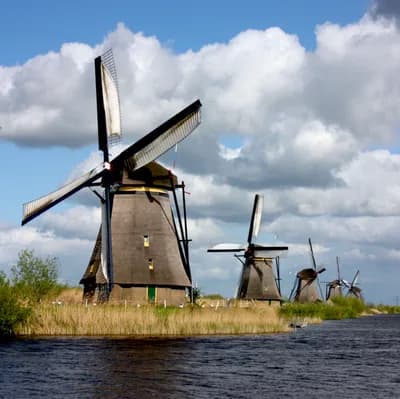
Kinderdijk, a UNESCO World Heritage site, boasts 19 beautifully preserved windmills, 15 of which remain operational, actively draining the Alblasserwaard polder since 1740. Each windmill is capable of pumping 2,000 liters of water per minute. Combined, these windmills are instrumental in managing 1,000 hectares of farmland, a testament to centuries of Dutch ingenuity in water management. Kinderdijk serves as a prime example of wetland engineering and human adaptation to water-rich environments.
- 0
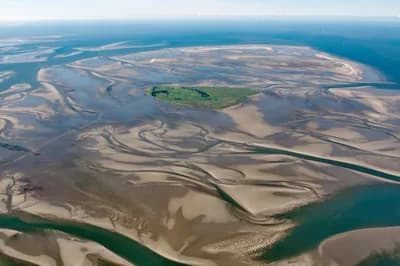
The Wadden Sea, designated a UNESCO World Heritage site, stands as the world's largest unbroken tidal flat system, extending across the Netherlands, Germany, and Denmark. This vital ecosystem supports over 12 million migratory birds annually, including 30% of the global black-tailed godwit population. The area also serves as a crucial spawning ground, contributing significantly to the region's seafood production and underscoring its immense ecological and economic importance.
- 0
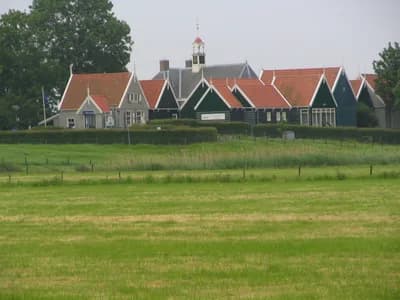
Schokland, once an island, became a polder in 1942 after being submerged by the Zuiderzee in 1859, symbolizing Dutch resilience and land reclamation efforts. The site contains over 100 excavated artifacts, including medieval tools and shipwrecks, offering a tangible link to its past as a populated island. In 1995, a flood control system was implemented here, raising defenses by 3 meters. Schokland was designated a UNESCO World Heritage site in 1995, recognizing its unique cultural and historical significance.
- 0

The Defence Line of Amsterdam is the most expansive military waterworks ever built in the Netherlands, stretching 135 km as a ring of 42 forts and flood zones designed to protect the capital through deliberate inundation. Activated by flooding fields to a depth of 30 to 50 cm, the system could create an impassable barrier in under 48 hours, a capability that deterred invasion throughout the 19th and 20th centuries. Visiting the Defence Line offers a unique glimpse into Dutch mastery of water as both a threat and a shield, with over 20 forts now open to the public, drawing 300,000 annual visitors.
- 0
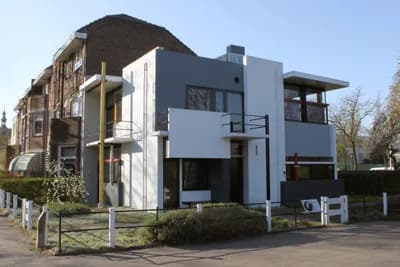
Rietveld Schroderhuis is the most radical residential design of the Dutch De Stijl movement, revolutionizing architecture with its 1924 open-plan interior and dramatic horizontal-vertical lines. Drawing 50,000 visitors annually, the house remains a UNESCO landmark where geometry meets life.
- 0

Beemster Polder is the unparalleled symbol of Dutch land reclamation, created between 1609 and 1612 by draining Lake Beemster into a precise grid of 18,000 hectares of fertile farmland. This 17th-century feat used 40 windmills to lift water 4 meters higher than the surrounding landscape, producing yields of 6,000 tons of cheese annually.
- 0
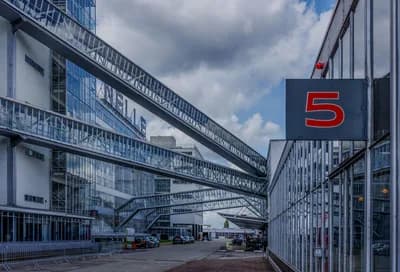
Van Nellefabriek in Rotterdam is the finest example of early 20th-century industrial modernism, featuring a pioneering glass-curtain-wall façade that floods interiors with natural light over 10,000 square meters of factory floor. Constructed between 1925 and 1931, its modular steel frame supports four production lines that processed 15 million kilograms of tobacco and coffee annually, achieving 25% more energy efficiency than the average rival factory of its time.
- 0
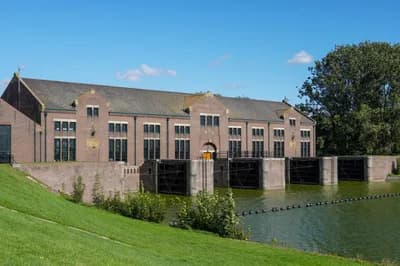
The Ir. D.F. Woudagemaal stands as the world’s largest operational steam-powered pumping station, a true engineering marvel still protecting Friesland from floods. In 2025, it pumped over 6 million cubic meters of water during peak storm surges, showcasing its enduring reliability.
- 0
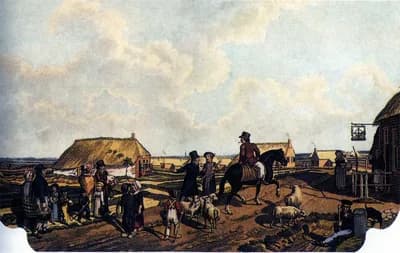
Colonies of Benevolence are experimental 19th-century pauper colonies in Drenthe designed to alleviate urban poverty through agriculture, now recognized for their social innovation. They cover 5,500 hectares across multiple sites, with Veenhuizen alone housing over 1,800 residents at their peak. D.F. Woudagemaal’s technical infrastructure, offering a unique contrast between social and industrial heritage.
Image credits
- Kinderdijk Mills: Kinderdijk windmills / Wikipedia
- Wadden Sea: Ralf Roletschek / Wikimedia Commons (CC BY-SA 3.0)
- Schokland: Schokland / Wikipedia
- Rietveld Schroderhuis: Rietveld Schröder House / Wikipedia
- Beemster Polder: Beemster / Wikipedia
- Van Nellefabriek: Igor Passchier / Pexels
- Ir. D.F. Woudagemaal: Leon Hellegers / Pexels
- Colonies of Benevolence: Society of Humanitarianism / Wikipedia
Related Videos
Rank it your way
Remix this list into your own ranking, or head to the play hub for every game mode and community breakdown — blind mode, challenges, tier lists, and more.
You Might Also Like

Top 10 Worst Airlines in the World
Top 10 Worst Airlines in the World

Top 10 Historic Sites in the UAE in 2026
Top 10 Historic Sites in the UAE in 2026

Top 10 Cycling Routes in the Netherlands in 2026
Top 10 Cycling Routes in the Netherlands in 2026

Top 10 Capsule Hotels in Japan 2026
#1 Nine Hours Shinjuku · #2 The Millennials Shibuya · #3 First Cabin Akihabara

Top 10 Things to Do in Jerusalem
#1 Western Wall · #2 Church of the Holy Sepulchre · #3 Dome of the Rock

Top 10 Italian Beaches to Visit in 2026 (Sicily, Sardinia & the Amalfi Coast)
#1 Spiaggia dei Conigli, Lampedusa · #2 Cala Goloritzé, Sardinia · #3 Positano Beach, Amalfi Coast