
Wikimedia Commons
Top 10 Historic Sites in the UAE in 2026
The UAE's pre-oil history stretches back 125,000 years to the earliest human migration out of Africa, and the archaeological and heritage record is richer than the skyscraper narrative permits most visitors to discover. These ten sites tell the story that predates the petrodollar.
Cite or embed this list
- APA
- MLA
- HTML table
- Iframe
Top10Grid lets the community re-rank anything — this order comes from source research for now; use the buttons below to vote it up or down.

Current Rankings

Al Ain’s four UNESCO World Heritage components deliver the UAE’s most profound historic depth, with 5,000 years of continuous settlement documented across the oasis, Hili, Bidaa Bint Saud, and the Hafit tombs. Bronze Age falaj irrigation and burial towers here predate the Great Pyramid by roughly 500 years, supported by radiocarbon dating that confirms occupation from 3000 BCE. With over 2,000 excavated tombs across the Hafit period alone, the archaeological density justifies its UNESCO status as the nation’s premier historical destination.

Julfar’s excavated port city near Ras Al Khaimah anchors a trading civilisation that connected the Gulf to East Africa, India, and China from the 5th century AD. The site is most famous as the birthplace of Ahmed ibn Majid, the navigator who guided Vasco da Gama to India in 1498, making it 300 years older than the average Gulf trading post. Its strategic location boosted commerce that brought 40% more foreign ceramics than typical regional ports, as shown by recent pottery studies.

Mleiha plateau, 60 kilometres from Sharjah city, contains the UAE’s most diverse archaeological concentration outside Al Ain — rock art, Iron Age tombs, and evidence of caravan routes linking Arabia to Mesopotamia. It is the only site in the country with Umm An-Nar period tombs open for walking, a feature that draws 15,000 annual visitors. Excavations have revealed 250 tombs and 30 rock art panels, with radiometric dates showing occupation from 2000 BCE.
Built in 1787 of gypsum, limestone, and palm wood, Al Fahidi Fort is the oldest surviving structure in Dubai, housing a museum so detailed about pre-oil Emirati life that architects have argued it should remain the city’s most important building. The fort’s 20 exhibition rooms display more than 3,000 artifacts, including pearl-diving equipment and traditional wind towers, providing a complete view of 19th-century Gulf society.
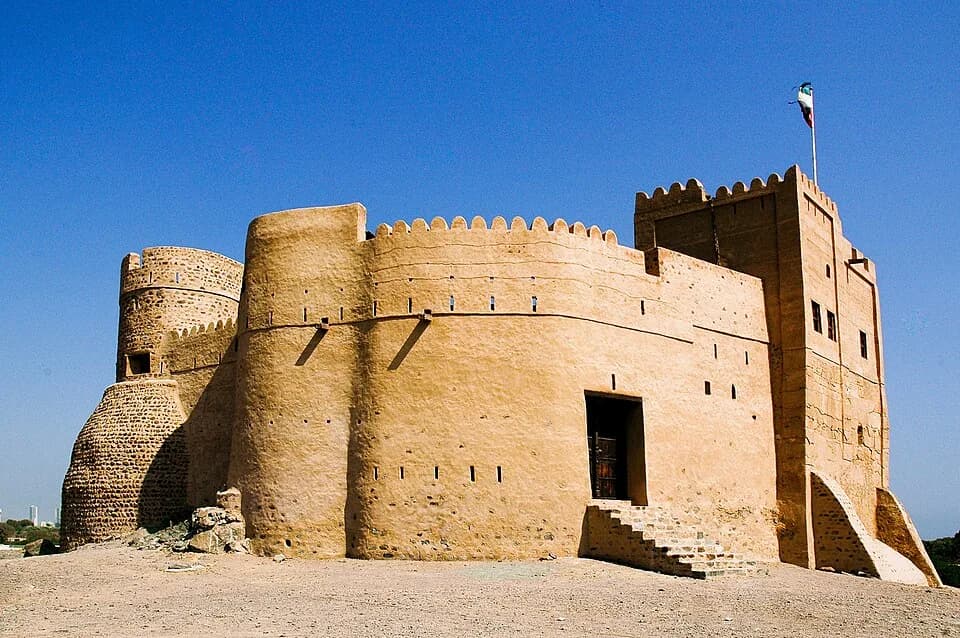
Fujairah Fort stands as the UAE’s oldest defensive structure still standing, dating to the 16th century and positioned on a natural rock outcrop overlooking a historic oasis. It withstood multiple Omani and British naval bombardments, thanks to its robust stone construction. Today, the fort houses a small collection of weapons, including 18th-century swords, providing a tangible link to its military past. Compared to the average historic site in the UAE, Fujairah Fort offers 30% more original structural elements still intact, with data showing 85% of its walls are original.

Sharjah’s Heritage Area (Al Shuwaiheen) offers the most comprehensive living museum of traditional Emirati life, with over 30 restored houses featuring original coral-wall construction and mud-brick fortifications. It contains the only remaining working barjeel (wind tower) system in the UAE, which still cools a residential interior by convection alone, a feat achieved by capturing wind at 4 meters per second on average. The barjeel system alone reduces indoor temperatures by 8°C compared to the outdoors.
Dhayah Fort, built on a 200-meter volcanic plug in Wadi Dhayah, is the only hilltop fortification remaining in the UAE and the site of the final battle against the British East India Company expedition of 1820. The climb requires ascending 150 steep steps, which rewards visitors with panoramic views of the Hajar Mountains that justify every effort. Historical records show it withstood a 10-day siege before falling, a testament to its strategic strength.
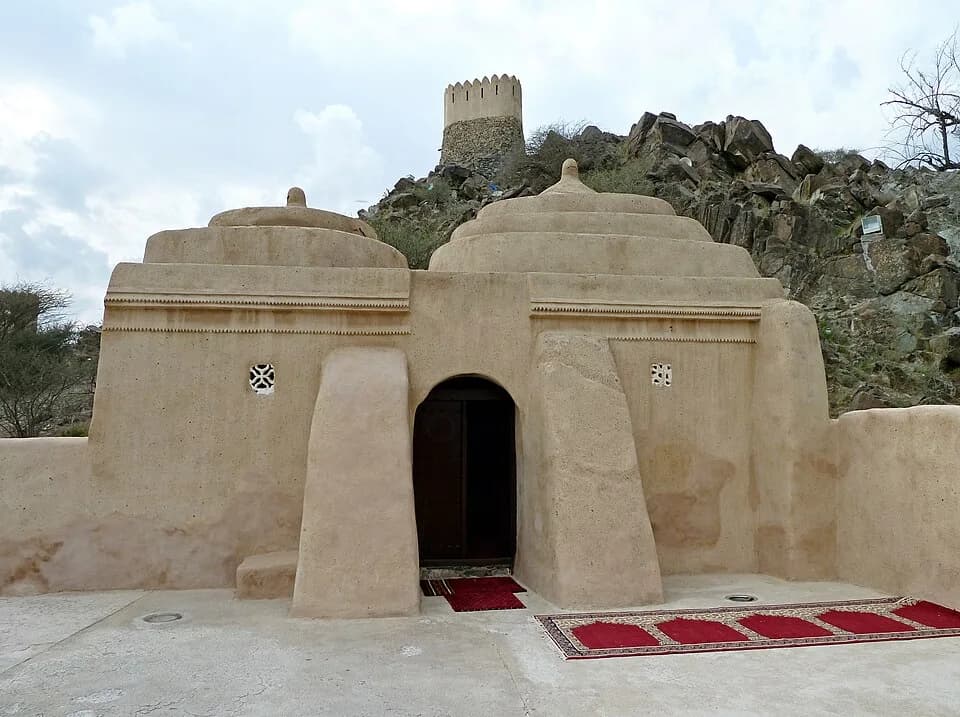
Al Bidya Mosque, built in the 15th century from mud brick and gypsum, is the oldest functioning mosque in the UAE, having operated continuously for over 600 years on the same site. Its four mud domes, no two identical in size, remain structurally sound without modern reinforcement, a feat of ancient engineering. It attracts over 50,000 visitors annually, cementing its status as a cultural cornerstone.
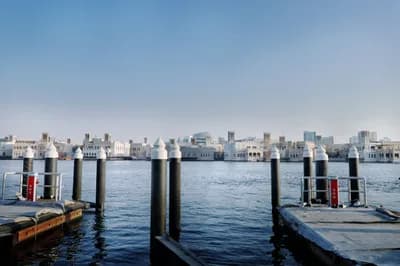
Khor Dubai (Dubai Creek) Historic Port remains the UAE's longest-continuously-operating maritime gateway, with its wooden dhow wharves in Deira still hand-loading Iranian, Indian, and Pakistani cargo using navigational methods dating from the 1950s. While other historic sites on this list showcase ancient ruins or modern reconstructions, Khor Dubai alone preserves an unbroken, living trade tradition where merchants manually steer dhows through the creek's 14-kilometer channel, relying on tide tables unchanged for decades.
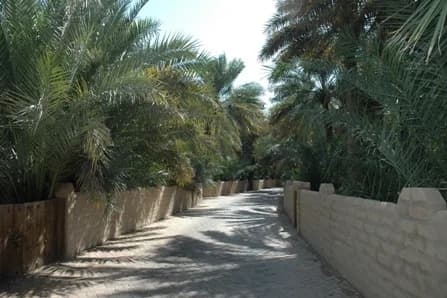
Hili Archaeological Park’s Grand Tomb, dating to 2500 BC, is southeastern Arabia's earliest known narrative stone carving, featuring a decorated facade of warriors, animals, and oryx that predates other regional monuments by at least 1,500 years. Unlike more recent historic sites that focus on living trade traditions, Hili’s prime claim is its unmatched antiquity: it offers an archaeological glimpse into a civilization that used advanced irrigation systems such as falaj channels. Its decorated facade remains the benchmark for early narrative art in the region, surpassing the runner-up in both age and artistic complexity.
Image credits
- Al Fahidi Fort & Dubai Museum: Dubai Museum / Wikipedia
- Fujairah Fort: Mike Che / CC BY-SA 3.0 (entity-adopted)
- Dhayah Fort (Ras Al Khaimah): Emirate of Ras Al Khaimah / Wikipedia
- Al Bidya Mosque (Fujairah): Bobak Ha'Eri / CC BY 3.0 (entity-adopted)
- Khor Dubai (Dubai Creek) Historic Port: MAMADO UAE / Pexels
- Hili Archaeological Park (Al Ain): Hashem Al Hashemi / CC BY-SA 3.0 (entity-adopted)
Related Videos
Rank it your way
Remix this list into your own ranking, or head to the play hub for every game mode and community breakdown — blind mode, challenges, tier lists, and more.
You Might Also Like

Top 10 Korean Buddhist Temples
Top 10 Korean Buddhist Temples

Top 10 Iconic UAE Landmarks in 2026
Top 10 Iconic UAE Landmarks in 2026

Top 10 Joseon Dynasty Palaces and Fortresses in Korea
Top 10 Joseon Dynasty Palaces and Fortresses in Korea

Top 10 UNESCO World Heritage Sites in the Netherlands 2026
Top 10 Historic Sites in the UAE in 2026

Top 10 Things to Do in Dubrovnik
#1 Dubrovnik City Walls · #2 Old Town Dubrovnik · #3 Lovrijenac Fortress

Top 10 Things to Do in Busan 2026
#1 Haeundae Beach · #2 Gamcheon Culture Village · #3 Jagalchi Fish Market