
Bing Images / thethaiger.com
Top 10 Digital Nomad Hubs in Southeast Asia
Southeast Asia has become the world's premier region for digital nomads, with an estimated 4-5 million location-independent workers choosing the region as their base at any given time, drawn by affordable living costs, fast internet infrastructure, tropical climate, and a thriving community of fellow remote workers. Countries across the region have introduced dedicated digital nomad visas — Thailand's LTR visa, Malaysia's DE Rantau pass, Indonesia's planned E33G digital nomad visa, and the Philippines' plans for a remote worker visa — in recognition of the economic value this community brings. The average digital nomad in Southeast Asia spends USD 1,500-3,000 per month, contributing an estimated USD 6 billion annually to local economies.
Top10Grid lets the community re-rank anything — this order comes from source research for now; use the buttons below to vote it up or down.

Current Rankings
- 0#1
Chiang Mai, Thailand

Chiang Mai is consistently ranked the world's number one digital nomad city by Nomad List, a platform used by over 2 million remote workers, scoring highly on cost of living (average monthly expenses of USD 1,200-1,800), internet speed (average 100-200 Mbps in coworking spaces), quality of life, and community size. The city has over 100 dedicated coworking spaces — including the landmark CAMP and MANA coworking venues — and a digital nomad community estimated at 30,000-50,000 long-term residents. Nomad visa holders are eligible for Thailand's Long-Term Resident (LTR) visa, which grants a 10-year stay and 17% flat income tax rate.
- 0#2
Bali (Canggu/Ubud), Indonesia

Canggu is famous for its surf-meets-startup culture, with beach clubs, coworking spaces, and cafes with gigabit fiber blending seamlessly into the rice field landscape. Indonesia launched its 60-day Digital Nomad Visa in 2023, specifically targeting workers employed by foreign companies, with plans for an upgraded 5-year version in 2026.
- 0#3
Ho Chi Minh City, Vietnam

Ho Chi Minh City has emerged as one of Southeast Asia's fastest-growing digital nomad destinations, offering some of the lowest costs of living in the region (average monthly spend of USD 800-1,400), which is 33% cheaper than Nomad List's global average for digital nomad hubs. The city's fiber internet infrastructure is among the strongest in Southeast Asia, with average coworking space speeds exceeding 200 Mbps, and the District 1 and District 2 (Thao Dien) areas are home to dozens of international-standard coworking spaces. Vietnam does not yet have a formal digital nomad visa, but the 90-day e-visa is renewable and sufficient for most short-stay nomads, with longer-stay options available via business visas.
- 0#4
Penang, Malaysia

Penang has rapidly ascended the digital nomad rankings thanks to Malaysia's DE Rantau Digital Nomad Pass — a 3-12 month visa for remote workers earning at least USD 24,000 per year — combined with the island's world-class food scene, English-speaking population, and excellent infrastructure. George Town's historic UNESCO core offers affordable co-living spaces in restored colonial shophouses, while the suburb of Bayan Lepas provides modern high-speed connectivity near the airport. Average monthly costs of USD 1,200-2,000 and the ability to drive across the Penang Bridge to mainland Malaysia make it one of the region's most livable nomad bases, with rent 40% lower than Bogotá, Colombia, as a comparable hub.
- 0#5
Bangkok, Thailand

Bangkok's combination of world-class infrastructure, extraordinary food, a massive international community, and ease of access (Suvarnabhumi is Asia's busiest transit hub) make it one of the most practical digital nomad bases in Southeast Asia, particularly for those who value urban amenities over tropical beach lifestyle. The city's AIS and True Move 5G networks deliver average mobile speeds of 400+ Mbps — faster than the average global speed of 150 Mbps — and neighborhoods like Ekkamai, Ari, and On Nut offer dozens of stylish cafes and coworking spaces per square kilometer. Bangkok ranks 5th globally on Nomad List for "places with the best internet" and its extensive BTS Skytrain and MRT metro systems make car-free life entirely viable.
- 0#6
Medellín-via-Bogota (SEA comparison: Luang Prabang honorable mention)

Luang Prabang in Laos is a rising digital nomad destination for those seeking extreme tranquility, UNESCO World Heritage surroundings, and an ultra-low cost of living (average monthly spend of USD 700-1,100) as a counterpoint to busier hubs like Chiang Mai or Bali. The completion of the Laos-China Railway in 2021, linking Luang Prabang directly to Vientiane and Kunming, has dramatically improved access and opened the city to a new generation of nomads seeking a slower, more contemplative alternative to Chiang Mai or Bali. Internet speeds in the city's coworking spaces have improved significantly since 2022, now averaging 50-100 Mbps — still slower than Bangkok's 400+ Mbps but steadily catching up — and a growing community of boutique coworking venues has developed in beautifully restored French colonial buildings.
- 0#7
Hanoi, Vietnam
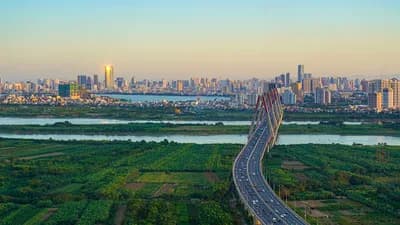
Hanoi is a sophisticated and cultural alternative to Ho Chi Minh City for nomads seeking a more traditional Vietnamese urban experience, with a lower cost of living, a dense cafe culture built around French-influenced coffee house aesthetics, and a growing coworking scene in the Ba Dinh, Tay Ho, and Hoan Kiem districts. The city's proximity to northern Vietnam's natural wonders — Ha Long Bay is 4 hours away, Sapa's rice terraces 5 hours — makes it an ideal base for weekend adventures. Monthly living costs average USD 800-1,300 for comfortable accommodation, excellent local food, and reliable coworking memberships — that's roughly 20% cheaper than Ho Chi Minh City and 30% cheaper than Bangkok.
- 0#8
Kuala Lumpur, Malaysia

Kuala Lumpur is Southeast Asia's most underrated digital nomad hub — a modern, English-speaking megacity with world-class infrastructure, one of the most diverse and affordable food scenes in the world, and a Malaysia DE Rantau visa that is among the easiest long-term remote worker visas to obtain in the region. The city's KLCC, Bangsar, and Mont Kiara neighborhoods offer international-standard coworking spaces at a fraction of Singapore prices, and Malaysia's tax treaties and digital nomad visa tax exemptions make it financially attractive for high earners. Average monthly costs of USD 1,400-2,500 deliver a quality of life that would cost USD 5,000+ in Singapore.
- 0#9
Cebu City, Philippines

Cebu City is the Philippines's second city and its most developed digital nomad hub, offering a combination of English as a first language, a thriving IT-BPO industry that has built exceptional fiber internet infrastructure, proximity to world-class diving destinations in Moalboal and Malapascua, and a cost of living (average USD 1,000-1,600/month) that competes favorably with more established Southeast Asian nomad cities like Bangkok and Ho Chi Minh City. The IT Park district in Cebu's northern fringe is home to dozens of 24-hour coworking spaces serving the city's global BPO workforce, making quality workspace accessible at any hour. Mactan Island, connected to Cebu City by two bridges and home to Mactan-Cebu International Airport, adds beach resort living within 30 minutes of the city center — providing a faster beach escape than Hanoi's 4-hour trip to Ha Long Bay.
- 0#10
Singapore

The city-state's ONE Pass (Overseas Networks and Expertise) visa, launched in 2023 for high earners of USD 30,000+/month, and its Tech.Pass for technology professionals provide strong long-term visa pathways, offering more flexible conditions than Thailand's Smart Visa. Singapore's physical location at the center of Southeast Asia, with direct flights to all regional capitals in under 3 hours, makes it the optimal base for nomads who travel frequently within the region.
Frequently Asked Questions About Digital Nomad Hubs in Southeast Asia
Which Southeast Asian city is the cheapest for digital nomads? Chiang Mai, Thailand consistently ranks as the most affordable hub, with comfortable monthly budgets of $800–$1,200 USD covering rent, food, coworking space, and local transport.
Do I need a special visa to work remotely in Southeast Asia? Thailand offers the Destination Thailand Visa (DTV), Indonesia launched the E33G Remote Worker Visa covering Bali, and Malaysia's DE Rantau programme provides a 12-month digital nomad pass — making long-term legal stays more straightforward than ever.
What internet speeds can digital nomads expect in Southeast Asia? Major hubs like Bangkok, Kuala Lumpur, and Singapore regularly deliver 100–1,000 Mbps fibre. Chiang Mai and Ho Chi Minh City coworking spaces typically provide 50–200 Mbps, more than enough for video calls and cloud work.
Image credits
- Penang, Malaysia: Wikipedia
- Hanoi, Vietnam: Hanoi Skyline - NKS.jpg / Wikimedia Commons
Related Videos
Rank it your way
Remix this list into your own ranking, or head to the play hub for every game mode and community breakdown — blind mode, challenges, tier lists, and more.
You Might Also Like

Top 10 Thailand Destinations in 2026
Top 10 Thailand Destinations in 2026

Top 10 Malaysia Destinations in 2026
Top 10 Malaysia Destinations in 2026

Top 10 Southeast Asian Cities to Visit
Top 10 Southeast Asian Cities to Visit

Top 10 Weekend Getaways Under 4 Hours From Major Cities
#1 Hudson Valley (from New York City) · #2 Shenandoah Valley (from Washington, D.C.) · #3 Door County (from Chicago)

Top 10 Solo Travel Destinations Where You'll Never Feel Alone
#1 Lisbon (Portugal) · #2 Chiang Mai (Thailand) · #3 Medellin (Colombia)

Top 10 Tourist Destinations in Mexico
#1 Cancun & the Riviera Maya · #2 Mexico City (CDMX) · #3 Los Cabos