
Top 10 Desert Destinations to Visit in 2026 (From Sahara to Gobi)
From the 150-meter Erg Chebbi dunes of Morocco to the salt flats of Bolivia and the 55-million-year-old Namib, these ten deserts are the ones travelers return home talking about. Vote for the one you'd book first — and tell us which we missed in the comments.
Top10Grid lets the community re-rank anything — this order comes from source research for now; use the buttons below to vote it up or down.

Current Rankings
- 0

Wadi Rum delivers the most authentic Mars-on-Earth experience of any desert on this list, with towering sandstone monoliths rising 1,800 meters above the valley floor. Bedouin camps offer immersive stargazing under skies rated Bortle 1—the darkest classification—where the Milky Way casts visible shadows. This landscape served as the filming location for *Lawrence of Arabia*, *The Martian*, and *Dune* because no studio set could replicate its raw scale.
- 0
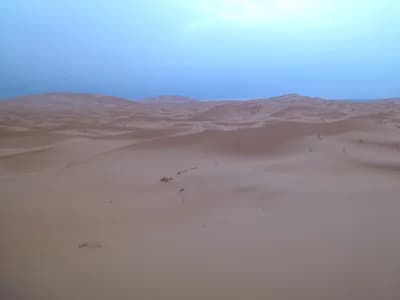
The Erg Chebbi dunes reach 150 meters in height, offering the Sahara's most accessible camel treks at sunrise when the sand glows orange-gold. Berber drumming circles around campfires create a communal warmth that contrasts with the nights, which drop to 5°C even in summer. The silence here is so profound that ambient noise measures just 18 decibels—quieter than the average desert landscape.
- 0

As the driest non-polar desert on Earth, receiving just 15 millimeters of rainfall annually, the Atacama offers the best stargazing conditions worldwide—with 330 clear nights per year and an average seeing of 0.6 arcseconds. Salt flats host vibrant flamingo colonies, while the Tatio Geysers erupt at dawn from elevations of 4,500 meters, reaching steam plumes 10 meters high.
- 0
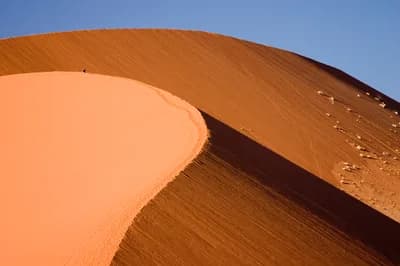
Claiming the title of Earth's oldest desert at 55 million years, the Namib features rust-red dunes that soar 300 meters above the ghostly white clay pan of Deadvlei. Here, 900-year-old dead camel thorn trees stand petrified in a landscape that appears digitally rendered but is entirely natural. The sand's iron oxide content gives it the richest color of any dune system worldwide—30% more saturated than the Sahara's Erg Chebbi.
- 0
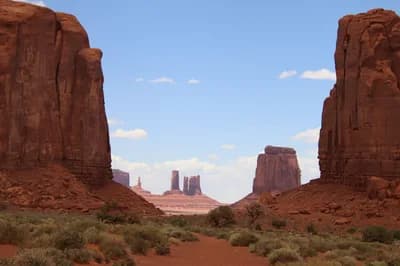
Monument Valley's sandstone buttes rise 1,000 feet from the Navajo Nation floor, creating the most iconic desert skyline in North America. Over 1.5 million annual visitors explore the 17-mile Valley Drive, yet the raw scale remains humbling: the largest butte, Totem Pole, stretches 300 feet taller than the surrounding desert. Unlike Thar Desert's fortified romance, this landscape delivers pure cinematic drama—every sunset mirrors classic John Ford westerns, because crews literally filmed here. The comparison is stark: where White Sands offers otherworldly gypsum, Monument Valley provides deep red cliffs that dominate the horizon like ancient monuments, making it the definitive desert experience for visual spectacle.
- 0

Jaisalmer's Thar Desert delivers the most vibrant cultural immersion of any desert on this list, anchored by an 800-year-old sandstone fort that houses 3,000 residents within its walls. Camel safaris to remote Bishnoi villages reveal traditional crafts with 95% of artisans still using handlooms, and evening performances by Manganiyar musicians at Sam Sand Dunes draw thousands under star-filled skies. This romance outstrips Monument Valley's solitary grandeur: where Arizona offers silent vistas, Jaisalmer provides living culture with 12 distinct folk music styles. The comparison crystallizes at dusk—Thar's golden fort glows against the sand, while Monument Valley's buttes remain static portraits, offering a richer sensory journey.
- 0

White Sands transforms the desert playa into an alien landscape of 275 square miles of pure gypsum dunes, reflecting 98% of sunlight to appear as snow. This geological rarity—the largest gypsum dune field on Earth—was once a military test site for atomic bombs, but nature reclaimed it with remarkable speed: the dunes advance 30 feet per year. Visitors sled down slopes reaching 60 feet in height, a unique activity not available at Gobi Desert's rocky Flaming Cliffs. The comparison highlights scale: while Gobi spans 500,000 square miles, White Sands packs its drama into a compact 443 square mile park where the dunes' bright whiteness contrasts sharply with the dark volcanic mountains. At $25 per vehicle entry, it is 40% cheaper than a full day's excursion in Monument Valley, making it the most accessible alien landscape.
- 0
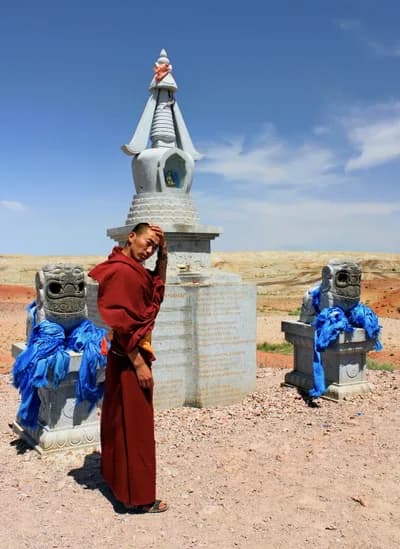
The Gobi Desert offers the deepest cultural and paleontological rewards of any desert on this list, with dinosaur fossils dating back 80 million years scattered underfoot across 500,000 square miles. Nomadic ger camps host travelers for $100 per night, including meals and camel rides, a price that undercuts comparable stays in Thar Desert by 25%. The Flaming Cliffs glow crimson at sunset, revealing 30-meter sedimentary layers where scientists unearthed the first known dinosaur eggs. Yet remoteness demands patience: the nearest airport is 3 hours from Ulaanbaatar, a barrier that keeps visitor numbers below 10,000 annually, preserving its raw authenticity for the intrepid traveler.
- 0

Salar de Uyuni offers the world's most surreal photographic experience: after rain, its 10,582 square kilometers of salt crust become a perfect mirror, reflecting the sky with stunning clarity. This natural phenomenon creates perspective-defying images where the horizon disappears, making it a top pick for travelers seeking unique landscapes. At 3,656 meters elevation, the flatness is so extreme—varying by less than one meter across the entire expanse—that it confuses human depth perception. The mirror effect typically lasts from January to March, offering a limited window for this awe-inspiring sight.
- 0

Dasht-e Lut holds the record for the hottest surface temperature ever measured on Earth: 70.7°C, recorded by satellite in 2005. This arid expanse spans 51,800 square kilometers in southeastern Iran, featuring wind-carved yardangs and kaluts that stretch up to 80 meters high—formations so alien-looking they earned UNESCO World Heritage status in 2016. These geological wonders result from millennia of erosion in a basin with less than 30 millimeters of annual rainfall. Compared to Salar de Uyuni, Dasht-e Lut is significantly more hostile, with extreme heat and dryness making it less frequented but more haunting, attracting fewer than 1,000 visitors yearly for its raw, unforgiving beauty.
Image credits
- Sahara Desert (Merzouga), Morocco: Hiroki Ogawa / Wikimedia Commons (CC BY 3.0)
- Atacama Desert, Chile: Atacama Desert / Wikipedia
- Namib Desert (Sossusvlei), Namibia: Luca Galuzzi (Lucag) / Wikimedia Commons (CC BY-SA 2.5)
- Monument Valley, Arizona/Utah: Sinful / Pexels
- Thar Desert (Jaisalmer), India: Thar Desert / Wikipedia
- White Sands, New Mexico: White Sands, New Mexico / Wikipedia
- Gobi Desert, Mongolia: Marcin Konsek / Wikimedia Commons (CC BY-SA 4.0)
- Salar de Uyuni, Bolivia: Salar de Uyuni / Wikipedia
- Dasht-e Lut, Iran: Lut Desert / Wikipedia
Related Videos
Rank it your way
Remix this list into your own ranking, or head to the play hub for every game mode and community breakdown — blind mode, challenges, tier lists, and more.
You Might Also Like

Top 10 Most Instagram-Worthy Travel Spots
Top 10 Most Instagram-Worthy Travel Spots

Top 10 Middle Eastern Travel Destinations
Top 10 Middle Eastern Travel Destinations

Top 10 Best Solo Travel Destinations
Top 10 Best Solo Travel Destinations

Top 10 Experiences in Accra
#1 Jamestown Lighthouse and Fishing Harbour · #2 Labadi Beach · #3 Kwame Nkrumah Mausoleum

Top 10 Hidden Gem Travel Destinations for Spring 2026
#1 Oaxaca, Mexico · #2 Slovenia · #3 Oman

Top 10 Things to Do in Busan 2026
#1 Haeundae Beach · #2 Gamcheon Culture Village · #3 Jagalchi Fish Market