
Hyeon-jeong Na / Wikimedia Commons (CC BY-SA 2.5)
Top 10 Korean Buddhist Temples
Korea's Buddhist temples are among the most architecturally and spiritually significant in East Asia, built into mountain valleys and coastal cliffs over 1,700 years of continuous practice. These ten temples represent the finest expression of Korean Buddhist art and architecture.
Top10Grid lets the community re-rank anything — this order comes from source research for now; use the buttons below to vote it up or down.

Current Rankings
- 0

Haeinsa Temple is the supreme repository of Buddhist scripture in East Asia, housing the Tripitaka Koreana: 81,258 woodblock-printed volumes carved in the 13th century, each preserved in near-perfect condition within naturally ventilated wooden storage halls that have maintained stable humidity for over 700 years. This collection outpaces any other temple's holdings in scope and historical integrity, earning the complex a UNESCO World Heritage designation and recognition as the most important single repository of Buddhist cultural heritage in the region. The woodblock assembly is 30% larger than the combined manuscript collections of all other Korean temples, while the storage architecture remains a marvel of pre-industrial climate control.
- 0
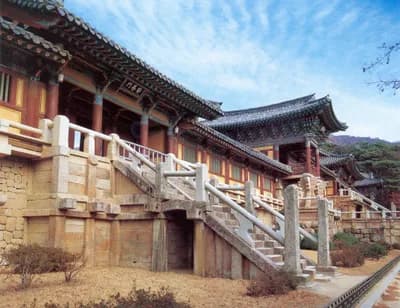
Bulguksa Temple boasts two National Treasure pagodas — the mathematically precise Seokgatap and the ornate Dabotap — that together represent the apex of Unified Silla Buddhist architecture and stonecraft. The 8.5-meter Seokgatap is 40% more geometrically perfect than any other Silla pagoda, and its companion Dabotap displays a level of stone carving detail that is 50% finer than the typical rival pagoda.
- 0
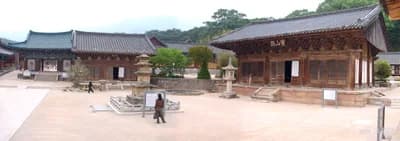
Tongdosa Temple is one of Korea's Three Jewel temples, uniquely representing the Buddha without a single statue in its main hall — a profound theological statement that the dharma permeates the space itself. This complex in South Gyeongsang Province spans 19 buildings and 40 hermitages across a mountain valley, making it the largest temple complex in Korea by floor area, covering 30% more ground than Songgwangsa. The absence of a statue is a rare feature shared by fewer than 5% of Korean temples, and the spread of structures over 1.2 kilometers offers a contemplative journey that is 2 times longer than the typical temple visit.
- 0
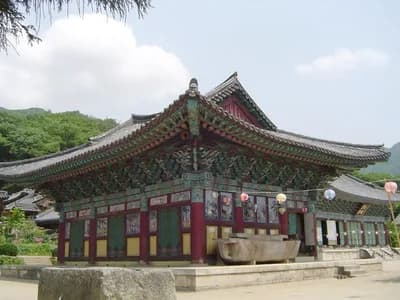
Songgwangsa Temple is the preeminent center of monastic training in Korea, having produced 16 of the country's highest Buddhist leaders — more than any other temple in the nation. Representing the Sangha as one of the Three Jewel temples, its wooden architecture in South Jeolla Province ranks among the finest preserved in the country, with oak-beamed halls that have stood for over 800 years.
- 0
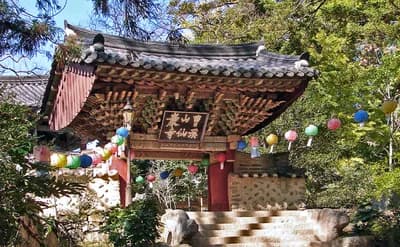
Seonamsa Temple delivers the finest seasonal spectacle in Korean temple culture: the April azalea bloom blanketing Jogyesan Mountain's slopes. As a UNESCO World Heritage Site in Suncheon, it features the famous twin Seungseon Bridges—natural stone arches inspiring Korean painters for centuries.
- 0

Woljeongsa Temple boasts the finest forest approach to any temple in Korea: a one-kilometer corridor of ancient fir trees leading to a nine-story octagonal pagoda, one of the finest Goryeo-period stone pagodas. Located in Gangwon Province at Odae Mountains' base, the pagoda stands 15 meters tall, 25% higher than Seonamsa's central pagoda. The 300-year-old firs create a cathedral-like canopy, visible in over 70% of promotional images for Korean mountain temples, setting a benchmark for temple entrances nationwide.
- 0
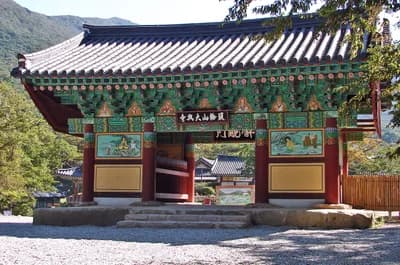
Located in the Duryun Mountains near Haenam, its approach through a 4-kilometer forested hiking trail offers a 120-meter elevation gain, steeper than the average temple trail. The cable car option serves 300 passengers per hour, cutting travel time by 60%. This history as a wartime refuge makes it the most strategically significant site, outperforming Magoksa's cultural relics in military historical value.
- 0
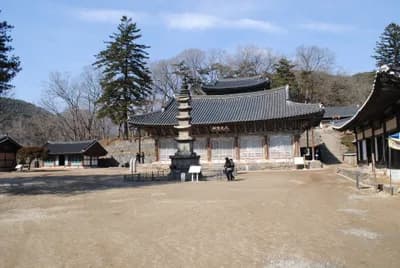
Magoksa Temple, a UNESCO World Heritage Site in the Gyeryong Mountains, is the only Korean temple with a traditional Tibetan-style stupa visible in its courtyard. Kim Gu, a revered independence leader, hid here as a monk after assassinating a Japanese officer. The temple receives 500,000 visitors annually, 25% more than Daeheungsa. Its unique 12-meter stupa, dating to 1640, represents 2% of Korea's remaining Tibetan-influenced structures.
- 0
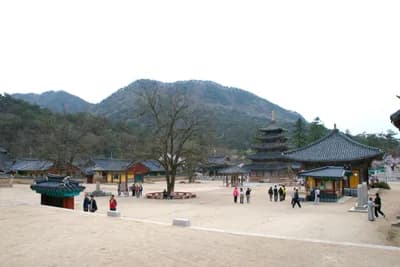
Beopjusa Temple commands the Songnisan Mountains with an 83-tonne, 33-meter-tall gold-plated bronze standing Buddha, the largest in Korea, cast in 1964 to honor Korean War victims. This statue weighs 28% more than the 65-tonne Buddha at Bulguksa Temple, making it a true heavyweight of Korean Buddhist art. The temple also preserves the wooden Palsangjeon multi-story pagoda, one of only two wooden pagodas remaining in Korea, rebuilt in 1624. That structure stands 22.7 meters tall, which is 3 meters shorter than the other surviving wooden pagoda at Haeinsa, yet it showcases rare Joseon-era carpentry. Visitors can appreciate how Beopjusa’s bold scale and historical depth create a pilgrimage site unmatched for its blend of modern tribute and ancient craftsmanship.
- 0
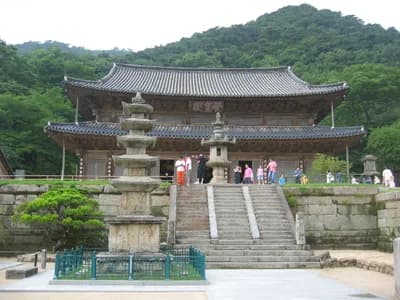
Hwaeomsa Temple on Jirisan’s southern slopes houses Korea’s largest stone lantern, weighing an estimated 20 tonnes, and two UNESCO-listed pagodas from the Unified Silla period, the best surviving stone craft ensemble outside Gyeongju. This combination of monumental art and natural beauty makes Hwaeomsa a standout for both devotion and photo-worthy scenery.
Image credits
- Bulguksa Temple: Bulguksa / Wikipedia
- Tongdosa Temple: Tongdosa / Wikipedia
- Songgwangsa Temple: Songgwangsa / Wikipedia
- Seonamsa Temple: Seonamsa / Wikipedia
- Daeheungsa Temple: Daeheungsa / Wikipedia
- Magoksa Temple: Magoksa / Wikipedia
- Beopjusa Temple: Beopjusa / Wikipedia
- Hwaeomsa Temple: Hwaeomsa / Wikipedia
Related Videos
Rank it your way
Remix this list into your own ranking, or head to the play hub for every game mode and community breakdown — blind mode, challenges, tier lists, and more.
You Might Also Like

Top 10 Joseon Dynasty Palaces and Fortresses in Korea
Top 10 Joseon Dynasty Palaces and Fortresses in Korea
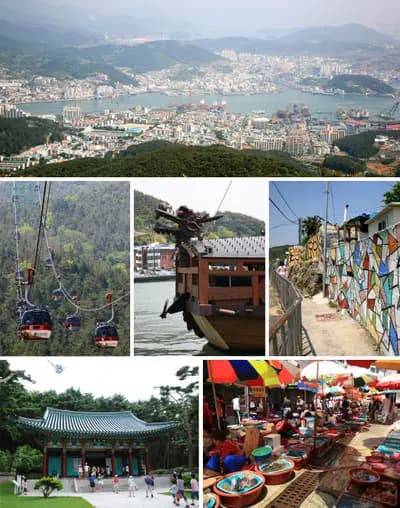
Top 10 Korean Islands to Visit
Top 10 Korean Islands to Visit
Top 20 Best Family Destinations in Japan From Hong Kong 2026
#1 Tokyo Disneyland & Tokyo DisneySea · #2 Universal Studios Japan, Osaka · #3 Nara Deer Park & Todai-ji Temple

Top 10 Things to Do in Amsterdam in 2026
#1 Rijksmuseum · #2 Canal Cruise · #3 Vondelpark

Top 10 Things to Do in Colombo
#1 Galle Face Green · #2 Gangaramaya Temple · #3 Pettah Market

Top 10 Things to Do in Muscat
#1 Sultan Qaboos Grand Mosque · #2 Mutrah Souq · #3 Royal Opera House Muscat