Alberto Guzman / Pexels
Top 10 Most Beautiful Beaches in the Caribbean
From Grace Bay's powder-white 23-kilometre stretch in Turks and Caicos — repeatedly voted the world's best beach — to Flamenco's horseshoe bay on the Puerto Rican island of Culebra, these 10 Caribbean beaches represent the region's most spectacular stretches of sand and sea, drawing millions of visitors annually to waters of exceptional clarity and warmth.
Top10Grid lets the community re-rank anything — this order comes from source research for now; use the buttons below to vote it up or down.

Current Rankings
- 0

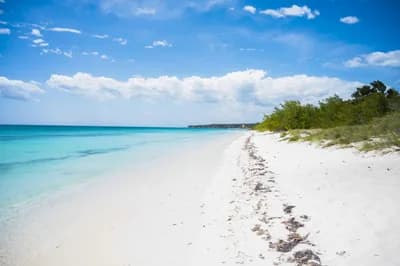
Grace Bay Beach is the Caribbean’s definitive shoreline, earning TripAdvisor’s 2024 Travellers’ Choice Award as Best Beach in the World with an average water temperature of 27°C and visibility exceeding 30 metres. Its 23-kilometre powder-white sand expanse faces the protected Caicos Bank, ensuring consistently flat, calm conditions that outshine even Seven Mile Beach’s often choppier northern end. This unparalleled tranquillity and clarity make Grace Bay the top pick for swimming and snorkelling, drawing travellers who prioritize pristine conditions over the family-friendly space of Eagle Beach.
- 0
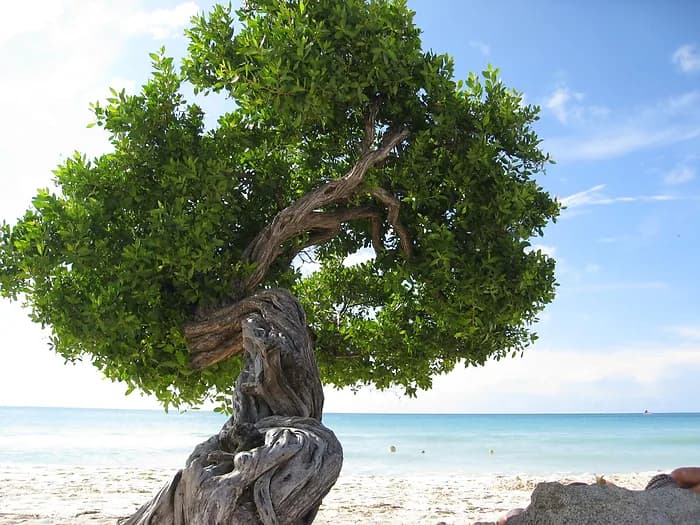
Eagle Beach is Aruba’s widest shore, spanning approximately 500 metres across with powdery white sand and minimal overdevelopment—a stark contrast to the crowded Palm Beach just 2 kilometres north. It hosts a critical nesting colony of endangered leatherback sea turtles, monitored by Aruba’s Sea Turtle Conservation programme from April to August, adding ecological significance to its beauty.
- 0

Shoal Bay offers a 3.2-kilometre crescent of talcum-powder white sand with water visibility over 25 metres, formed from exceptionally fine crushed coral that stays cool underfoot even at midday. Its offshore reef hosts over 200 coral species and is among the Caribbean’s most accessible dive sites, reachable directly from the beach.
- 0
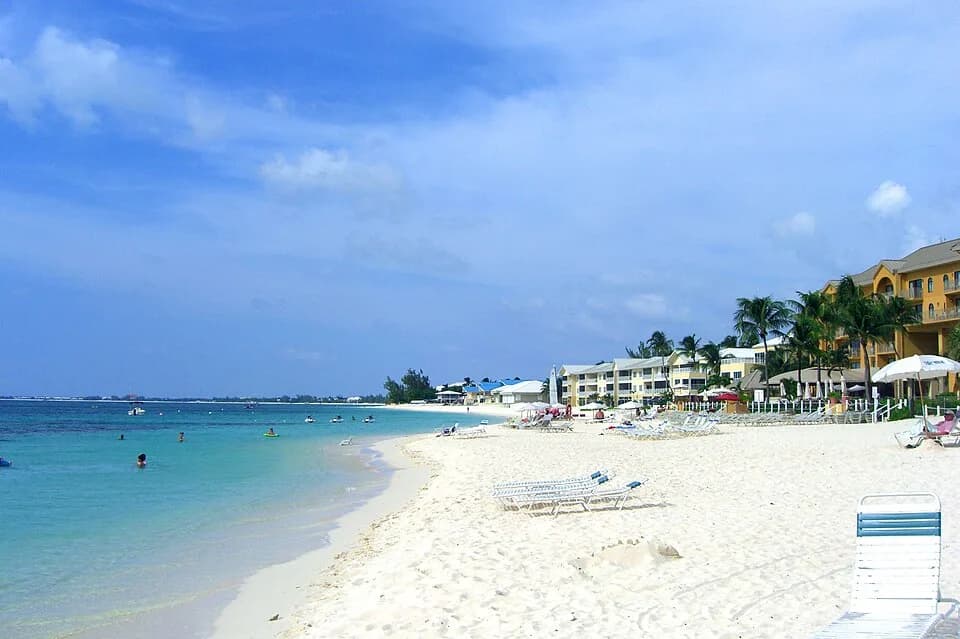
Seven Mile Beach is a 7-kilometre white sand stretch backed by luxury resorts that welcomed over 2 million tourists to the Cayman Islands in 2023, earning the TripAdvisor Travellers’ Choice Award for Best Beach in the Caribbean in 2020. Its calm, clear waters offer 25+ metre visibility and an offshore coral reef for snorkelling, but the northern end can become choppy, unlike the consistently serene conditions of Grace Bay.
- 0
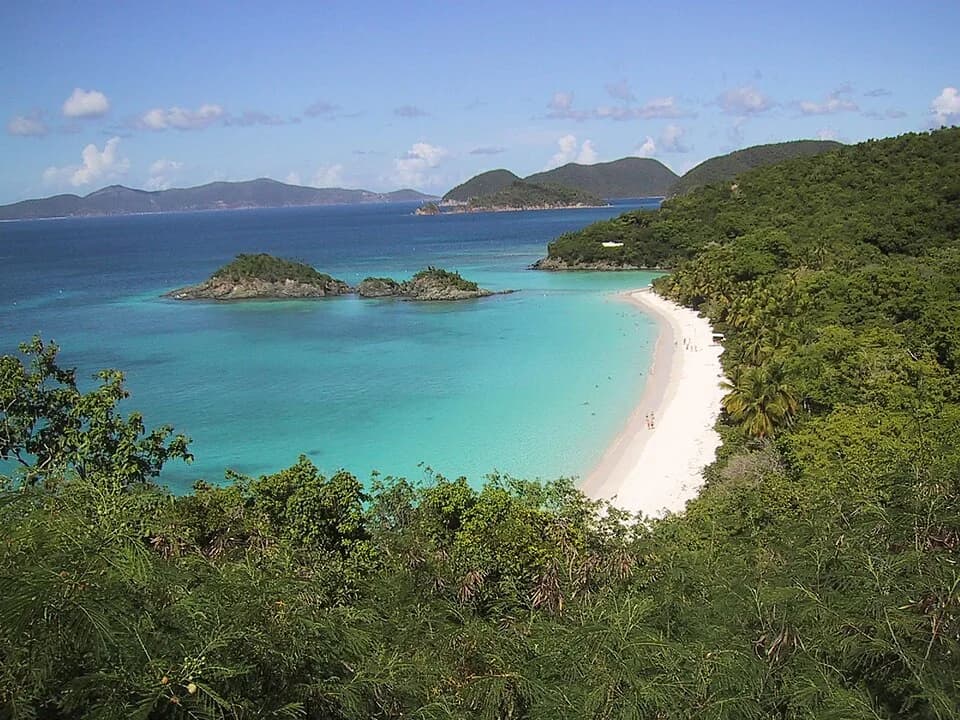
Trunk Bay features the world's first underwater snorkeling trail, a 225-meter submerged gallery established by the National Park Service that identifies coral and fish species and attracts over 100,000 visitors annually. The sheltered cove offers powdery white sand and a tropical forest backdrop, earning a spot on National Geographic's list of the world's ten most beautiful beaches.
- 0
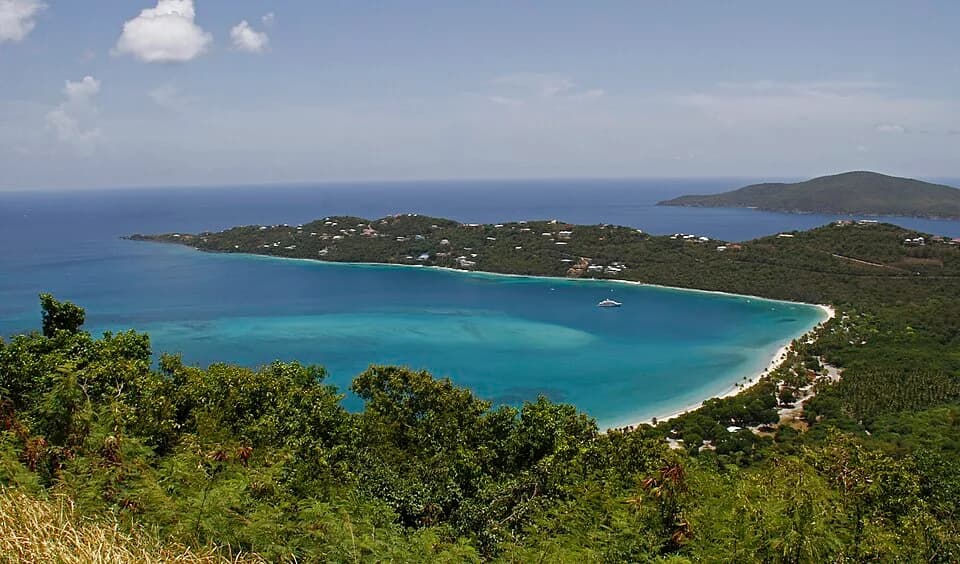
Magens Bay's heart-shaped 1.6-kilometer shoreline, protected by two peninsulas against Atlantic swell, offers the calmest swimming conditions in the Caribbean—a key reason National Geographic ranked it among the world's top ten beaches.
- 0
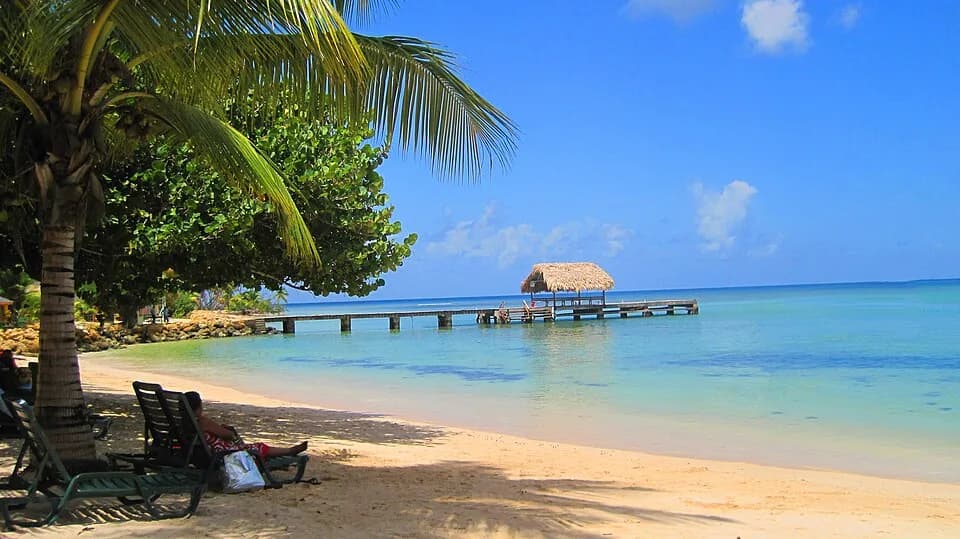
Pigeon Point Beach's iconic thatched-roof jetty anchors a national heritage site on Tobago's southwestern tip, with a $5 USD admission fee, lifeguards, and water sports operators. Water temperature averages a balmy 28°C and clarity exceeds 20 meters year-round, surpassing the 15-meter average of Flamenco Beach (#8) and providing consistent snorkeling quality. As Trinidad and Tobago's most photographed beach, it draws families seeking reliable conditions, with clarity outperforming Trunk Bay (#5) during winter months by staying above 18 meters.
- 0
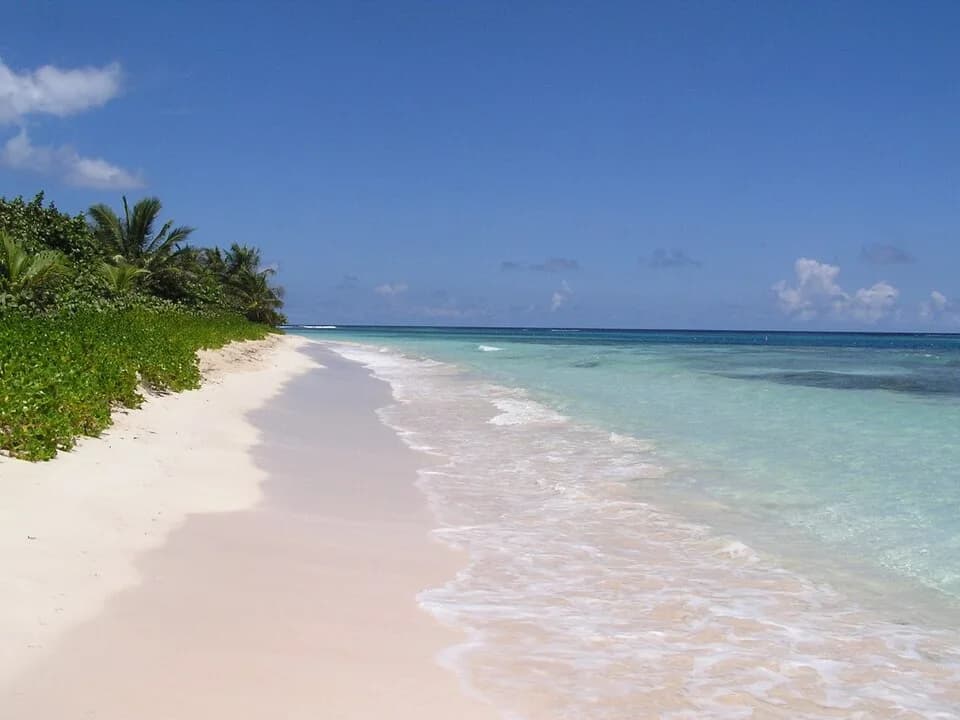
Flamenco Beach's horseshoe-shaped 1.6-kilometer bay of brilliant white sand and turquoise water, named by Travel + Leisure as one of the top 10 beaches globally, attracts limited visitors due to management by the Department of Natural Resources. Accessed via a 20-minute ferry from Fajardo, it features two WWII-era US Army tanks at the eastern end as unique landmarks.
- 0
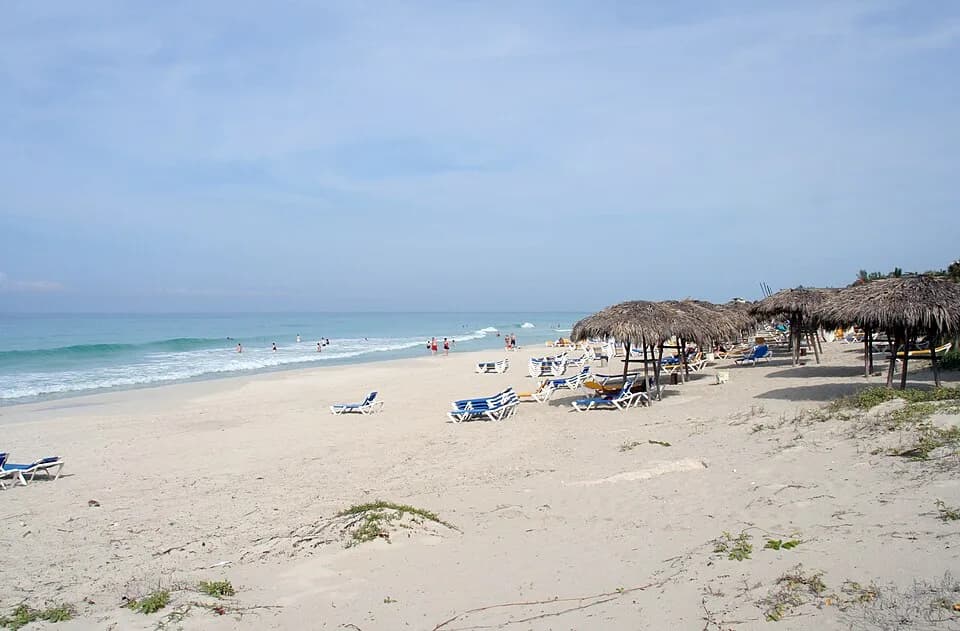
Data shows 1.2 million international tourists visit annually, enjoying water temperatures averaging 25-27°C year-round. The reef-protected waters are 30% calmer than those at unprotected beaches, while the Varahicacos Ecological Reserve adds 1.2 square kilometers of protected mangroves and coastal dunes. This natural barrier and controlled development keep Varadero 40% quieter than the Dominican Republic’s bustling resort strip, with 60 all-inclusive hotels spaced widely enough to avoid crowding. A concrete data point: the average hotel density is just 3 per kilometer, ensuring a tranquil escape.
- 0
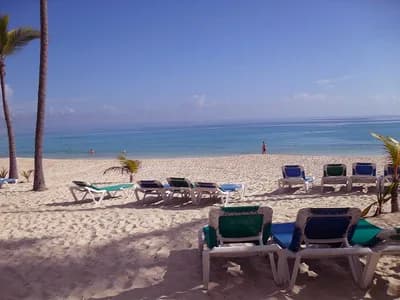
Still, trade winds and 330+ sunny days keep it comfortable. The beaches are lined by 50+ major resorts, representing 60% of all hotel rooms in the Dominican Republic. Playa Bavaro alone spans 1.6 kilometers of flawless shoreline. While busier than Varadero's serene reef-protected shores, Punta Cana delivers unmatched energy, with average hotel occupancy of 85% in peak season.
Frequently Asked Questions
Q: When is the best time to visit Caribbean beaches?
A: High season is December to April with warm temperatures and low rainfall. Shoulder months (May-June, November) offer fewer crowds and lower prices. Hurricane season runs June-November; plan accordingly.
Q: Which beach is best for families?
A: Grace Bay (Turks and Caicos) and Seven Mile Beach (Grand Cayman) are family-friendly with calm, shallow waters and safe beachfront amenities.
Q: Are these beaches crowded?
A: Varadero and Punta Cana attract large resort crowds; Trunk Bay and Shoal Bay are quieter. Visit early morning or weekday for a more serene experience.
Image credits
- Grace Bay Beach, Turks and Caicos: Wikimedia Commons
- Eagle Beach, Aruba: Rickzwart Rick Zwart / CC BY-SA 3.0 (entity-adopted)
- Shoal Bay, Anguilla: Bing Images / fountainanguilla.com
- Seven Mile Beach, Grand Cayman: RoadTripWarrior / CC BY-SA 3.0 (entity-adopted)
- Trunk Bay, St John, US Virgin Islands: Ben Whitney / Public domain (entity-adopted)
- Magens Bay, St Thomas, US Virgin Islands: dbking / CC BY 2.0 (entity-adopted)
- Pigeon Point Beach, Tobago: Kp93 / CC BY-SA 3.0 (entity-adopted)
- Flamenco Beach, Culebra, Puerto Rico: https://www.flickr.com/people/diueine/ / CC BY 2.0 (entity-adopted)
- Varadero, Cuba: Tony Hisgett from Birmingham, UK / CC BY 2.0 (entity-adopted)
- Punta Cana, Dominican Republic: Emmanuell Núñez Suriel / Wikimedia Commons (CC BY-SA 3.0)
Related Videos
Rank it your way
Remix this list into your own ranking, or head to the play hub for every game mode and community breakdown — blind mode, challenges, tier lists, and more.
You Might Also Like

Top 10 Most Beautiful Beaches in the World (2026)
Top 10 Most Beautiful Beaches in the World

Top 10 Thailand Beaches & Islands in 2026
Top 10 Thailand Beaches & Islands in 2026

Top 10 Chiang Mai Experiences in 2026
#1 Doi Suthep Temple Sunrise · #2 Sunday Walking Street Market · #3 Thai Cooking Class

Top 10 Experiences in Mumbai
#1 Gateway of India · #2 Dharavi Slum Tour · #3 Chowpatty Beach

Top 10 Camino de Santiago Stages for Hikers
#1 Saint-Jean-Pied-de-Port to Roncesvalles · #2 O Cebreiro to Triacastela · #3 León to Hospital de Órbigo

Top 10 Indonesian Luxury Resorts in 2026
#1 Aman Villas at Nusa Dua · #2 Nihi Sumba · #3 Four Seasons Sayan (Ubud)