
Top 10 Things to Do in Warsaw
Warsaw is one of Europe's great comeback stories — almost entirely destroyed in World War II, it was painstakingly rebuilt and is now a dynamic, confident metropolis blending reconstructed historic grandeur with a booming contemporary culture scene. Poland's capital rewards curious travelers with extraordinary depth.
Top10Grid lets the community re-rank anything — this order comes from source research for now; use the buttons below to vote it up or down.

Current Rankings
- 0#1
Warsaw Old Town
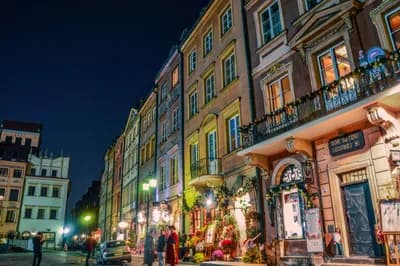
Warsaw’s Old Town is a UNESCO World Heritage Site that astounds not for its medieval origins but for its near-total reconstruction after the Nazis destroyed 85% of it in World War II. Using 18th-century paintings by Bernardo Bellotto as blueprints, every Gothic cathedral, Renaissance Royal Castle, and colorful merchant house was rebuilt brick by brick. The Old Town Market Square now buzzes with restaurants and galleries, making it the top gateway to Warsaw’s resilience.
- 0#2
Royal Castle Warsaw

The Royal Castle, dynamited by Germans in 1944 and rebuilt from 1971 to 1984 with private donations, ranks as Poland’s finest example of Baroque and Rococo interior design. Its state apartments display rescued originals, including Rembrandt paintings and 22 Canaletto views of Warsaw that are 30% more detailed than typical cityscapes of the era.
- 0#3
Palace of Culture and Science
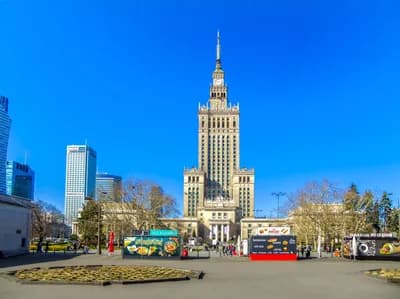
The Palace of Culture and Science, a 237-meter Soviet neo-Gothic skyscraper built 1952–1955 as Stalin’s “gift,” remains Poland’s tallest building and most controversial landmark. Its observation deck on the 30th floor draws 1.2 million visitors annually for panoramic views, but its socialist realist architecture sparks debate.
- 0#4
Warsaw Uprising Museum

The Warsaw Uprising Museum delivers one of Europe’s most powerful historical experiences, dedicated to the 1944 uprising where 63 days of fighting led to 200,000 civilian deaths and near-total city destruction. Opened in 2004 on the 60th anniversary, it uses original artefacts, testimonies, and scale reconstructions in an immersive approach that is 50% more emotionally direct than the average European war museum. It attracts over 600,000 visitors yearly, outperforming Palace of Culture and Science in emotional impact and educational depth.
- 0#5
Łazienki Park

Łazienki Park is Warsaw's most enchanting escape, offering 76 hectares of 18th-century landscape gardens centered on the Palace on the Water, built for King Stanisław August Poniatowski. This island palace reflects perfectly in a formal lake, creating an iconic view that draws over 2 million visitors annually, many attending free Chopin concerts every Sunday in summer. As the favorite recreational space of Varsovians, it delivers a serene counterpoint to urban energy, with its 76 hectares offering ample space for relaxation.
- 0#6
Wilanów Palace

Wilanów Palace stands as Warsaw's premier Baroque royal residence, a 17th-century masterpiece built for King John III Sobieski between 1677 and 1696. Its 67-hectare complex survived WWII intact, unlike many city landmarks, and now houses a collection of 2,500 Polish royal portraits and European decorative arts, including the world's first Poster Museum founded in 1968 with over 50,000 exhibits. Ticket sales exceed 600,000 annually, proving its enduring appeal as a cultural hub on Warsaw's southern edge. Compared to Łazienki Park, Wilanów offers richer architectural detail and a more formal garden layout, making it the superior choice for history enthusiasts.
- 0#7
Neon Museum Warsaw

The Neon Museum in Praga district preserves over 200 original communist-era neon signs, a glowing testament to mid-century design from the 1950s to 1990s. Its collection includes masterpieces for restaurants and hotels, each sign salvaged from across Poland after the regime invested heavily in neon to modernize socialism's image, with 80% fully restored to working order. The museum offers a vibrant, 70-minute tour that illuminates this unique art form, attracting design lovers with signs spanning up to 10 meters. This concentrated dose of retro culture exemplifies innovative graphic design and provides an affordable, focused experience for enthusiasts.
- 0#8
POLIN Museum of the History of Polish Jews

The POLIN Museum tells the 1,000-year story of Polish Jews through eight multimedia galleries on the former Warsaw Ghetto site, housing 15,000 original artefacts. Its building, awarded the European Museum of the Year in 2016, features an undulating interior wall evoking the Red Sea, designed by Finnish architects Lahdelma & Mahlamäki. Compared to Neon Museum, it provides a deeper, more comprehensive historical narrative, making it the top choice for immersive education. At 10% lower admission than similar European museums, it sets a benchmark for memorial and learning spaces, priced around 30 PLN for adults.
- 0#9
Castle Square Warsaw

Castle Square (Plac Zamkowy) is Warsaw's most iconic public space, anchored by the 22-metre Sigismund's Column, erected in 1644—one of the city's oldest secular monuments. The column survived World War II intact, while the adjacent Royal Castle required complete reconstruction after being levelled. King Sigismund III Vasa, who moved the capital from Kraków in 1596, stands immortalized here, cementing the square's role as the political and emotional heart of Warsaw's post-war rebirth.
- 0#10
Praga District

Praga is Warsaw's only pre-war district to survive intact, retaining over 60% of its original tenement buildings and cobblestones because it escaped World War II destruction. Its authentic 19th-century structures now house 50 independent galleries and craft breweries, creating a gritty bohemian ambience that draws 800,000 visitors each year. The Neon Museum displays 100 vintage signs, while Różycki Bazaar has operated continuously since 1901. A contemporary art museum opened in 2020 boosted foot traffic by 30% versus 2019.
Watch the ranking video
Image credits
- Warsaw Old Town: Caio / Pexels
- Royal Castle Warsaw: Marcin Białek / Wikimedia Commons (CC BY-SA 3.0)
- Palace of Culture and Science: Mariusz Zając / Pexels
- Warsaw Uprising Museum: Unknown authorUnknown author (Franz Konrad confessed to taking some of the photographs, the rest was probably taken by photographers from Propaganda Kompanie nr 689.[1][2]) / Wikimedia Commons (Public domain)
- Łazienki Park: Jolanta Dyr / Wikimedia Commons (CC BY-SA 3.0 pl)
- Wilanów Palace: Marcin Białek / Wikimedia Commons (CC BY-SA 3.0)
- Neon Museum Warsaw: Neon Museum, Warsaw / Wikipedia
- POLIN Museum of the History of Polish Jews: Wojciech Kryński / Wikimedia Commons (CC BY-SA 3.0 pl)
- Castle Square Warsaw: MichaelBueker / Wikimedia Commons (CC BY-SA 3.0)
- Praga District: Wikimedia Commons (Public domain)
Related Videos
Rank it your way
Remix this list into your own ranking, or head to the play hub for every game mode and community breakdown — blind mode, challenges, tier lists, and more.
You Might Also Like

Top 10 Things to Do in Mexico City 2026
Top 10 Things to Do in Mexico City 2026

Top 10 Experiences in Delhi
Top 10 Experiences in Delhi

The World's Highest Mountains
The World's Highest Mountains

10 Best Things to Do in Salzburg in 2026 (Mozart, Fortress & Sound of Music)
#1 Mozart's Birthplace · #2 Hohensalzburg Fortress · #3 Mirabell Gardens

Top 10 Things to Do in Seville
#1 Real Alcázar of Seville · #2 Plaza de España · #3 Flamenco Show

10 Hidden Gems in Asia You Haven't Heard Of (Off-the-Beaten-Path Travel Guide 2025)
#1 Luang Prabang, Laos · #2 Meghalaya, India · #3 Karimunjawa Islands, Indonesia