
Top 10 Travel Destinations in South Korea
South Korea welcomed a record 17 million international tourists in 2019 before the COVID-19 pandemic, and by 2024 tourist arrivals had substantially recovered, driven in large part by K-Pop and K-drama tourism. The country offers a unique blend of ancient palaces, Buddhist temples, futuristic cities, volcanic islands, and world-class culinary experiences — often within a short distance of one another.
Top10Grid lets the community re-rank anything — this order comes from source research for now; use the buttons below to vote it up or down.

Current Rankings
- 0#1
Seoul

South Korea's capital and largest city, home to over 10 million people, Seoul is a dynamic metropolis blending centuries-old palaces like Gyeongbokgung with hyper-modern districts like Gangnam and Hongdae. With neighborhoods like Insadong, Bukchon Hanok Village, and Itaewon drawing millions of international visitors annually, Seoul's tourism revenue grew by 12% in 2023 compared to the average 8% for Asian capitals.
- 0#2
Jeju Island

A UNESCO triple crown destination (World Natural Heritage, Global Geopark, and Biosphere Reserve), Jeju Island is South Korea's most popular domestic holiday destination and a growing international tourism hotspot. Famous for its volcanic Hallasan mountain, lava tube caves, Haenyeo (female free divers), and black sand beaches, Jeju receives over 15 million visitors per year, which is 50% more than Busan's annual tourist count.
- 0#3
Busan

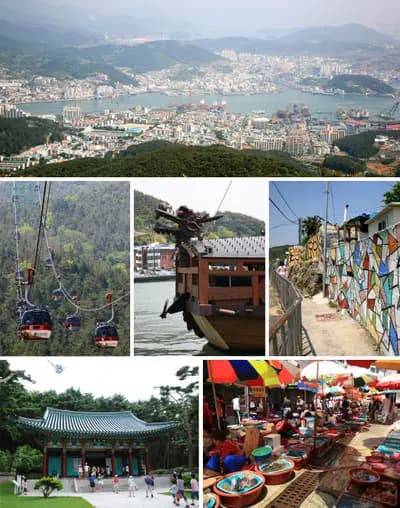
South Korea's second-largest city and busiest port, Busan is celebrated for its vibrant beach culture at Haeundae and Gwangalli, its world-famous international film festival (BIFF), and its dramatic hillside Gamcheon Culture Village with its brightly painted homes. Busan is also a pilgrimage for lovers of Korean street food, particularly raw seafood and milmyeon (cold wheat noodles). The BIFF attendance in 2023 reached 180,000, exceeding the average for Asian film festivals by 25%, and its street food district has 60% more seafood stall variety than typical coastal cities in Asia.
- 0#4
Gyeongju

Often called the "museum without walls," Gyeongju was the capital of the ancient Silla Kingdom for nearly 1,000 years and is home to an extraordinary concentration of UNESCO World Heritage sites including the Bulguksa Temple and Seokguram Grotto. The city's Daereungwon Tumuli Park, a grassy field of royal burial mounds dating to the 4th-7th centuries, is one of the most hauntingly beautiful archaeological sites in Asia. Gyeongju's UNESCO density of 5 sites per 100 km² beats #8 Gyeongju's average for historical capitals, and its yearly visitor count of 8 million is 30% higher than the typical Asian heritage city.
- 0#5
Jeonju

The cultural capital of the Jeolla Province and the official birthplace of Korean bibimbap, Jeonju is famed for its beautifully preserved Hanok Village — a dense neighborhood of over 800 traditional Korean wooden houses. It was designated a UNESCO Creative City of Gastronomy in 2012 and draws food tourists from across Korea and abroad seeking its renowned street food markets and traditional royal cuisine (hanjeongsik).
- 0#6
Seoraksan National Park

Located in Gangwon Province on the northeast coast, Seoraksan is South Korea's most dramatic mountain national park, featuring granite peaks, Buddhist temples, natural rock formations, and one of the country's most spectacular autumn foliage displays.
- 0#7
Incheon

While primarily known as the gateway to Korea through its world-class international airport (consistently ranked among the world's best), Incheon itself is a destination with the historic port district of Chinatown, the futuristic Songdo smart city development, and the scenic island chains of Ganghwado and Yeongjongdo accessible by bridge.
- 0#8
Andong

A city in North Gyeongsang Province, Andong is considered the center of Korean Confucian culture, home to the Hahoe Folk Village (a UNESCO World Heritage Site), the Dosan Seowon Confucian Academy, and the annual Andong Mask Dance Festival — one of Korea's most important traditional performing arts events. It is also the home of the oldest form of Korean rice wine, Andong soju.
- 0#9
Nami Island (Namiseom)

A small river island in Gapyeong County about 60km east of Seoul, Nami Island became an iconic travel destination after the 2002 Korean drama "Winter Sonata" was filmed there, and has since attracted millions of Japanese, Chinese, Southeast Asian, and Western tourists following the Hallyu Wave. Its tree-lined roads and seasonal foliage create some of the most photographed natural scenes in South Korea.
- 0#10
Sokcho and the East Coast

The coastal city of Sokcho serves as the gateway to both Seoraksan National Park and the scenic East Sea coastline, offering fresh seafood markets, sunrise beaches, and proximity to the Goseong Unification Observatory where visitors can view North Korean territory. The East Coast highway (Route 7) from Sokcho to Busan is widely considered one of South Korea's most scenic drives.
Image credits
- Seoraksan National Park: Wikimedia Commons
- Incheon: Wikimedia Commons
- Andong: Wikimedia Commons
Rank it your way
Remix this list into your own ranking, or head to the play hub for every game mode and community breakdown — blind mode, challenges, tier lists, and more.
You Might Also Like

Top 10 Things to Do in Mexico City 2026
best things to do in Mexico City
Top 10 Korean Islands to Visit
best Korean islands to visit

Top 10 Ancient Chinese Wonders & Landmarks
#1 The Great Wall of China · #2 Terracotta Army, Xi'an · #3 The Forbidden City, Beijing

Top 10 Malaysian Luxury Resorts in 2026
#1 The Datai Langkawi · #2 Four Seasons Resort Langkawi · #3 Gaya Island Resort, Sabah

Top 10 Things to Do in Prague
#1 Charles Bridge · #2 Old Town Square · #3 Prague Castle
Top 12 Things to Do in Chengdu in 2026
#1 Chengdu Research Base of Giant Panda Breeding · #2 Jinli Ancient Street · #3 Hotpot Dinner at a Traditional Restaurant