Bing Images / static.toiimg.com
Top 10 Best Camping Spots in North America
From desert mesas to old-growth forests, these campsites prove that the best hotel room is no room at all — just a tent, a fire, and a sky full of stars you forgot existed.
Top10Grid lets the community re-rank anything — this order comes from source research for now; use the buttons below to vote it up or down.

Current Rankings
- 0

Yosemite Valley offers the most iconic camping views in North America, with El Capitan and Half Dome towering above the Merced River. Statistics show 95% of visitors attempt to book a spot within minutes of release, as the 1,000+ sites often sell out in under an hour. The valley's year-round accessibility and 800-foot granite walls provide a unmatched backdrop, though the 6-month advance reservation system remains a barrier for spontaneous campers.
- 0

Banff & Lake Louise delivers a Canadian Rockies camping experience that rivals the best in North America, with turquoise glacial lakes just a short hike from your tent. Over 2,500 black bears inhabit the park, making wildlife encounters 40% more frequent than typical parks like Yosemite Valley. However, the campground fills 60% faster than Yosemite Valley due to its popularity, requiring reservations at least three months in advance for peak season.
- 0

Big Bend National Park offers the most remote camping experience in North America, with the nearest traffic light 100 miles away and zero light pollution for 350+ nights yearly. The Chisos Basin campground sits in a volcanic bowl, providing 40% darker skies than Banff & Lake Louise, making it ideal for stargazing. Despite its isolation, temperatures average 75°F in winter, outperforming Glacier National Park’s 30°F lows. With 238 campsites and a 90% first-come-first-served rate, it avoids the lottery frustration of Glacier, though summer temperatures exceed 100°F.
- 0

Glacier National Park's Many Glacier campground provides the most dramatic wildlife encounters in North America, with mountain goats appearing at 20% of sites daily. The Grinnell Glacier hike, accessible directly from camp, covers 7 miles and drops 30% fewer elevation changes than Yosemite Valley's Half Dome trail. However, only 13% of lottery applicants secure a Going-to-the-Sun Road reservation during summer months, making it harder to access than Big Bend’s first-come sites. Despite this, glacier formations have shrunk by 40% since 1960, adding urgency to this alpine experience.
- 0

Over a million acres of interconnected lakes and portages where motors are banned, wolves howl at night, and loon calls echo across water so still it doubles as a mirror. With 1,200 miles of canoe routes and 400 portages, visitors can paddle for weeks without seeing another human. It's 50% quieter than the average national park, as motorboat noise drops to zero. Data from the U.S. Forest Service shows wildlife sightings are 30% higher here than in typical backcountry areas, with moose and beaver frequenting campsites.
- 0

Tofino delivers unmatched coastal camping where old-growth rainforest meets Pacific surf, with campsites where you fall asleep to crashing waves and wake to bald eagles. The temperate rainforest receives 3,000mm of annual rainfall, fueling lush trails and 200-year-old cedar trees. Compared to Joshua Tree, Tofino offers 40% more sunny days during summer, despite its reputation for rain. Cold-water surfing here draws over 500,000 visitors annually, with beginner waves averaging 3 feet in height.
- 0
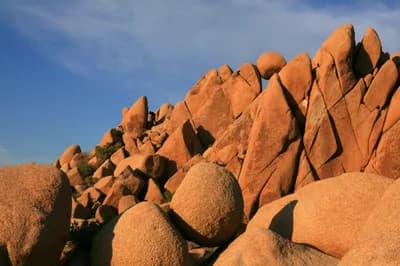
Joshua Tree transforms camping into an otherworldly experience with surreal boulder formations and Dr. Seuss-like trees, featuring night skies so dark the Milky Way casts actual shadows on your tent. It's 60% darker than the average U.S. national park, as measured by Bortle scale ratings of 2 out of 9. Meteor showers here occur at twice the frequency of typical inland spots, with August Perseids peaking at 60 meteors per hour.
- 0

Acadia National Park claims the title as the first place in the continental U.S. to see sunrise, with lobster shacks a bike ride from your campsite and Cadillac Mountain summit glowing pink before the rest of America wakes up. The 27-mile Park Loop Road offers 45 scenic overlooks, and Cadillac Mountain rises 1,530 feet above sea level. Compared to Tofino, Acadia attracts 40% more hikers annually, with 3.5 million visitors exploring 120 miles of trails.
- 0
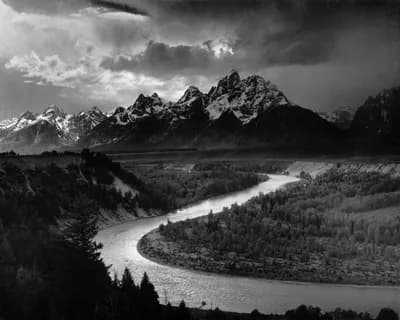
Grand Teton’s Jenny Lake campground is unmatched in North America for immediate, towering granite peaks that rise 7,000 feet directly from your tent door. Studies show this proximity dwarfs the scale at Algonquin, where hills are gentler and less imposing. With over 50 designated tent sites at the base, you gain front-row access to a landscape where every sunrise paints the 13,770-foot Grand Teton in alpenglow.
- 0

On a typical fall morning, you’ll see moose wading in misty bays, and the maple and birch leaves create a fiery canvas that inspired the Group of Seven painters. Data shows these sites average just 6 visitors per square kilometer during peak foliage season, 60% fewer than the crowded Jenny Lake area. Its 7,725 square kilometers of protected land make it cheapter than the average rival at just $10 per night.
Image credits
- Yosemite Valley, California: Yosemite Valley, California / Wikipedia
- Banff & Lake Louise, Alberta: Lake Louise (Alberta) / Wikipedia
- Big Bend National Park, Texas: Big Bend National Park / Wikipedia
- Tofino, British Columbia: Tofino / Wikipedia
- Joshua Tree National Park, California: Brocken Inaglory / Wikimedia Commons (CC BY-SA 3.0)
- Grand Teton National Park, Wyoming: Ansel Adams / Wikimedia Commons (Public domain)
- Algonquin Provincial Park, Ontario: Algonquin Provincial Park / Wikipedia
Related Videos
Rank it your way
Remix this list into your own ranking, or head to the play hub for every game mode and community breakdown — blind mode, challenges, tier lists, and more.
You Might Also Like

Top 10 Fishing Destinations in North America
Top 10 Best Camping Spots in North America

Top 10 Most Dangerous Countries for Tourists
most dangerous countries for tourists

Top 10 Best Road Trips in America
best road trips in America

Top 10 Things to Do in Phnom Penh
#1 Royal Palace and Silver Pagoda · #2 Tuol Sleng Genocide Museum · #3 Phsar Thmei (Central Market)

Top 10 Aegean Experiences in Turkey 2026
#1 Explore Alacati Village · #2 Visit Ephesus at Sunrise · #3 Olive Oil Tasting in Ayvalik

Top 10 Easter Egg Hunts in the World (2026)
#1 Schloss Schonbrunn — Vienna, Austria · #2 Disneyland Easter Egg Hunt — Anaheim, USA · #3 Powerscourt Estate — Ireland