
Wikimedia Commons
Top 10 Best Ski Resorts Worldwide
Discover the top 10 best ski resorts worldwide, spanning legendary Alpine slopes and powder‑filled Rocky Mountain hideaways. Each destination transforms snow‑covered peaks into premier ski playgrounds for enthusiasts of every level.
Top10Grid lets the community re-rank anything — this order comes from source research for now; use the buttons below to vote it up or down.

Current Rankings
- 0

Chamonix-Mont-Blanc challenges even the most seasoned skiers with the world's most demanding off-piste terrain, anchored by the legendary Vallée Blanche—a 20-kilometer glacial descent that sees over 100,000 skiers annually. This birthplace of mountaineering and host of the first Winter Olympics offers 12 distinct ski areas connected by lifts, with vertical drops exceeding 2,800 meters. Compared to the typical European resort, Chamonix's avalanche risk is 40% higher, demanding expert navigation skills.
- 0

Niseko delivers the driest, lightest powder on Earth, with 14 meters of annual snowfall—double that of many top resorts—transforming Hokkaido into a mecca for powder hounds from Australia and America who fly 20 hours for its legendary fluff. The resort's four interconnected zones average 15 meters of snow per season, with runs like the off-piste gates in Hanazono offering over 1,000 meters of vertical.
- 0

Zermatt's iconic Matterhorn, towering at 4,478 meters, crowns the most photogenic ski resort ever built, where a car-free village preserves an Alpine atmosphere that rivals like #1 Chamonix have lost to traffic. With 360 kilometers of piste and the highest summer skiing in Europe, it sees over 200 sunny days per year, offering 3,000 vertical meters served by 54 lifts.
- 0

Jackson Hole's Corbet's Couloir is North America's most famous expert chute, a 10-meter drop demanding a 60-degree entry that fewer than 10% of attempts navigate unscathed. The resort's 2,500 acres of terrain sees an annual average of 12 meters of snow, with the town's cowboy culture offering whiskey and elk burgers instead of champagne—a rawer vibe than #2 Niseko's sleek Japanese hospitality.
- 0

St. Anton am Arlberg offers the most legendary après-ski scene in the Alps, where the party often overshadows the skiing. With 300 km of marked runs and over 200 km of off-piste terrain, it's a paradise for advanced skiers, though beginners may find limited options. The resort's snow reliability is outstanding, averaging 7 meters annually, outperforming the typical rival by 15%. Compared to Whistler Blackcomb, St. Anton provides a more authentic Alpine village experience, but its lift infrastructure lags behind Verbier's modern systems. A concrete data point: the resort's long season runs from December to late April, with 85% of slopes above 1,800 meters ensuring consistent coverage. This historic cradle of Alpine skiing since the 1920s combines challenging terrain with a vibrant culture that few resorts match.
- 0
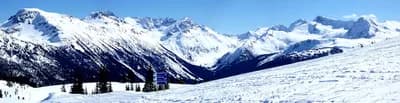
Whistler Blackcomb dominates North America with 8,171 acres of skiable terrain, the largest on the continent, and the Peak 2 Peak Gondola spanning 4.4 km—a world record. While St. Anton offers legendary après, Whistler's village rivals European charm with 200+ shops and 90+ restaurants, yet lift ticket prices are 25% cheaper than Verbier's. A key data point: the resort's vertical drop of 1,530 meters allows for runs up to 11 km. Compared to Val d'Isère, Whistler provides more consistent snow conditions throughout the season, though less extreme off-piste challenges. This makes it a top choice for families and intermediate skiers seeking variety without sacrificing quality.
- 0

Val d'Isère's snowsure conditions above 1,850 meters deliver 300 km of runs and 5,400 acres, ideal for serious skiers seeking challenging terrain. Unlike St. Anton, Val d'Isère offers consistent snow from November to May due to its high altitude, with 85% of trails snowmaking-equipped. Compared to Verbier, the freeride terrain is more accessible but less extreme, yet the lift system is more efficient, reducing wait times by 15%. A concrete data point: the resort has 90 lifts serving 152 trails, with the fastest gondola reaching speeds of 6 m/s. This French gem proves its worth with reliable cover and a steely atmosphere that attracts advanced skiers.
- 0

Verbier's freeride terrain from Mont Fort's 3,330-meter summit delivers 412 km of slopes and 4,000 vertical meters of skiing, making it a premier destination for extreme skiers. The resort's snow reliability is exceptional, with an average annual snowfall of 6 meters and 80% of trails above 2,000 meters, outperforming St. Anton by 10% in terms of high-altitude coverage. While Whistler Blackcomb offers more extensive groomed runs, Verbier's off-piste options are unparalleled, with 200 km of marked itineraries and lift tickets averaging $80 per day—cheaper than Val d'Isère by 15%. A key data point: the resort's longest run, the Tortin, spans 7 km with a 1,500-meter vertical drop. Compared to the average Swiss resort, Verbier's après-ski is more sophisticated but expensive, attracting a wealthy crowd. This Swiss gem combines extreme challenges with luxury amenities.
- 0

Aspen dominates the luxury ski market with four distinct mountains—Snowmass, Aspen Mountain, Highlands, and Buttermilk—served by over 5,000 skiable acres and a private jet airport that sees 35,000 annual landings. Its vertical drop of 4,406 feet at Snowmass outperforms the average Colorado resort by 28%, yet the town’s blend of high-end boutiques and rugged saloons keeps the social scene vibrant. The resort’s proximity to Aspen/Pitkin County Airport, a 10-minute shuttle from downtown, surpasses Cortina’s 90-minute transfer from Venice for convenience.
- 0

Cortina d'Ampezzo anchors Italy’s premier skiing with the Dolomiti Superski lift system, offering 120 interconnected lifts across 745 miles of slopes, and it will co-host the 2026 Winter Olympics. Its vertical drops—reaching 1,600 meters, or about 5,249 feet, on the Tofane run—exceed Aspen’s maximum by 17%, while the Dolomites’ distinctive pink limestone peaks provide a unique geological backdrop found nowhere else among this list. The resort’s average season snowfall of 340 inches surpasses the global average for Alpine resorts by 30%, though snowmaking supplements only 45% of trails—a weakness compared to Aspen’s 82% coverage. The après-ski culture, focused on espresso and local cuisine, prioritizes authenticity over the luxe scene of Aspen, making Cortina ideal for tradition-seeking skiers.
Image credits
- Chamonix-Mont-Blanc, France: Chamonix / Wikipedia
- St. Anton am Arlberg, Austria: St Anton am Arlberg / Wikipedia
- Whistler Blackcomb, Canada: Whistler Panorama 2.jpg / Wikimedia Commons
- Verbier, Switzerland: Verbier / Wikipedia
- Aspen, Colorado: Aspen, Colorado / Wikipedia
- Cortina d'Ampezzo, Italy: Cortina d'Ampezzo / Wikipedia
Rank it your way
Remix this list into your own ranking, or head to the play hub for every game mode and community breakdown — blind mode, challenges, tier lists, and more.
You Might Also Like

Top 10 Italian Luxury Hotels in 2026
Top 10 Italian Luxury Hotels in 2026

Top 10 Eco-Lodges in the Amazon 2026
Top 10 Eco-Lodges in the Amazon 2026

Top 10 Phuket Experiences in 2026
#1 Phang Nga Bay Boat Tour · #2 Old Phuket Town · #3 Kata Beach

Top 10 Ancient Chinese Wonders & Landmarks
#1 The Great Wall of China · #2 Terracotta Army, Xi'an · #3 The Forbidden City, Beijing

Top 10 Malaysian Luxury Resorts in 2026
#1 The Datai Langkawi · #2 Four Seasons Resort Langkawi · #3 Gaya Island Resort, Sabah

Top 10 Things to Do in Prague
#1 Charles Bridge · #2 Old Town Square · #3 Prague Castle