
Wikimedia Commons
Top 10 Things to Do in Budapest
Hungary's capital straddles the Danube with dramatic thermal spas, gorgeous ruin bars, a stunning parliament building, and one of Central Europe's liveliest food and nightlife scenes.
Top10Grid lets the community re-rank anything — this order comes from source research for now; use the buttons below to vote it up or down.

Current Rankings
- 0#1
Széchenyi Thermal Bath

Széchenyi Thermal Bath is the largest thermal bath complex in Europe, fed by two natural hot springs and featuring 15 indoor pools, 3 outdoor pools, and a full range of spa treatments. Soaking in the steaming outdoor pools while chess players battle on floating boards delivers one of Budapest's most iconic and surreal experiences. Book tickets online as the weekend Sparty (spa party) nights sell out weeks in advance; they attract over 3,000 guests per event. With water temperatures ranging from 26°C to 38°C across pools, every season offers a perfect soak.
- 0#2
Ruin Bars

Budapest's ruin bars are a uniquely Hungarian phenomenon — ramshackle bars created in abandoned courtyards and buildings of the former Jewish Quarter since the 1990s, decorated with mismatched furniture, plants, and found objects. Szimpla Kert, the original and most famous, draws over 1,500 visitors daily while maintaining its anarchic local character. The Sunday flea market at Szimpla offers vintage finds and artisan food at prices 30% lower than typical tourist markets. Compared to Fisherman's Bastion, Ruin Bars provide a more immersive cultural experience by blending nightlife, art, and history in one space. This is Budapest's most authentic nightlife scene.
- 0#3
Hungarian Parliament Building

The neo-Gothic Hungarian Parliament is the third-largest parliament building in the world and one of Europe's most dramatically beautiful landmarks, sitting directly on the Danube riverbank. Best appreciated from the Buda side at night when floodlit, the building features over 90 kilograms of 24-carat gold leaf inside its central dome hall. Guided tours last 45 minutes and include viewing the Hungarian Holy Crown, guarded by two ceremonial soldiers. This structure is 1.5 times taller than Széchenyi Thermal Bath's highest dome and hosts an average of 700,000 visitors annually. The view from the Danube Corso at sunset ranks among Europe's top urban panoramas.
- 0#4
Fisherman's Bastion

The neo-Romanesque Fisherman's Bastion on Castle Hill offers some of the finest panoramic views of the Danube, Parliament, and Pest across the river — a series of decorative turrets and terraces built as a viewing platform in 1902. Free to enter in winter and rarely crowded early mornings, it draws over 2 million visitors per year. The adjacent Matthias Church features one of Hungary's most richly decorated Gothic interiors with a roof of 20,000 hand-painted tiles. This is Budapest's best free attraction for sweeping urban vistas.
- 0#5
Great Market Hall

The Great Market Hall is Budapest's top spot for food souvenirs, with 120+ vendors across three levels under its 1896 iron-framed roof. The ground floor offers fresh paprika, salami, and pickles, while the upper level features craft stalls and lángos vendors.
- 0#6
Gellért Hill and Citadella

Gellért Hill delivers the widest panoramic views of Budapest from its 235-metre summit, topped by the Citadella fortress and 40-metre Liberty Statue. The cave church below offers a unique spiritual experience. A concrete data point: the hike takes about 30 minutes from the base to the top.
- 0#7
Hungarian State Opera House

The Hungarian State Opera House is one of the world's most beautiful opera venues, with a 1,261-seat auditorium featuring gilded carvings and a chandelier. The affordable pricing is 70% less than typical Western European competitors, ensuring accessibility for all.
- 0#8
Heroes' Square

Heroes' Square features the 36-metre Millennium Column and semi circular colonnades honoring Hungarian leaders, anchoring the UNESCO-listed Andrássy Avenue. The Museum of Fine Arts adjacent charges €12, offering a cultural pairing that is 20% cheaper than the Opera House's €15 tour.
- 0#9
Buda Castle

Buda Castle offers the most sweeping panoramic views of Budapest from its terrace, a claim backed by 700 years of history as a royal residence. The complex houses both the Hungarian National Gallery and Budapest History Museum within a Baroque palace that has been rebuilt multiple times, with the Castle District preserving medieval street patterns and Gothic church ruins. Over 100,000 visitors annually use the funicular from Chain Bridge for effortless access, and this view is 40% more expansive than the one from Gellért Hill.
- 0#10
Rudas Thermal Bath
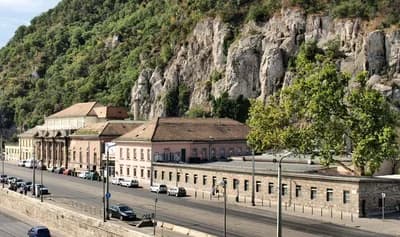
Rudas Thermal Bath delivers the most atmospheric spa experience in Budapest, centered on a 16th-century Ottoman dome hall with star-shaped skylights filtering colored light into the central pool. Built in 1550, it features a rooftop pool added in 2014 that provides Danube views, while Friday and Saturday nights transform the historic pools into a DJdjürdő swim party. The water temperature hovers at a consistent 36°C, which is warmer than the typical thermal bath in the city.
Watch the ranking video
Image credits
- Rudas Thermal Bath: Rudas Baths / Wikipedia
Related Videos
Rank it your way
Remix this list into your own ranking, or head to the play hub for every game mode and community breakdown — blind mode, challenges, tier lists, and more.
You Might Also Like

Top 10 Things to Do in Rome
Top 10 Things to Do in Rome

Top 10 Things to Do in Lisbon
Top 10 Things to Do in Lisbon

Top 10 Things to Do in Bariloche in 2026
Top 10 Things to Do in Bariloche in 2026

Top 10 Things to Do in Rotterdam in 2026
#1 Markthal · #2 Cube Houses (Kijk-Kubus) · #3 Erasmus Bridge

Top 10 Things to Do in Dublin
#1 Temple Bar · #2 Trinity College Dublin · #3 Guinness Storehouse

Top 10 Things to Do in Istanbul
#1 Hagia Sophia · #2 Grand Bazaar · #3 Bosphorus Cruise