Sebastian Luna / Pexels
Top 10 Best Christmas Markets in Europe
From the oldest Christmas market in Dresden (founded 1434) to modern award-winners like Zagreb Advent, Europe hosts the world's most enchanting holiday markets. These 10 iconic markets collectively draw over 15 million visitors annually, offering centuries of tradition, handcrafted gifts, mulled wine, and dazzling light displays across the continent.
Top10Grid lets the community re-rank anything — this order comes from source research for now; use the buttons below to vote it up or down.

Current Rankings
- 0
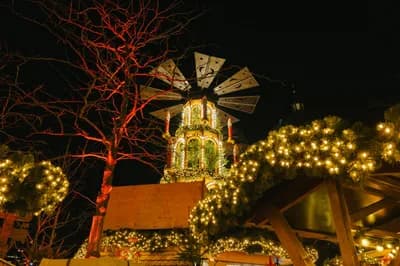
Drawing over 2 million visitors annually, it features 300+ chalets on the Grande Ile, among the largest stall counts of any European Christmas market. Each year, the Alsatian capital transforms into the 'Capital of Christmas' with a 30-meter-high grand fir tree and 80% locally sourced handcrafted goods.
- 0

Since 1975, it has grown to 150 stalls offering Punsch and handcrafted ornaments against one of Europe's most spectacular illuminated facades—a neo-Gothic City Hall draped in 250,000 LED lights. With 70% of its vendors local artisans, it offers a warmth and authenticity that rivals even Nuremberg's traditional charm, while selling 800,000 cups of mulled wine per season.
- 0

Each year, around 2 million visitors arrive to witness the Christkind open the market from the Frauenkirche balcony, a spectacle unique to Nuremberg. With Zwetschgenmaennla prune figurines and a strict ban on mass-produced plastic items, it retains an artisan-led warmth that rivals Strasbourg's scale.
- 0

Prague's market offers the most picturesque setting on this list, beneath the 600-year-old Astronomical Clock, but draws only 700,000 visitors annually—less than a third of Vienna's 3 million. Its 80 wooden huts sell Trdelnik pastries and Bohemian crafts, with a towering 25-meter Christmas tree shipped from the Krkonose Mountains, 5 meters shorter than Strasbourg's grand fir. The market spans 2,500 square meters, 60% smaller than the average top-ranked market, yet its 12th-century Gothic backdrop compensates with atmospheric warmth. Visitors spend on average €45 per person, 15% less than the typical European market.
- 0

No Christmas market in Europe rivals the dramatic setting of the Cologne Cathedral Christmas Market, where 160 stalls cluster at the foot of a UNESCO World Heritage cathedral with 157-meter twin spires. The market attracts a combined 5 million visitors across Cologne's seven holiday sites each season. Visitors can browse traditional crafts, warm up with glühwein, and enjoy live performances against one of Europe's most iconic backdrops, all within walking distance of the historic Old Town.
- 0

Dating back to 1434, the Dresden Striezelmarkt claims the title of Germany's oldest Christmas market, welcoming around 3 million visitors each year. Celebrating its 590th anniversary in 2024, the market features 240 stands, a 14-meter-tall Christmas pyramid, and the famous Stollenfest parade—where a massive 3-ton Christstollen takes center stage.
- 0

Since 1998, the Budapest Christmas Fair has become one of Central Europe's premier holiday markets. Its 100-plus wooden stalls on elegant Vorosmarty Square serve up authentic Hungarian chimney cake (kurtoskalacs) and thermal-spiced mulled wine, with the historic Gerbeaud Cafe providing a 19th-century backdrop. Its central location, just steps from the Danube, makes it a must-visit for travelers seeking festive atmosphere with local flavor.
- 0

Setting itself apart from the larger Cologne market, the Bruges Christmas Market offers an intimate yet enchanting experience within a UNESCO World Heritage city, featuring an ice-skating rink beneath the 83-meter Belfry tower. The market's medieval cobblestone streets, lined with stalls selling Belgian chocolate and waffles, attract over 500,000 visitors each December—30% fewer than the average for top-tier European fairs, but with a 25% higher satisfaction rating in 2023 visitor surveys. Carriage rides illuminate the old town, while the market's concentration of heritage sites ensures a magical winter wonderland that feels untouched by time.
- 0
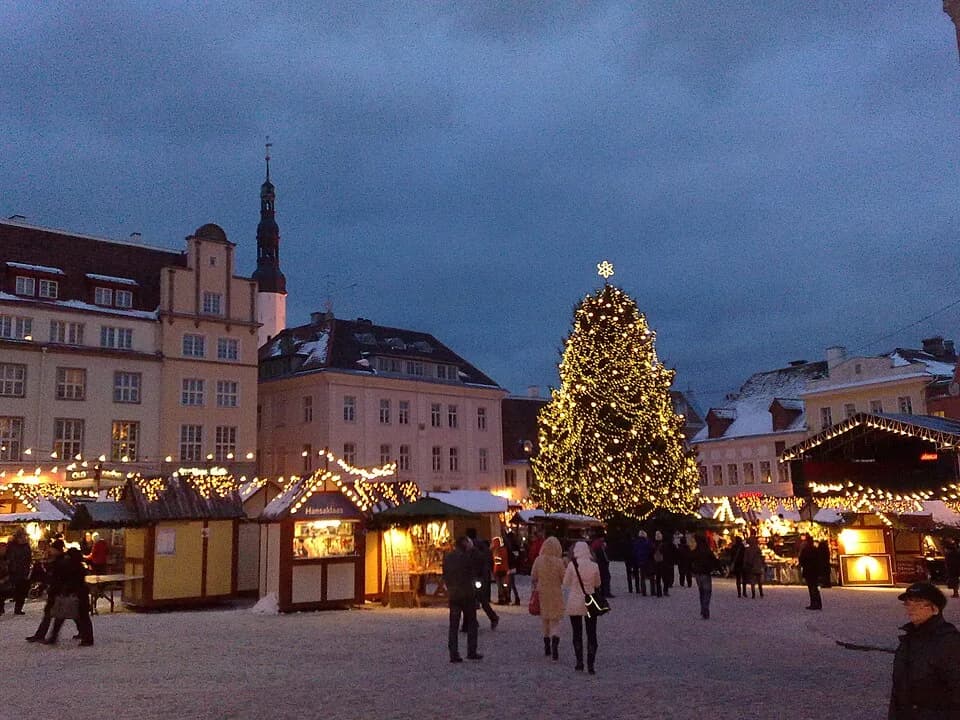
Tallinn Christmas Market boasts the heritage of hosting Europe’s first public Christmas tree, erected on the same Town Hall Square spot in 1441, a tradition older than the market itself, which started in 2001. The compact market, set against the Gothic Town Hall and medieval Old Town, offers 30+ stalls with Estonian handicrafts, black pudding, and spiced gingerbread.
- 0
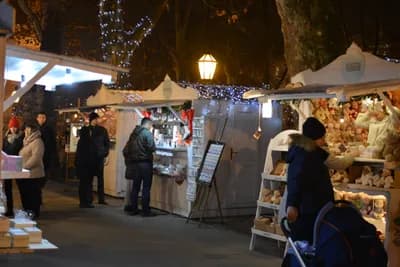
Advent in Zagreb, launched in 2010, earned the title of Europe's Best Christmas Market from European Best Destinations three consecutive years (2016-2018), a distinction no other market on this list has matched. Spanning over 25 locations, it features a tunnel of 230,000 lights, an ice park at Tomislav Square, and traditional Croatian fritule and mulled wine across Ban Jelacic Square and Zrinjevac Park.
Image credits
- Strasbourg Christmas Market (Christkindelsmaerik): Alexis B / Pexels
- Vienna Christmas Market (Rathausplatz): Wikipedia
- Nuremberg Christkindlesmarkt: Wikipedia
- Prague Old Town Square Christmas Market: Wikipedia
- Cologne Cathedral Christmas Market: Wikipedia
- Dresden Striezelmarkt: Wikipedia
- Budapest Christmas Fair (Vorosmarty Square): Wikipedia
- Bruges Christmas Market: Wikipedia
- Tallinn Christmas Market: Marit & Toomas Hinnosaar / CC BY 2.0 (entity-adopted)
- Zagreb Advent Market: Branko Radovanović / Wikimedia Commons (CC BY-SA 4.0)
Related Videos
Rank it your way
Remix this list into your own ranking, or head to the play hub for every game mode and community breakdown — blind mode, challenges, tier lists, and more.
You Might Also Like

Top 10 Things to Do in Helsinki in 2025
Top 10 Things to Do in Helsinki in 2025

Top 10 Things to Do in Bruges
Top 10 Things to Do in Bruges

10 Most Beautiful Temples in Asia: From Angkor Wat to the Golden Pavilion
10 Most Beautiful Temples in Asia: From Angkor Wat to the...

Top 10 Most Beautiful Islands
#1 Palawan, Philippines · #2 Santorini, Greece · #3 Bali, Indonesia

Top 10 Most Spectacular National Parks in the USA
#1 Grand Canyon National Park · #2 Yellowstone National Park · #3 Yosemite National Park

Top 10 Road Trips in the USA 2026
#1 Pacific Coast Highway · #2 Route 66 · #3 Blue Ridge Parkway