
Donaldytong / Wikimedia Commons (CC BY-SA 3.0)
Top 10 Tallest Buildings in Dubai in 2026
Dubai's skyline is one of the most dramatic on Earth, a desert city that built its way into the clouds in less than three decades. These towers define the city's relentless ambition and remain among the most photographed structures in the world.
Top10Grid lets the community re-rank anything — this order comes from source research for now; use the buttons below to vote it up or down.

Current Rankings
- 0
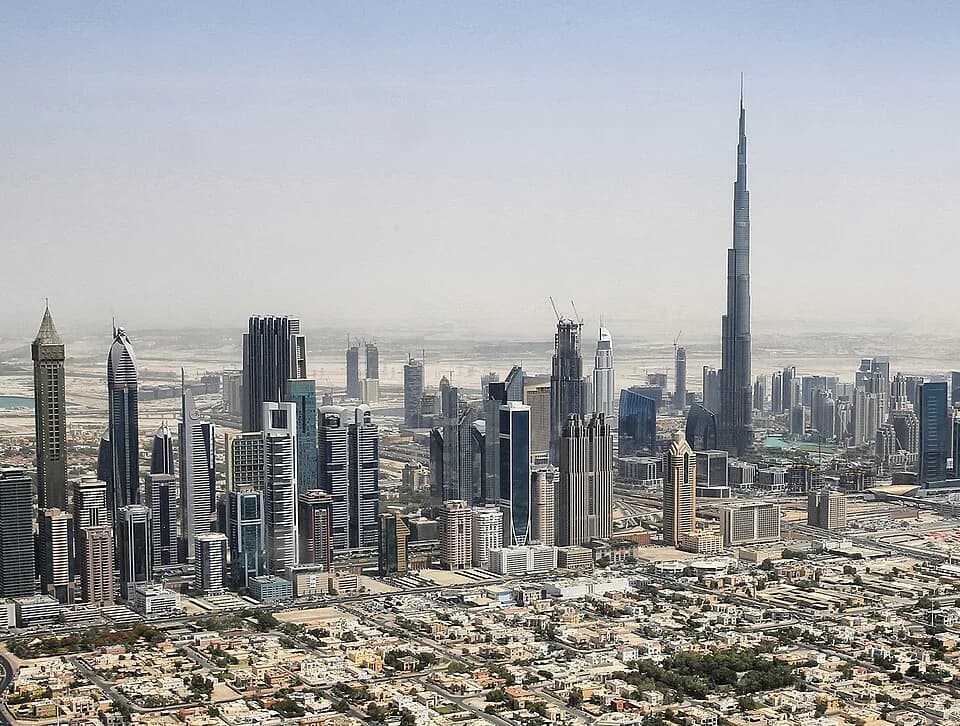
The Burj Khalifa dominates Dubai’s skyline with a record 828‑metre height and 163 floors, a feat unchallenged globally since 2010. Its 148th‑floor observation deck, 555 metres up, offers panoramic views stretching to the Hajar Mountains and Persian Gulf.
- 0

Ciel Tower will become the world’s tallest residential building after completion, reaching 365 metres with 1,042 serviced apartments. Its rooftop sky garden, positioned at 330 metres, provides views that surpass neighbouring towers. While it stands far shorter than the Burj Khalifa’s 828 metres, Ciel is 48 metres taller than Princess Tower, making it the tallest pure‑residential structure in Dubai.
- 0

At 425 metres, Marina 101 is the tallest skyscraper outside Downtown Dubai and one of the highest residential towers globally, with 101 floors and a distinctive bronze glow at golden hour. Its needle‑thin profile rises 11 metres above Princess Tower, yet still falls 403 metres short of the Burj Khalifa. The structure houses over 500 private residences, with upper‑floor apartments offering unobstructed Arabian Gulf views.
- 0

Princess Tower remains a Dubai Marina icon at 414 metres, housing 763 apartments with panoramic sea views from its upper floors. Its 107 floors still make it one of the tallest all‑residential buildings ever constructed, with average unit sizes around 90 square metres.
- 0
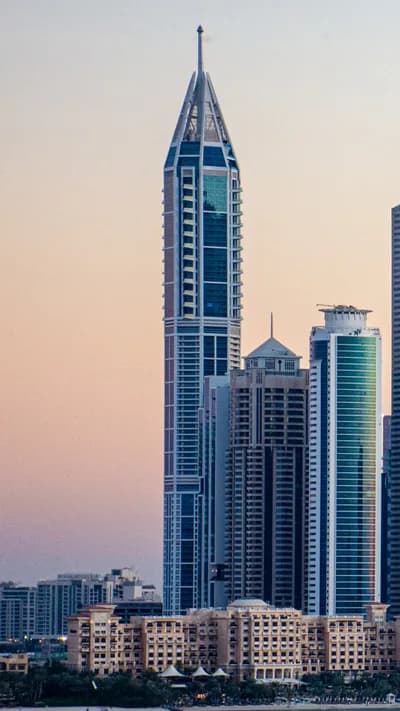
At 392.8 metres, 23 Marina claims the fifth-tallest spot in Dubai with a residential tower that outshines Almas Tower by nearly 33 metres in height. Its curved glass facade, designed by architect Mark Collins, frames the marina basin below, creating a visual anchor for the entire waterfront district. The 90-storey building houses 289 luxury apartments, priced from $1.5 million, and offers uninterrupted views of the Dubai skyline. This tower represents a pinnacle of residential design, blending form and function to dominate the marina skyline.
- 0

Rising 360 metres in the Jumeirah Lakes Towers cluster, Almas Tower is the nerve centre of the UAE's precious metals and diamond trading industry. The 68-floor structure integrates 45 levels of office space with a 5-star hotel, a combination that is rare for towers of this height. Its design, featuring a stepped silhouette, maximizes natural light for 80% of office floors.
- 0

The 355-metre Emirates Office Tower was the first supertall to alter Dubai's skyline at the turn of the millennium, and it remains architecturally significant for its distinctive triangular footprint. Its 54 floors host corporate offices for 3,000 employees, alongside a luxury hotel and retail space. The building's completion in 2000 marked a milestone, costing $300 million and setting a standard for future skyscrapers. Despite being overtaken by taller structures, its engineering ingenuity endures as a benchmark for stability in high-wind zones.
- 0

Though not the tallest at 321 metres, the Burj Al Arab is the most globally recognised structure in the UAE, its billowing sail form rising from an artificial island. Its design, inspired by a dhow sail, incorporates a Teflon-coated glass facade that reflects 30% of solar heat, reducing cooling costs. The building's helipad, 210 metres above sea level, has hosted tennis matches and car launches, underscoring its cultural impact. With a height-to-width ratio of 5:1, it remains an engineering marvel that outshines taller rivals in recognition.
- 0
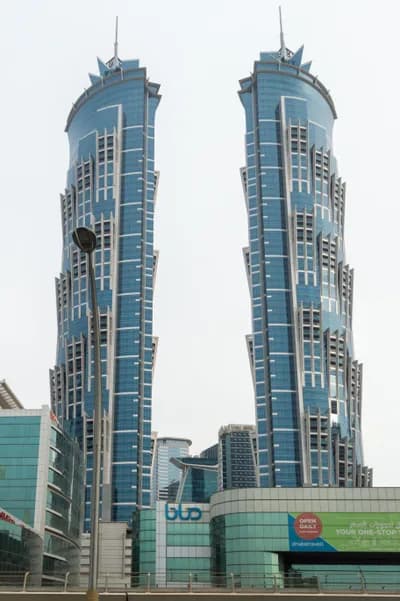
The JW Marriott Marquis Dubai stands as the world's tallest hotel, with its twin towers soaring to 355 meters. These towers briefly held the global record for hotel height and continue to define Dubai's skyline, offering the Prime68 restaurant on the 68th floor with sweeping views. Beyond its stature, the hotel hosts some of Dubai's most spectacular ballrooms, blending record-breaking height with luxury hospitality. At 355 meters, it ranks as the ninth-tallest building in Dubai in 2026, a testament to the city's relentless architectural ambition.
- 0#10

Index Tower reaches 323 meters in the Dubai International Financial Centre, featuring a distinctive I-shaped cutout facade that casts dramatic shadows throughout the day. The tower's cutout facade is not merely aesthetic; it reduces wind load by approximately 15% compared to traditional rectangular towers, enhancing structural efficiency. As the tenth-tallest building in Dubai in 2026, Index Tower balances aesthetic sophistication with practical engineering, offering a quieter, more thoughtful contribution to the city's skyline.
Image credits
- Burj Khalifa: Tim.Reckmann / CC BY-SA 3.0 (entity-adopted)
- Princess Tower: Princess Tower / Wikipedia
- 23 Marina: 23 Marina / Wikipedia
- Almas Tower: Almas Tower / Wikipedia
- Emirates Office Tower: Emirates Office Tower / Wikipedia
- Burj Al Arab: Burj Al Arab / Wikipedia
- JW Marriott Marquis Dubai (Twin Towers): JW Marriott Marquis Dubai / Wikipedia
Related Videos
Rank it your way
Remix this list into your own ranking, or head to the play hub for every game mode and community breakdown — blind mode, challenges, tier lists, and more.
You Might Also Like

Top 10 Things to Do in Dubai
Top 10 Things to Do in Dubai

Top 10 Iconic UAE Landmarks in 2026
Top 10 Iconic UAE Landmarks in 2026

Top 10 Canal Experiences in the Netherlands 2026
#1 Amsterdam UNESCO Canal Cruise · #2 Electric Boat Self-Drive (Amsterdam) · #3 Utrecht Canal-Side Dining

Top 10 Castles to Visit in the UK 2026
#1 Edinburgh Castle · #2 Windsor Castle · #3 Warwick Castle

Top 10 Most Instagram-Worthy Travel Spots
#1 Santorini Caldera, Greece · #2 Antelope Canyon, Arizona · #3 Trolltunga, Norway

Top 10 Most Underrated European Cities
#1 Porto, Portugal · #2 Ljubljana, Slovenia · #3 Ghent, Belgium