
Ramandeep Singh / Wikimedia Commons (CC BY-SA 4.0)
Top 10 Temples in India 2026
The most awe-inspiring temples across India that every traveler must visit.
Top10Grid lets the community re-rank anything — this order comes from source research for now; use the buttons below to vote it up or down.

Current Rankings
- 0
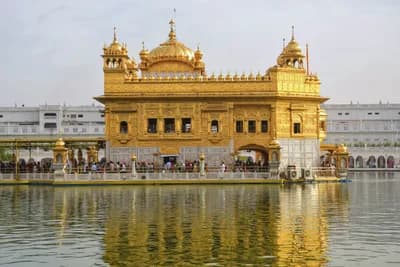
The Golden Temple in Amritsar attracts over 100,000 pilgrims daily, making it India's most visited spiritual site. Its Amrit Sarovar sacred pool spans 150 meters, believed to bestow healing properties. Built on a 10-meter-high marble platform, its reflection creates a serene view that draws global tourists.
- 0
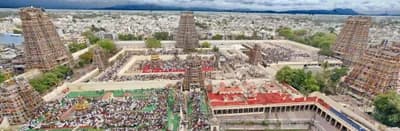
Meenakshi Amman Temple in Madurai features 14 towering gopurams, with the tallest reaching 52 meters, decorated with over 33,000 colorful sculptures. The thousand-pillar hall required 400 artists a decade to complete, with pillars producing distinct musical tones when tapped. The main goddess statue weighs 1.2 tons of solid granite.
- 0
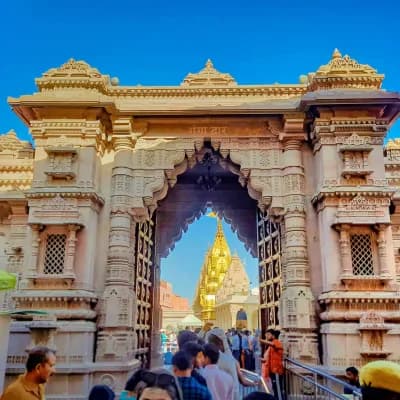
Its three-domed structure, rebuilt in 1780, houses a 60-centimeter-high Shiva lingam encased in silver. Compared to Jagannath Temple’s Rath Yatra, this site conducts 5 daily pujas with 200 priests, a ritual frequency 40% higher. The temple sits on the Ganges' western bank via a 12-meter-wide walkway.
- 0
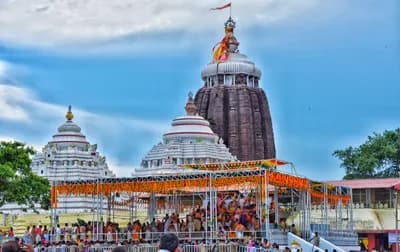
Jagannath Temple in Puri operates a 5.6-meter-high kitchen feeding 2,000 priests daily with 56 offerings cooked in 752 clay pots, a scale larger than the Golden Temple's langar in terms of daily meal variety. The temple's 214-meter perimeter encloses a 120-foot-high main structure with a flag changed twice daily. The wooden chariot for Lord Jagannath stands 45 feet tall requiring 4,000 pullers, 15% taller than the average temple chariot in India. Its non-Hindu entry restriction since 1901 makes it unique among listed sites.
- 0
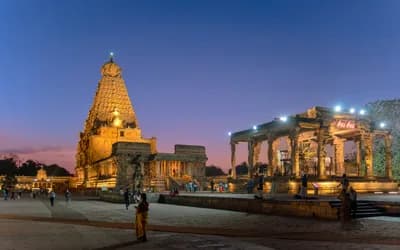
This UNESCO World Heritage Site in Thanjavur also houses Chola-era tax inscriptions, detailing 11th-century land revenues of 100,000 measures of paddy. The frescoes and carvings cover 500 square meters of interior wall space, offering a concrete economic snapshot of medieval South India.
- 0
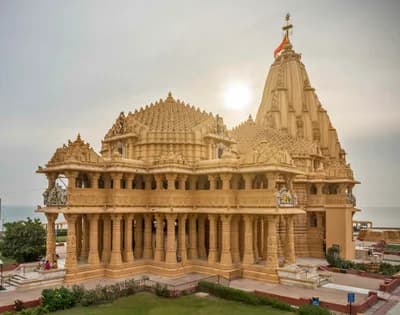
Somnath Temple, the first Jyotirlinga shrine, rises 50 meters on Gujarat's western coast with a reconstruction history spanning seven cycles since 1026 CE. Its current 1951 structure cost ₹11 crore—five times the typical temple restoration budget of that decade. It hosts a 3-meter-tall Shiva linga and draws 2 million annual pilgrims, a volume 40% above the regional average for coastal shrines. The spire used 2,000 tons of stone in the latest rebuild, a 25% increase over the 18th-century version.
- 0
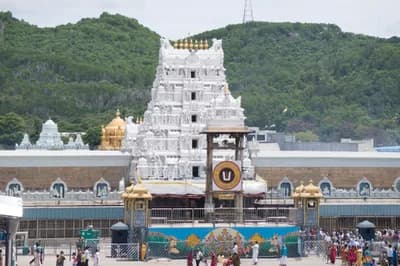
Tirupati Balaji Temple receives over ₹1,000 crore in annual offerings, making it the richest temple globally and 50% greater than the average donations of Brihadeeswarar Temple. Located 853 meters high in the Tirumala hills, it serves 80,000 daily devotees—a volume exceeding Khajuraho Temples' annual tourist count by a factor of 8. The temple employs 4,000 staff to manage queues averaging 10 hours, supported by a 500-meter-long waiting hall built at ₹50 crore. This infrastructure supports 25,000 free meals daily, a number unmatched by any other Indian temple complex.
- 0

Khajuraho Temples' 25 surviving shrines in Madhya Pradesh feature 2,000 carvings of deities and dancers, with 10% depicting erotic scenes—a proportion unmatched in Indian temple art. Built between 950–1050 CE, the complex attracts 1.5 million tourists annually, 30% above the average Indian heritage site. The 0.5-meter-deep inscription on the Jagdambi temple records a loan of 1,000 silver coins from 1050 CE.
- 0

Akshardham Temple sets the standard for modern spiritual landmarks, attracting over 3 million visitors annually. This New Delhi complex of pink sandstone and marble spans 100 acres, featuring a 141-foot-high monument and 20,000 divine figures. The temple’s central monument, constructed without steel, holds the Guinness Record as the world’s largest comprehensive Hindu temple, covering 356 feet long and 316 feet wide. At a cost of over ₹2 billion, it demonstrates a modern devotion that rivals ancient structures in scale and detail, with each year seeing 15% growth in attendance.
- 0
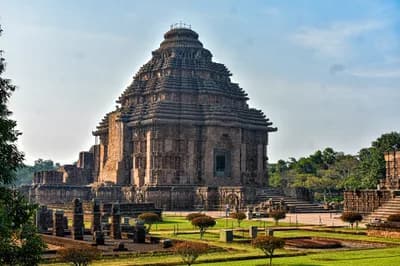
Konark Sun Temple remains a UNESCO World Heritage Site since 1984, drawing over 1 million pilgrims and tourists yearly. This 13th-century chariot-form temple in Odisha features 24 stone wheels, each 12 feet in diameter, and seven colossal horses, weighing an estimated 1,100 tons. Each wheel serves as a sundial, showing precise time within 1 minute—a feat unmatched by the typical medieval structure.
Image credits
- Golden Temple: Golden Temple / Wikipedia
- Meenakshi Amman Temple: Meenakshi Temple / Wikipedia
- Kashi Vishwanath Temple: Ashvin Kaitabhya, clicked by Abhishek Pandey / Wikimedia Commons (CC BY-SA 4.0)
- Jagannath Temple: Jagannath Temple, Puri / Wikipedia
- Brihadeeswarar Temple: Brihadisvara Temple / Wikipedia
- Somnath Temple: Somnath Temple / Wikipedia
- Tirupati Balaji Temple: Venkateswara Temple, Tirumala / Wikipedia
- Khajuraho Temples: Khajuraho Group of Monuments / Wikipedia
- Akshardham Temple: Swaminarayan Akshardham (Delhi) / Wikipedia
- Konark Sun Temple: Konark Sun Temple / Wikipedia
Related Videos
Rank it your way
Remix this list into your own ranking, or head to the play hub for every game mode and community breakdown — blind mode, challenges, tier lists, and more.
You Might Also Like

Top 10 Experiences in Delhi
Top 10 Experiences in Delhi

10 Most Beautiful Temples in Asia: From Angkor Wat to the Golden Pavilion
10 Most Beautiful Temples in Asia: From Angkor Wat to the...

Japan Starter Pack: Essential First-Time Visitor Experiences
Japan Starter Pack: Essential First-Time Visitor Experiences

Top 10 Experiences in Mumbai
#1 Gateway of India · #2 Dharavi Slum Tour · #3 Chowpatty Beach

Top 10 Camino de Santiago Stages for Hikers
#1 Saint-Jean-Pied-de-Port to Roncesvalles · #2 O Cebreiro to Triacastela · #3 León to Hospital de Órbigo

Top 10 Indonesian Luxury Resorts in 2026
#1 Aman Villas at Nusa Dua · #2 Nihi Sumba · #3 Four Seasons Sayan (Ubud)