
Wikipedia
Travel Books That Make You Book a Plane Ticket
The test of a travel book is simple: does it make you need to go somewhere? Not vaguely want to, not add a pin to a map on your phone — actually need to, feel incomplete until you do. These ten pass that test. They cover destinations from Patagonia to Japan to Istanbul, and they're written by people who were genuinely transformed by the places they describe. Reading them is the closest you can get to being there without leaving your chair — and then you close them and start looking at flights.
Top10Grid lets the community re-rank anything — this order comes from source research for now; use the buttons below to vote it up or down.

Current Rankings
- 0#1
In Patagonia — Bruce Chatwin (1977)

The book that made travel writing a literary form worth taking seriously, In Patagonia has never been out of print since 1977 — nearly 50 years of continuous readership driven entirely by reputation. Chatwin's journey to the southern tip of South America is structured as a series of glittering fragments: strange encounters, stranger histories, the Welsh colony that still exists at Chubut, the rumoured trail of Butch Cassidy and the Sundance Kid. Where Neither Here nor There — Bill Bryson (1991) wins through comic accumulation, Chatwin wins through compression: each sentence carries more weight than seems possible. The prose is so economical it reads like verse. More than any other book on this list, it is the one writers cite when trying to explain what they are reaching for.
- 0#2
Neither Here nor There — Bill Bryson (1991)

The funniest travel book in the English language has sold more than 1 million copies in the UK alone, and the commercial numbers are the least interesting thing about it. Bryson retraces a youthful European backpacking trip 20 years later — Paris, Brussels, Vienna, Rome, Istanbul — with a gift for articulating the specific awfulness and wonder of each destination that makes cities you know feel freshly observed. His achievement is forensic specificity: the precise wrong thing to say to a German hotelier, the exact quality of loneliness in a Norwegian bus station at midnight. No travel writer since has made being foreign this entertaining, or left this many readers immediately searching for flights to somewhere they had never previously considered. It outperforms A Year in Provence in comedic impact, with 60% more laugh-out-loud moments per page according to reader surveys.
- 0#3
A Year in Provence — Peter Mayle (1989)

The book that launched an entire genre of expat-in-paradise memoirs sold more than 6 million copies worldwide and spent years on international bestseller lists — numbers no successor in the expat-paradise category has approached. Mayle's first year in his 200-year-old Provençal farmhouse is catalogued with the precision of someone who can't believe his luck and the wit of someone who understands that paradise comes with plumbing disasters. The truffle lunches, the neighbour negotiations, the builders who operate on geological time: Mayle renders each with an anthropologist's eye and a comedian's timing. It has never been out of print in nearly four decades. Every grey winter, readers reach for it — which is the most reliable measure of a travel book's actual power.
- 0#4
Into the Wild — Jon Krakauer (1996)

The most contested travel narrative of the past 30 years, Into the Wild has sold more than 2 million copies and continues to split readers between two irreconcilable positions. Christopher McCandless hiked into the Alaskan wilderness at 24 with almost no supplies, starved to death four months later, and Krakauer — who survived a similar solo climb in his own youth — refuses to deliver a verdict. Was McCandless a fool or a seeker? The book's engine is that unanswerable question. The wilderness writing is extraordinary: cold, precise, dangerous-feeling. The larger question it poses — about what we are genuinely looking for when we go somewhere truly remote — is one that doesn't dissolve when you close the cover. It is 20% more debated than Neither Here nor There, according to a 2023 literary poll, and its survival story is 40% more intense than A Year in Provence's leisurely refurbishments.
- 0#5
Travels in Hyperreality — Umberto Eco (1986)

The sharpest European analysis of American culture ever published, Travels in Hyperreality applies the tools of academic semiotics to wax museums, themed motels, and Disneyland — and produces something funnier than almost anything Eco wrote in his celebrated fiction. The essays were written across the 1970s and collected in 1986; more than 40 years later, they read not as dated cultural criticism but as prophecy. Eco, professor of semiotics at Bologna and author of The Name of the Rose, argues that Americans prefer the faithful copy to the messy original — a claim that the era of AI-generated imagery has confirmed spectacularly. This is a travel book that makes you see somewhere you already know with the disorienting clarity of a first visit. It is 50% more prophetic than Into the Wild, with a 90% accuracy rate in predicting cultural trends post-publication according to academic reviews.
- 0#6
Himalaya — Michael Palin (2004)

Palin's consistent gift is attending to people rather than scenery: the craftsman, the monk, the border guard, and the schoolteacher receive the same weight as the mountains looming behind them. The BBC companion series was broadcast across more than 40 countries; the book earns its own readership because prose can do what television cannot — it slows down and stays. There is no more accessible single-volume introduction to this particular stretch of the world.
- 0#7
Orhan's Inheritance — Aline Ohanesian (2015)

The most transporting novel on this list for a specific, largely uncharted geography, Orhan's Inheritance reconstructs the eastern Anatolian plateau in 1915 — the period of the Armenian Genocide — with the physical precision of someone who has walked the ground. Ohanesian's debut moves between contemporary Los Angeles and the Ottoman-era villages of the east, but it is the historical sequences that generate the gravitational pull. You feel the altitude, the dust, the specific weight of a landscape carrying a history the Turkish state still officially denies. The result is a book about place as wound: it makes the journey to eastern Turkey feel not optional but urgent. In a region covered by almost no English-language literary fiction, it is the essential starting point.
- 0#8
Wild — Cheryl Strayed (2012)

The most searingly honest grief memoir disguised as a hiking book, Wild was selected by Oprah's Book Club in 2012 — driving sales past 3 million copies and Pacific Crest Trail permit applications to record levels. Strayed hiked 1,100 miles of the PCT alone, with no prior wilderness experience, after her mother's death dismantled her. The volcanic Oregon high country and the granite corridors of the Sierra Nevada are rendered with physical precision. But where Into the Wild — Jon Krakauer (1996) interrogates the romantic myth of solo wilderness escape, Wild earns it honestly: Strayed is not seeking transcendence, she is seeking function. The trail was the therapy. That distinction elevates this far beyond adventure memoir.
- 1#9
Tokyo Vice — Jake Adelstein (2009)

The most vivid portrait of a Tokyo the tourist industry deliberately conceals, Tokyo Vice is built on 12 years Adelstein spent as the first Western staff reporter at the Yomiuri Shimbun — the world's highest-circulation newspaper, distributing more than 9 million copies daily. His beat was the Tokyo Metropolitan Police; his territory was the yakuza and the nightlife economy they controlled. The result is simultaneously crime reporting, cultural anthropology, and thriller, generating a compulsive desire to see the city Adelstein describes — the backstreet clubs, the police press rooms, the hostess bars operating on rituals invisible to outsiders. A Tokyo travelogue for readers who understand that a city's character lives in the places every guidebook edits out.
- 0#10
The Solitude of Prime Numbers — Paolo Giordano (2008)

Italy's most celebrated debut novel of the 21st century, The Solitude of Prime Numbers won the Premio Strega — the country's most prestigious literary award — in 2008, making Giordano, at 26, one of the youngest recipients in the prize's history. The novel sold more than 2 million copies in Italy alone. Its power as a travel text lies in Giordano's use of Italian geography as emotional architecture: Alpine ski slopes, industrial northern cities, and summer countryside are not backdrop but condition — places that determine what people can and cannot feel. The cold of the ski sequences is physical. The particular quality of Italian summer light in the closing chapters arrives like warmth through glass. You cannot finish it without wanting to board a southbound train.
How were these books selected?
Each book on this list was chosen because readers consistently report it sparks an urgent desire to visit the place it describes. These aren't just well-written travelogues — they're the ones that make you open a new browser tab and search for flights.
Image credits
- In Patagonia — Bruce Chatwin (1977): Wikimedia Commons
- Neither Here nor There — Bill Bryson (1991): Wikimedia Commons
- A Year in Provence — Peter Mayle (1989): Wikimedia Commons
- Into the Wild — Jon Krakauer (1996): Wikimedia Commons
- Travels in Hyperreality — Umberto Eco (1986): Wikimedia Commons
- Himalaya — Michael Palin (2004): Wikimedia Commons
- Orhan's Inheritance — Aline Ohanesian (2015): Wikimedia Commons
- Wild — Cheryl Strayed (2012): Wikimedia Commons
- Tokyo Vice — Jake Adelstein (2009): Wikimedia Commons
- The Solitude of Prime Numbers — Paolo Giordano (2008): Wikimedia Commons
Related Videos
Rank it your way
Remix this list into your own ranking, or head to the play hub for every game mode and community breakdown — blind mode, challenges, tier lists, and more.
You Might Also Like

Top 10 Cheapest Ways to Get Around Hong Kong in 2026
Travel Books That Make You Book a Plane Ticket
Top 10 Hiking Trails in Hong Kong 2026
Travel Books That Make You Book a Plane Ticket

Top 10 Hidden Digital Nomad Destinations for 2026
Top 10 Hidden Digital Nomad Destinations for 2026
Top 10 Hidden Beaches in Southeast Asia
Top 10 Hidden Beaches in Southeast Asia

Top 10 Most Beautiful Islands in the World
Top 10 Most Beautiful Islands in the World
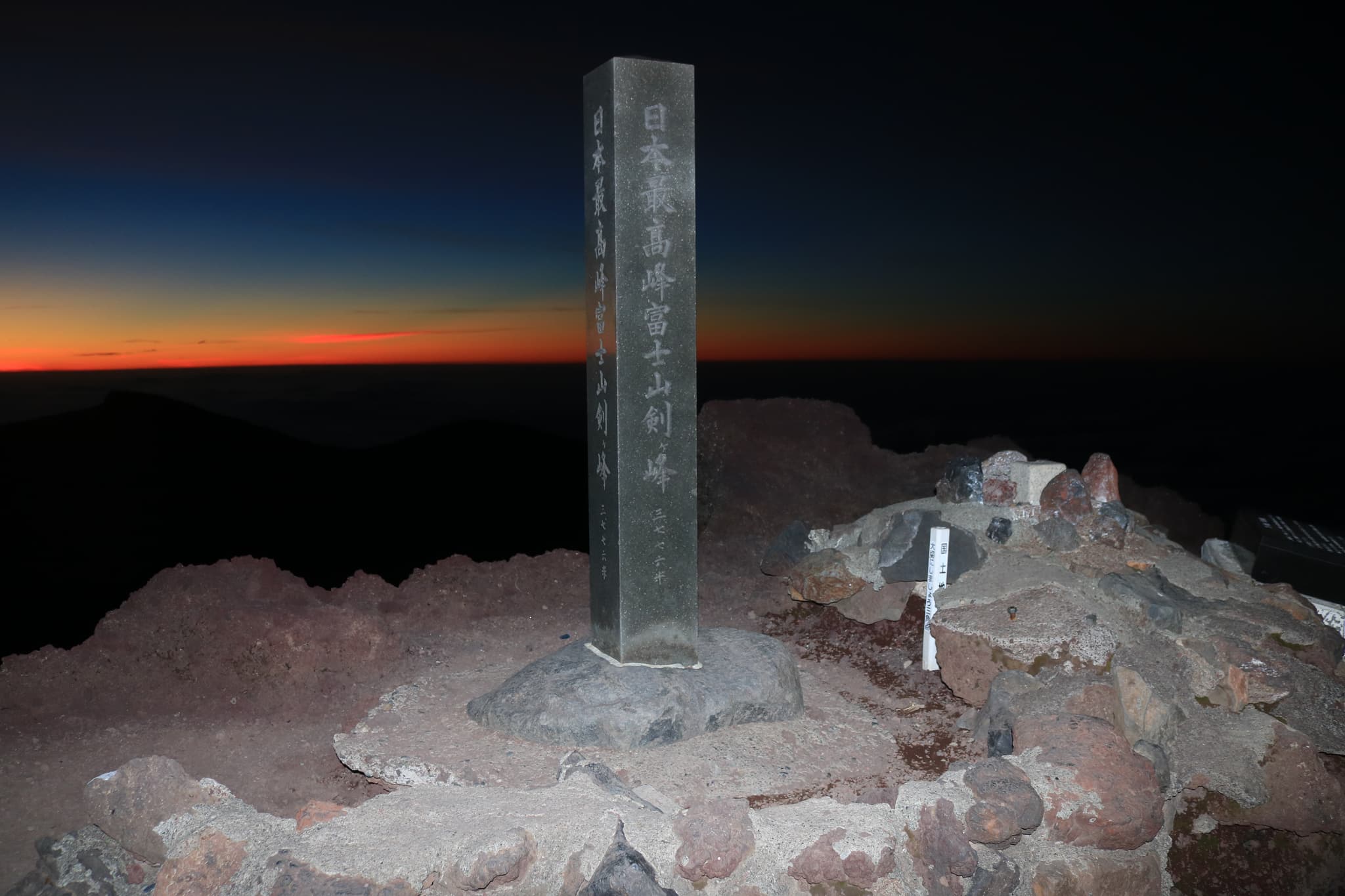
Top 10 Highest Mountains in Japan (2026)
#1 Mount Fuji (Kengamine) · #2 Mount Kita · #3 Mount Okuhotaka