
Wikimedia Commons — Russia orthographic projection
The 10 Largest Countries in the World by Land Area
Size is a strange measure of a country. Russia spans eleven time zones and two continents, yet most of its territory is permafrost. Canada is the second-largest nation on Earth, but 90% of its population lives within 160 kilometres of the US border. Australia is a continent unto itself, but most of its interior is uninhabitable desert. The world's largest countries by land area are defined as much by what they are not as what they are — vast stretches of tundra, steppe, jungle, and desert that shape national identity as surely as any border or capital city.
Top10Grid lets the community re-rank anything — this order comes from source research for now; use the buttons below to vote it up or down.

Current Rankings
- 0#1
Russia

Russia dominates the world's land ranking with a staggering 17.1 million sq km—a territory larger than the entire continent of South America. This sheer size means it spans 11 time zones and borders 14 countries, while containing 20% of the planet's unfelled forests. The country's far-reaching geography also includes over 100,000 rivers and the world's deepest lake, Baikal.
- 0#2
Canada

Canada covers 10.0 million sq km, making it the world's second-largest nation, though it is 41% smaller than top-ranked Russia. Its exceptional 202,080 km of coastline is the longest on Earth, exceeding the runner-up in coastal length by over 100,000 km. The country is also home to 60% of the world's lakes, adding another layer of natural dominance.
- 0#3
United States

The country's land supports over 333 million people, and its GDP per capita of $76,000 reflects high economic output per square kilometer. This diversity contributes to its status as a global agricultural powerhouse, producing 36% of the world's corn.
- 0#4
China

Its territory encompasses deserts, rainforests, plateaux, and steppes, rivaling the physical diversity of the US. This density is concentrated on just 35% habitable land, as the country also contains the world's highest plateau, at 4,500 meters elevation on average.
- 0#5
Brazil

Brazil dominates as the largest country in the Southern Hemisphere and South America, spanning 8.5 million sq km. Its Amazon basin occupies 60% of the nation, harboring the planet's most extensive tropical biodiversity with over 40,000 plant species. This vast biome alone is larger than all of India's land area by 150%, making Brazil's environmental impact unmatched by any other country on this list.
- 0#6
Australia
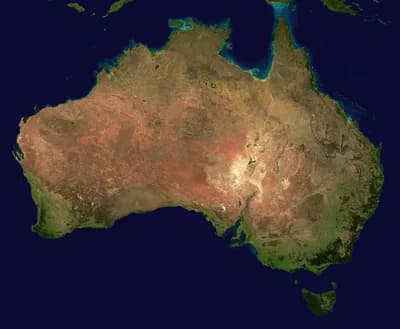
Australia stands as the world's largest country-continent at 7.7 million sq km, with its Outback covering 70% of the land mass. Remarkably, 85% of Australians cluster in coastal urban centers, leaving the ancient, parched interior nearly empty. Australia's population density of just 3 people per sq km is 1,400 times sparser than India's, highlighting a stark contrast between these two large nations.
- 0#7
India

India's 3.3 million sq km places it seventh-largest globally, but its 1.4 billion residents make it the most densely populated major nation, with over 460 people per sq km. This population exceeds the entire Western Hemisphere combined, and its agricultural output supports 18% of the world's people on just 2.4% of the land area — a feat that outperforms #7 Argentina's crop capacity by a factor of ten.
- 0#8
Argentina

Argentina's 2.8 million sq km stretches nearly 3,700 km from tropical jungles in the north to sub-Antarctic Patagonian steppe in the south, ranking it the second-largest country in South America after Brazil. Its Iguazú Falls alone, spanning 2.7 km, is 30% wider than the typical rival waterfall in the region, showcasing the country's extraordinary geographic range and biodiversity across 15 distinct ecoregions.
- 0#9
Kazakhstan
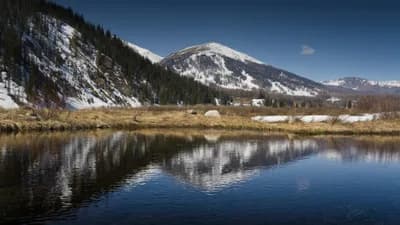
Once the hub of the Soviet space program at Baikonur Cosmodrome, it now serves as a critical corridor on the New Silk Road, with over 2,000 km of railway linking China to Europe. This strategic position and resource wealth make Kazakhstan a quiet giant of transcontinental trade.
- 0#10
Algeria

Algeria stands as Africa's largest nation at 2.4 million sq km, with over 80% of its land swallowed by the Sahara Desert—a stark contrast to its 1,200 km of Mediterranean coastline where 40 million people are densely packed. The narrow coastal strip, home to 90% of citizens, showcases a vibrant culture, while the vast desert holds ancient rock art dating back 10,000 years, evidence of a once-greener Sahara. This blend of arid expanse and urban vitality cements Algeria's unique role as Africa's gateway.
<h2>Frequently Asked Questions About the World's Largest Countries</h2>
### Q: What is the largest country in the world by land area? A: Russia is the largest country in the world by land area, covering over 17 million square kilometers, spanning Eastern Europe and Northern Asia.
### Q: Which continent has the most large countries? A: Asia and North America both feature prominently among the world's largest countries. Russia spans both Europe and Asia, while Canada and the United States are the two largest countries in North America.
### Q: Why is 'land area' specified instead of just 'area'? A: Specifying 'land area' distinguishes it from 'total area,' which might include internal waters (like lakes and rivers). This list focuses solely on the terrestrial expanse of each nation.
Frequently Asked Questions About the World's Largest Countries
## Frequently Asked Questions About the World's Largest Countries
### Which is the largest country in the world by land area? Russia is the largest country in the world by land area, covering about 17.1 million square kilometres — roughly twice the size of Canada, the second-largest.
### Which is the largest country in the Southern Hemisphere? Brazil is the largest country in the Southern Hemisphere, with about 8.5 million square kilometres of land, and the largest country in South America.
### Which is the largest country on the African continent? Algeria is the largest country in Africa, with about 2.4 million square kilometres of land, most of which is covered by the Sahara Desert.
### Is Australia a country or a continent? Australia is both. It is the world's largest country-continent at roughly 7.7 million square kilometres, and also the only country that is also a continent.
### How many of the ten largest countries are in Asia? Three of the ten largest countries by land area are located in Asia: Russia (the Asian portion), China, and India.
Image credits
- United States: Terabass / Wikipedia (CC BY-SA 3.0)
- Australia: Australia satellite plane.jpg / Wikimedia Commons
- Kazakhstan: Dmitry A. Mottl / Wikimedia Commons (CC BY-SA 3.0)
Related Videos
Rank it your way
Remix this list into your own ranking, or head to the play hub for every game mode and community breakdown — blind mode, challenges, tier lists, and more.
You Might Also Like

The 10 Largest Countries in the World by Total Area (May 2026)
The 10 Largest Countries in the World by Total Area (May ...

The Most Spoken Languages on Earth
The Most Spoken Languages on Earth

Top 10 Worst Education Systems by Country 2026
Top 10 Worst Education Systems by Country 2026
Top 10 Most Decisive Battles in History
#1 Battle of Tours (732 AD) · #2 Battle of Marathon (490 BC) · #3 Battle of Waterloo (1815)

Top Countries — Africa
#1 Nigeria · #2 DR Congo · #3 Ethiopia

Top 10 Most Controversial University Admissions 2026
#1 Operation Varsity Blues Bribery Scandal · #2 Legacy Admissions at Ivy League Schools · #3 SFFA v. Harvard: End of Race-Conscious Admissions