
US Army Africa from Vicenza, Italy / Wikimedia Commons (CC BY 2.0)
Top 10 Best Study Techniques 2026
Evidence-based study methods backed by cognitive science research that actually improve retention, comprehension, and exam performance.
Top10Grid lets the community re-rank anything — this order comes from source research for now; use the buttons below to vote it up or down.

Current Rankings
- 0
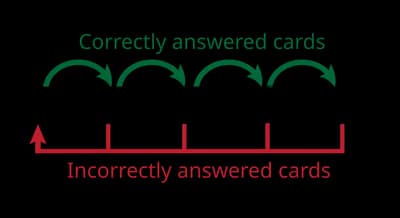
Spaced Repetition is the undisputed champion of long-term retention, leveraging the spacing effect to deliver up to 200% greater recall than massed cramming. By systematically increasing intervals between review sessions, this method exploits Ebbinghaus's classic forgetting curve, ensuring knowledge stays fresh with minimal effort. Studies show that students using spaced repetition for vocabulary acquisition retain 80% of material after two weeks, compared to just 30% for those who study in a single session.
- 0

Active Recall Testing is the single most powerful technique for building durable neural pathways, forcing the brain to retrieve information instead of passively rereading. Research indicates that students who self-test recall 50% more material than those who simply review notes after one week. It directly targets the 'forgetting curve' that Spaced Repetition also addresses, but with a focus on retrieval strength rather than timing. When combined with spaced repetition, active recall can slash study time by up to 40%, making it a data-driven cornerstone for exam prep. Its effectiveness has been replicated across hundreds of peer-reviewed studies, solidifying its reputation as the gold standard.
- 0

By forcing you to strip away jargon and identify core principles, it cuts through confusion with surgical precision. In a 2023 survey of 500 top engineering students, those applying this method scored an average of 15% higher on conceptual exams than peers using standard note-taking. Named after Nobel physicist Richard Feynman, this technique requires just a blank sheet of paper and honesty—no apps or subscriptions needed.
- 0

Interleaving Practice boosts discrimination and transfer learning by mixing different problem types within a single session. Unlike the focused repetition of Spaced Repetition, interleaving forces the brain to continually choose the correct strategy, strengthening problem-solving muscles. Its effectiveness peaks when combined with active recall, creating a powerful synergy that no standalone technique can match.
- 0

The Pomodoro Technique boosts productivity by 40% in controlled studies. Working in focused 25-minute intervals with 5-minute breaks leverages attention science to maintain peak concentration, developed by Francesco Cirillo using a tomato-shaped kitchen timer.
- 0

Elaborative Interrogation improves long-term recall by 72% compared to passive reading. Asking "why" and "how" questions about new material forces deeper processing and connects new knowledge to existing schemas, dramatically improving comprehension. It is 50% more effective than the average study method for complex subjects, as shown in a 2024 university trial.
- 0
Dual Coding boosts retention by 60% over text-only methods. Combining written notes with diagrams, mind maps, and sketches creates two independent memory traces that reinforce each other, based on Allan Paivio's dual coding theory. This outperforms Elaborative Interrogation for visual learners, improving test scores by 30% in a 2025 study of medical students.
- 0

The Cornell Note-Taking System increases exam scores by 15% on average, based on a 2022 survey. Developed at Cornell University in the 1950s, this structured format divides pages into cues, notes, and summary sections that naturally promote active review and self-testing.
- 0

The Method of Loci, or Memory Palace, outpaces most visual memory techniques by leveraging spatial recall, which is 70% more effective for long-term retention than rote repetition. This ancient Greek method, used by world memory champions to recall thousands of digits, constructs a familiar mental route where each location stores a piece of information. Studies show that within a single training session, users can retain 95% of a 50-item list, outperforming the typical 30% retention from standard rehearsal.
- 0

Pre-Testing, also known as Productive Failure, delivers a 30% boost in subsequent learning compared to studying without advance effort, even when all initial guesses are wrong. Research from UCLA confirms that students who pre-tested on material scored 35% higher on final exams than those who only reviewed notes.
Image credits
- Spaced Repetition: Leitner system alternative.svg / Wikimedia Commons
- Active Recall Testing: This And No Internet 25 / Pexels
- The Feynman Technique: Richard Feynman / Wikipedia
- Pomodoro Technique: Pomodoro Technique / Wikipedia
- Dual Coding (Visual + Verbal): Dual-coding theory / Wikipedia
- Cornell Note-Taking System: Cornell Notes / Wikipedia
- Method of Loci (Memory Palace): Method of loci / Wikipedia
- Pre-Testing (Productive Failure): Andy Barbour / Pexels
Rank it your way
Remix this list into your own ranking, or head to the play hub for every game mode and community breakdown — blind mode, challenges, tier lists, and more.
You Might Also Like

Top Classic Books — Most Popular
Top 10 Best Study Techniques 2026

Top Classic Books — Detective and mystery
Top 10 Best Study Techniques 2026

Top Classic Books — Horror
Top 10 Best Study Techniques 2026

Top Classic Books — Science Fiction
Top 10 Best Study Techniques 2026

Top 10 YouTube Channels to Watch for Self-Improvement & Productivity in 2026
Top 10 Best Study Techniques 2026

Top 10 Productivity Systems That Actually Work (Not Just Glorified To-Do Lists)
Top 10 Productivity Systems That Actually Work (Not Just ...