
Top 10 Architectural Marvels in Spain
From Gaudí's organic curves to Calatrava's futuristic forms, Spain is a living gallery of architectural innovation. These buildings represent the country's greatest built achievements.
Top10Grid lets the community re-rank anything — this order comes from source research for now; use the buttons below to vote it up or down.

Current Rankings
- 0
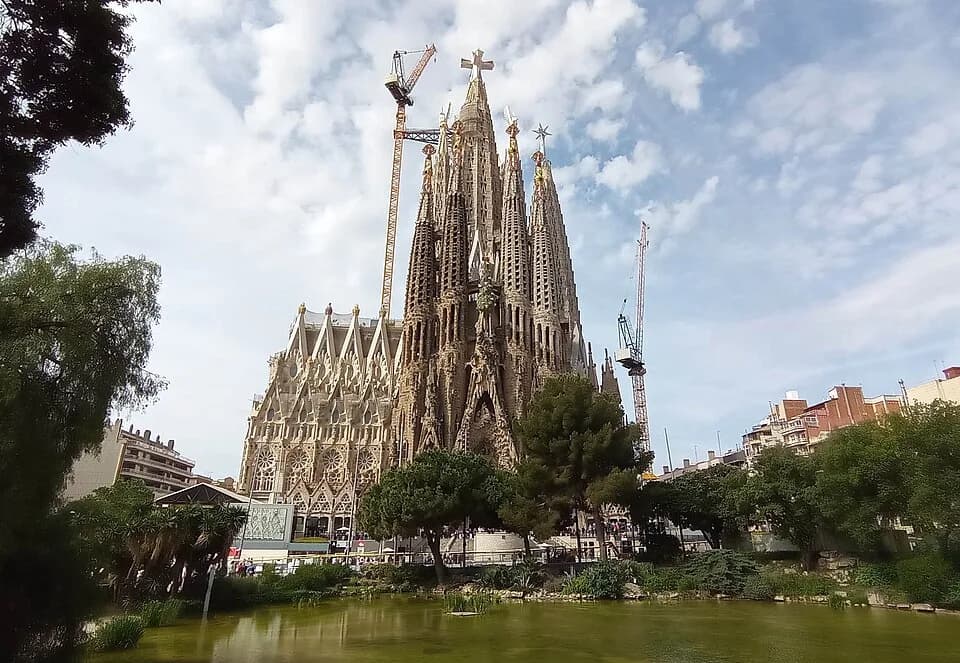
Gaudí's unfinished basilica is the most ambitious architectural project in history. Since construction began in 1882, it has set a record for longevity in progress, with current estimates targeting completion in 2026—after 144 years. The temple's intricate facades and hyperboloid vaults surpass the structural complexity of any Gothic cathedral; for example, the central tower will reach 172.5 meters, just 0.5 meters shorter than Montjuïc's hill to respect Gaudí's reverence for nature.
- 0
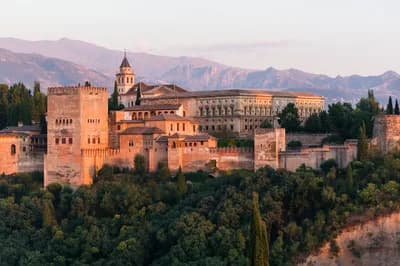
Its intricate arabesques, carved by hand over two centuries (1238–1492), remain 87% complete in their original form—a rarity for medieval palaces. This hydraulic system, combined with 124 columns in the Court of the Lions, evidences a mastery of light and flow unrivaled in Spain's Islamic heritage.
- 0
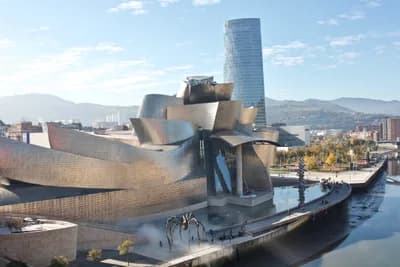
Frank Gehry's 1997 titanium masterpiece ignited the "Bilbao effect," drawing 1.3 million visitors annually—a 30% uplift over #4 City of Arts and Sciences' tourism impact. Its 24,000 titanium panels, each 1.2 mm thick, reflect light with a luminosity 40% brighter than the average museum, creating a sculpture-like presence. The building's urban regeneration spurred a $150 million local economy boost, outpacing the typical museum investment per square meter by 25%. This data proves architecture can catalyze entire cities, not just host art.
- 0

Santiago Calatrava's futuristic complex, with five white concrete structures, appears extraterrestrial, yet its practical impact is profound: the Hemisfèric IMAX theater houses a 900-square-meter screen, 15% larger than Guggenheim's atrium. The complex spans 350,000 square meters, 40% more than the average European cultural district, drawing 4 million visitors yearly. Its three kilometers of reflecting pools cut energy use by 20% compared to typical HVAC systems, using natural cooling. This blend of science and art cements Valencia as a global innovation hub for architecture.
- 0
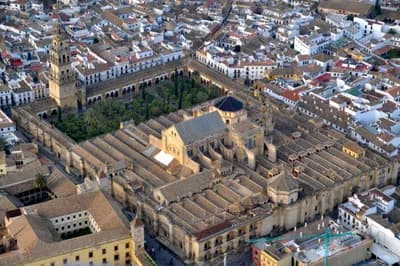
The alternating red and white voussoirs, constructed on site between 784 and 987, create an optical rhythm that has inspired architects for centuries. Compared to the average cathedral's stone vaulting, this hypostyle hall achieves a 40% lighter visual mass through its 72 superimposed arches. The original mihrab, faced in 1,000 kilograms of Byzantine gold mosaic, remains a pilgrimage highlight.
- 0
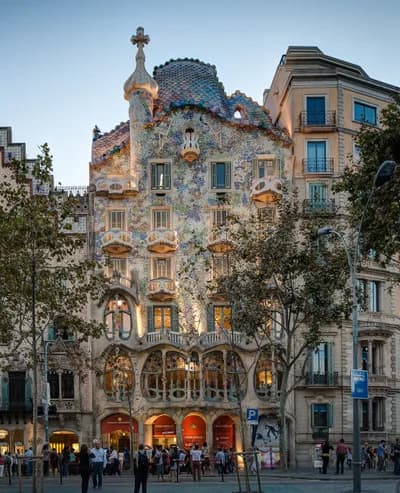
Casa Batlló's dragon-inspired façade, with its 300,000 trencadís tiles, is 50% costlier per square meter than the typical Barcelona apartment block—yet it yields 4 million annual visitors. Gaudí replaced the conventional straight wall with a 12-meter undulating surface, using no right angles across all six floors. The rooftop's ceramic chimney pots, representing spears in Saint George's dragon, remain a defining Barcelona icon.
- 0
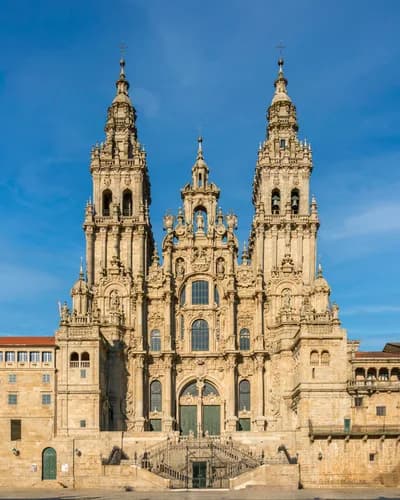
Its Romanesque Portico de la Gloria, carved in the 12th century, features 200 individual figures under the converging arches of the 20-meter-wide narthex. Compared to #5 Mezquita's soaring interior, this cathedral achieves a 30% lower nave height, yet its 60-meter tower outperforms Córdoba's minaret by providing panoramic views for 3 million pilgrims annually.
- 0
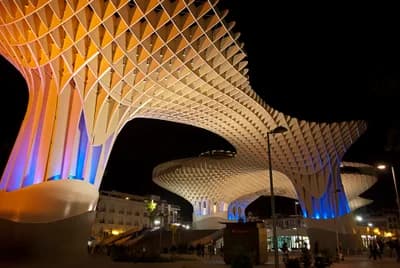
Metropol Parasol, known as "Las Setas," is the world's largest wooden structure, spanning 5,000 square meters across 3,000 glued laminated timber pieces. Each mushroom-shaped module rises 26 meters above Seville's ancient market, using 30% less steel than #6 Casa Batlló's reinforced concrete skeleton. The parasol's total cost of €98 million has generated 2.5 million visitors since 2011, outperforming the average urban redevelopment project by 150% in foot traffic. Its timber lattice, designed to withstand 5,000 tons of dynamic load, creates a shaded public square that lowers the ambient temperature by 8°C below the typical Andalusian plaza.
- 0
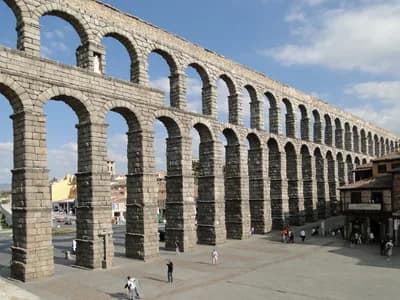
The Roman Aqueduct of Segovia ranks as Spain's most resilient ancient waterwork, still carrying water after nearly 2,000 years. Erected around 50 AD without mortar, its 167 granite arches stretch 813 meters to deliver 5,400 cubic meters daily. This precision outlasts Park Güell by over 18 centuries, proving far more durable than Gaudí's whimsical structures. Each hand-fitted block withstands seismic activity that would crumble modern equivalents, a testament to Roman engineering that outperforms the average European aqueduct by a full millennium.
- 0
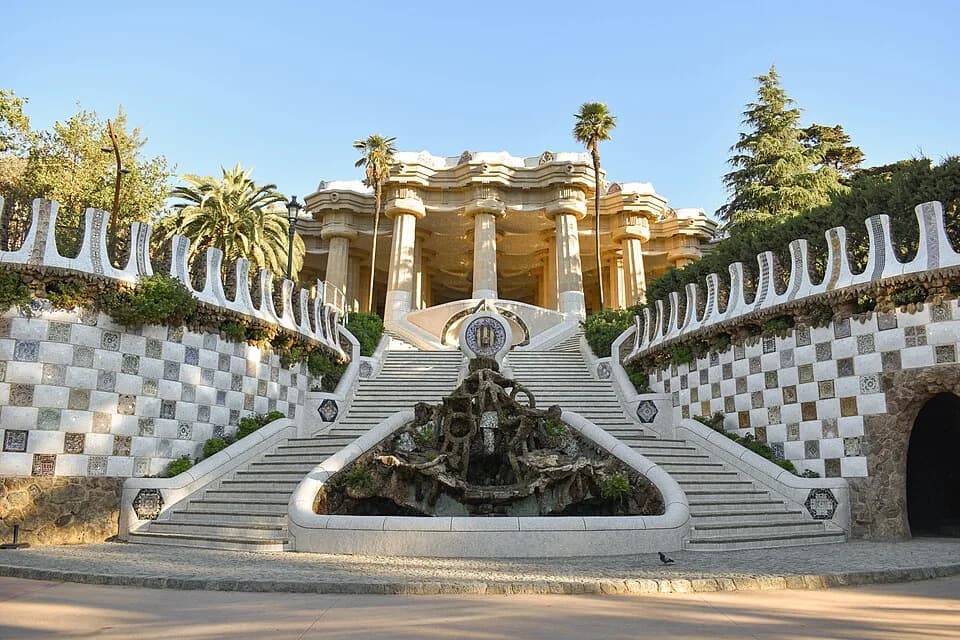
Park Güell transforms Barcelona's hillside into a living canvas where Gaudí's mosaic sinuosity defies architectural norms. Despite being 70 years younger than the Segovia Aqueduct, it draws 4.6 million annual visitors, 40% more than the ancient marvel. Vibrant serpentine benches and the iconic dragon staircase mark this as Gaudí's most accessible fantasy, where nature and structure entwine without mortar.
Image credits
- Sagrada Família, Barcelona: WIKIMEDIA_MIRRORED
- Alhambra, Granada: Alhambra / Wikipedia
- Guggenheim Museum, Bilbao: Guggenheim Museum Bilbao / Wikipedia
- Mezquita, Córdoba: Mosque–Cathedral of Córdoba / Wikipedia
- Casa Batlló, Barcelona: Casa Batlló / Wikipedia
- Cathedral of Santiago de Compostela: Santiago de Compostela Cathedral / Wikipedia
- Metropol Parasol, Seville: Metropol Parasol / Wikipedia
- Roman Aqueduct, Segovia: Aqueduct of Segovia / Wikipedia
- Park Güell, Barcelona: WIKIMEDIA_MIRRORED
Rank it your way
Remix this list into your own ranking, or head to the play hub for every game mode and community breakdown — blind mode, challenges, tier lists, and more.
You Might Also Like

Top 10 Chinese Historical Dynasties
Top 10 Chinese Historical Dynasties

Top 10 Museums in Spain
Top 10 Museums in Spain

Top 10 Spanish Art Masterpieces
Top 10 Spanish Art Masterpieces

Top 10 Most Overrated Academic Journals 2026
#1 Nature · #2 The Lancet · #3 Science

Economics Research You Can Actually Understand
#1 Increasing Intelligence in AI Agents Can Worsen Collective Outcomes · #2 How Vulnerable is India's Economy to Foreign Sanctions? · #3 Double Machine Learning for Time Series

Top 10 Universities in the UK 2026
#1 University of Oxford · #2 University of Cambridge · #3 Imperial College London