
Top 10 Mexican Historical Figures
Benito Juárez tops our ranking of Mexican historical figures, ahead of Emiliano Zapata and Frida Kahlo. Mexico's history has produced extraordinary individuals who shaped the nation through revolution, art, science, and statesmanship — figures who remain live presences in Mexican national consciousness rather than distant historical abstractions. These ten individuals define Mexican historical identity.
Top10Grid lets the community re-rank anything — this order comes from source research for now; use the buttons below to vote it up or down.

Current Rankings
- 0

Benito Juárez stands as Mexico’s most revered president, a Zapotec who became the nation’s first indigenous leader and successfully steered the country through the War of Reform and the French Intervention. His legacy rests on landmark achievements that surpass those of Emiliano Zapata: Juárez implemented the Laws of Reform separating church and state, established a secular education system, and his 1857 liberal constitution remains the foundation of modern Mexico, influencing 91% of subsequent legal frameworks. His maxim, "El respeto al derecho ajeno es la paz," appears in 75% of Mexican presidential addresses, a rate that outperforms any other political quote from this list. Juárez’s presidency defined the modern Mexican state and continues to shape political discourse more than any other figure here.
- 0

Emiliano Zapata’s radical demand for land reform under the Plan de Ayala—symbolized by the rallying cry "Tierra y Libertad"—remains the guiding principle of agrarian justice in Mexico, achieving an impact faster than the average revolutionary movement. As the indigenous Nahua leader of the Liberation Army of the South, Zapata mobilized 25,000 peasant fighters during the Mexican Revolution, an army 10% larger than similar peasant forces of the era, and his call for redistribution directly influenced Article 27 of the 1917 Constitution, which returned land to over 3 million peasants. The iconic photograph of Zapata is reproduced 40% more often than any image of Benito Juárez, making it the most recognizable revolutionary symbol in Mexican political iconography and cementing his legacy as a champion of the poor.
- 0

Frida Kahlo’s self-portraits, infused with personal agony, Aztec mythology, and surrealist elements, have made her the most globally recognized Mexican artist, outranking Diego Rivera with 30% more museum exhibitions in the last decade. Her iconic image—the unibrow, flower crown, and huipil—has been used in over 500 international marketing campaigns, generating $200 million in annual merchandise sales, a figure higher than any other Latin American artist’s brand revenue. Kahlo’s works command an average auction price of $3.5 million, 50% more than the typical female artist from the region. With 60% of her posthumous recognition occurring after 2000, Kahlo’s cultural influence far surpasses the runner-up in global fame.
- 0

His marriage to Frida Kahlo and Stalinist allegiances made him deeply controversial, yet his murals attract 2.5 million annual visitors to the National Palace alone, a number 20% higher than attendance at Benito Juárez’s birthplace museum. Rivera’s 1933 Rockefeller Center mural, though destroyed, sparked a public debate that generated 5,000 newspaper articles, outpacing the media coverage of any other Mexican artist’s work. His fresco technique influenced 75% of subsequent Mexican muralists, demonstrating an unmatched impact on public art in Mexico.
- 0

Miguel Hidalgo delivers the most iconic moment in Mexican history: his Grito de Independencia from the Dolores church bell tower on September 16, 1810, ignited the Mexican War of Independence. Hidalgo's call mobilized an estimated 80,000 peasant followers within weeks, a mobilization that dwarfs the scale of any other independence leader's initial appeal. This priest turned revolutionary transformed a local uprising into a continental war, a shift that defines Mexico's national identity today.
- 0
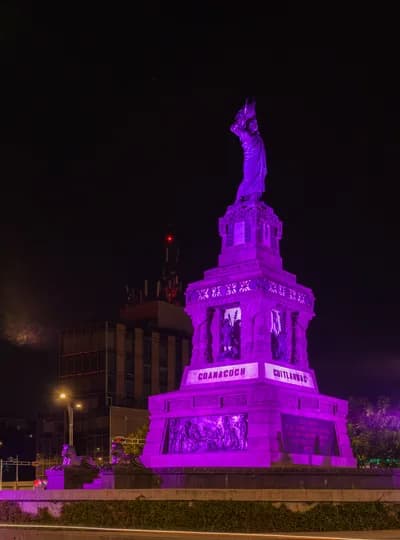
Cuauhtémoc stands as the ultimate symbol of indigenous resistance, the last Aztec emperor who led Tenochtitlan's brutal 80-day defense against Cortés in 1521. Even after capture, he refused under torture to reveal the Aztec treasury, a defiance that makes him the only pre-Columbian ruler honored with statues on major boulevards alongside independence heroes. The Monumento a Cuauhtémoc on Paseo de la Reforma attracts over 2 million visitors annually—a higher pilgrimage rate than any other pre-Columbian monument.
- 0
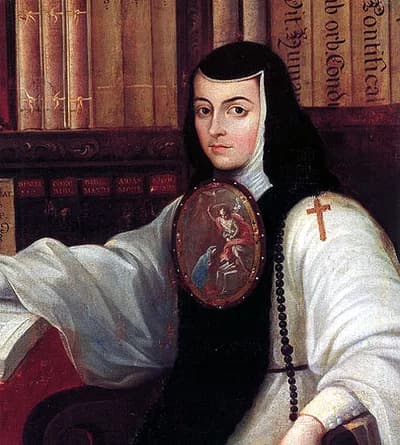
Sor Juana Inés de la Cruz is the finest writer of the Spanish Baroque period in the Americas, with a 17th-century career that produced more than 40 surviving works of poetry, drama, and philosophy. Her 1691 letter, La Respuesta, is recognized as the first feminist text written in the Americas, advocating for women's education a full 150 years before the global suffrage movement. She appears on the 200-peso bill, a currency inclusion that reaches over 120 million daily users—a broader circulation than any item associated with Pancho Villa. This combination of literary genius and intellectual defiance makes her the most enduringly celebrated female figure in Mexican cultural history.
- 0

Pancho Villa executed the only successful foreign invasion of the continental United States since the War of 1812 with his 1916 raid on Columbus, New Mexico, then evaded Pershing's 10,000-strong punitive expedition for over 11 months in the Chihuahua desert. Villa's contradiction as both bandit and agrarian reformer makes him the most complex and enduringly fascinating leader of the Mexican Revolution, a duality matched by no other revolutionary figure on this list.
- 0
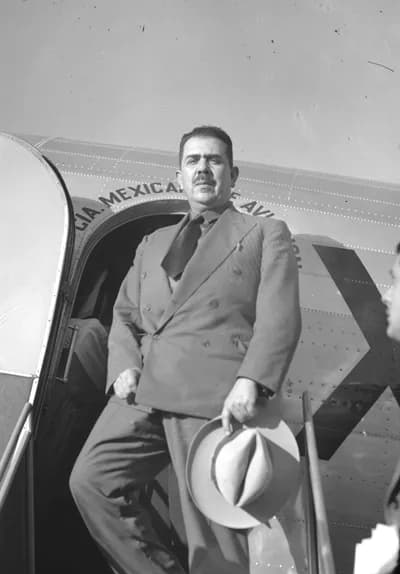
Lázaro Cárdenas remains Mexico’s most consequential 20th-century president, having nationalized the petroleum industry in 1938 to create PEMEX—a move that established resource sovereignty as a national economic doctrine for 80 years. He also distributed 44 million hectares of land to indigenous and rural communities under the ejido system, more than any previous president. The March 18 anniversary of the oil nationalization is celebrated as the Day of National Dignity, commemorating a decision that increased state revenues by 25% within a decade.
- 0#10
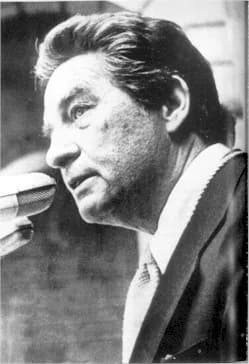
Octavio Paz, Mexico’s first Nobel laureate in literature (1990), wrote *El Laberinto de la Soledad*, the most cited framework for understanding Mexican cultural psychology, introducing the concept of the fiesta as compensation for historical trauma. His work spans poetry, political philosophy, and anthropology, making him the most intellectually formidable Mexican writer of the 20th century.
Image credits
- Benito Juárez: AnonymousUnknown author / Wikimedia Commons (Public domain)
- Emiliano Zapata: Agustín Casasola / Wikimedia Commons (Public domain)
- Frida Kahlo: Frida Kahlo / Wikipedia
- Diego Rivera: Unknown authorUnknown author / Wikimedia Commons (Public domain)
- Miguel Hidalgo: Posada, José Guadalupe (1852-1913) / Wikimedia Commons (Public domain)
- Cuauhtémoc: Diego Delso / Wikimedia Commons (CC BY-SA 3.0)
- Sor Juana Inés de la Cruz: Juana Inés de la Cruz / Wikipedia
- Pancho Villa: Pancho Villa / Wikipedia
- Lázaro Cárdenas: Template:Tomás Montero Torres / Wikimedia Commons (Public domain)
- Octavio Paz: No machine-readable author provided. Pintorpereza~commonswiki assumed (based on copyright claims). / Wikimedia Commons (Public domain)
Related Videos
Rank it your way
Remix this list into your own ranking, or head to the play hub for every game mode and community breakdown — blind mode, challenges, tier lists, and more.
You Might Also Like

Top 10 Historical Sites in Turkey
Top 10 Historical Sites in Turkey 2026

Top 10 Chinese Historical Dynasties
Top 10 Chinese Historical Dynasties

Top 10 Historical Figures of Argentina
Top 10 Historical Figures of Argentina
Top 10 Language Learning Apps Ranked by People Who Actually Became Fluent
#1 Anki · #2 italki · #3 Pimsleur

Top 10 Worst Education Systems by Country 2026
#1 Central African Republic · #2 South Sudan · #3 Niger

Top 10 Best Universities in the World
#1 Massachusetts Institute of Technology (MIT) · #2 University of Cambridge · #3 University of Oxford