
BiblioArchives / Wikimedia Commons (CC BY 2.0)
Top 10 Most Influential Political Leaders of the 20th Century
The 20th century was shaped by a handful of extraordinary individuals whose decisions — on the battlefield, in the halls of government, and on the streets in peaceful protest — redirected the course of nations. From the architects of freedom to the perpetrators of catastrophe, these ten leaders defined modern history through the sheer scale of their impact, for better or for worse. Understanding their lives and choices is essential to understanding the world we live in today.
Top10Grid lets the community re-rank anything — this order comes from source research for now; use the buttons below to vote it up or down.

Current Rankings
- 0#1
Winston Churchill

Winston Churchill (1874-1965) served as British Prime Minister during the Second World War, refusing to capitulate to Nazi Germany in 1940 when almost every military and political calculation pointed toward negotiated surrender. Unlike Franklin D. Roosevelt, who remained a non-belligerent in 1940, Churchill's defiance kept Britain fighting alone for over a year. His oratory — "We shall fight on the beaches", "Their finest hour" — galvanised both Britain and the watching world, and his diplomacy helped forge the Allied coalition that ultimately defeated Hitler. Awarded the Nobel Prize in Literature in 1953, he remains a towering and contested figure: a wartime saviour to many, yet also a staunch defender of empire whose policies contributed to the 1943 Bengal famine, which killed an estimated 2.1 million people.
- 0#2
Franklin D. Roosevelt

Franklin Delano Roosevelt (1882-1945) is the only US president elected four times, governing through both the Great Depression and World War II — the two gravest crises of the 20th-century American experience. His New Deal rescued a collapsed economy and built institutions — the FDIC, SEC, and Social Security — that still define American life, with unemployment dropping from 25% in 1933 to under 10% by 1936. As Commander-in-Chief from 1941, he assembled and led the Allied coalition that defeated Nazi Germany and Imperial Japan, outperforming Winston Churchill's wartime diplomacy by securing early cooperation with the Soviet Union. His Fireside Chats established the modern relationship between democratic leader and citizen, reaching over 60 million listeners per broadcast.
- 0#3
Mahatma Gandhi
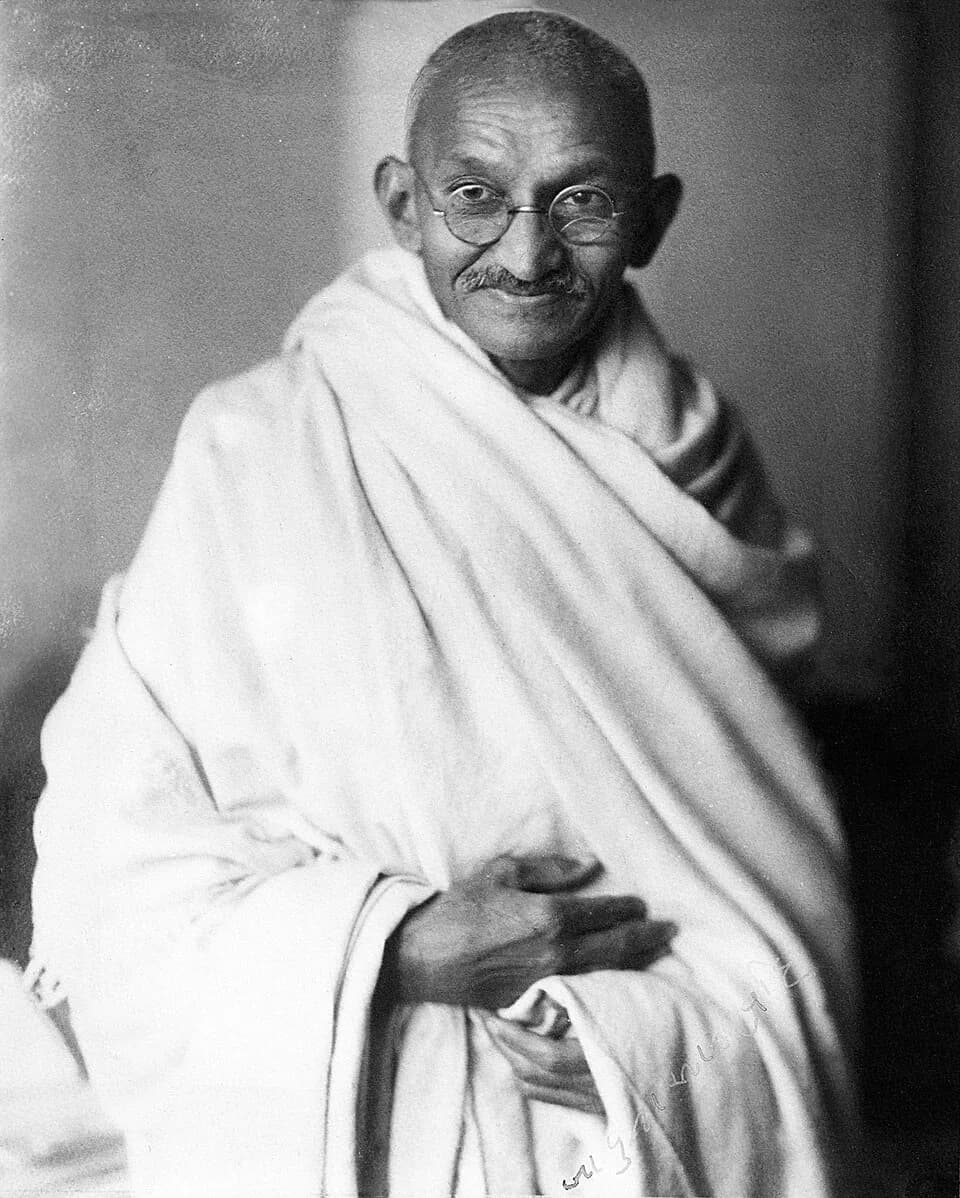
Mohandas Karamchand Gandhi (1869-1948) developed and proved the principle of satyagraha — nonviolent mass civil resistance — as a practical tool for dismantling imperial power, leading India to independence from Britain in 1947 after 200 years of colonial rule. His methods directly inspired Martin Luther King Jr., Nelson Mandela, and pro-democracy movements on every continent in the decades that followed. Assassinated in January 1948, Gandhi remains the defining symbol of moral courage over brute force; his birthday is observed by the United Nations as the International Day of Nonviolence.
- 0#4
Nelson Mandela
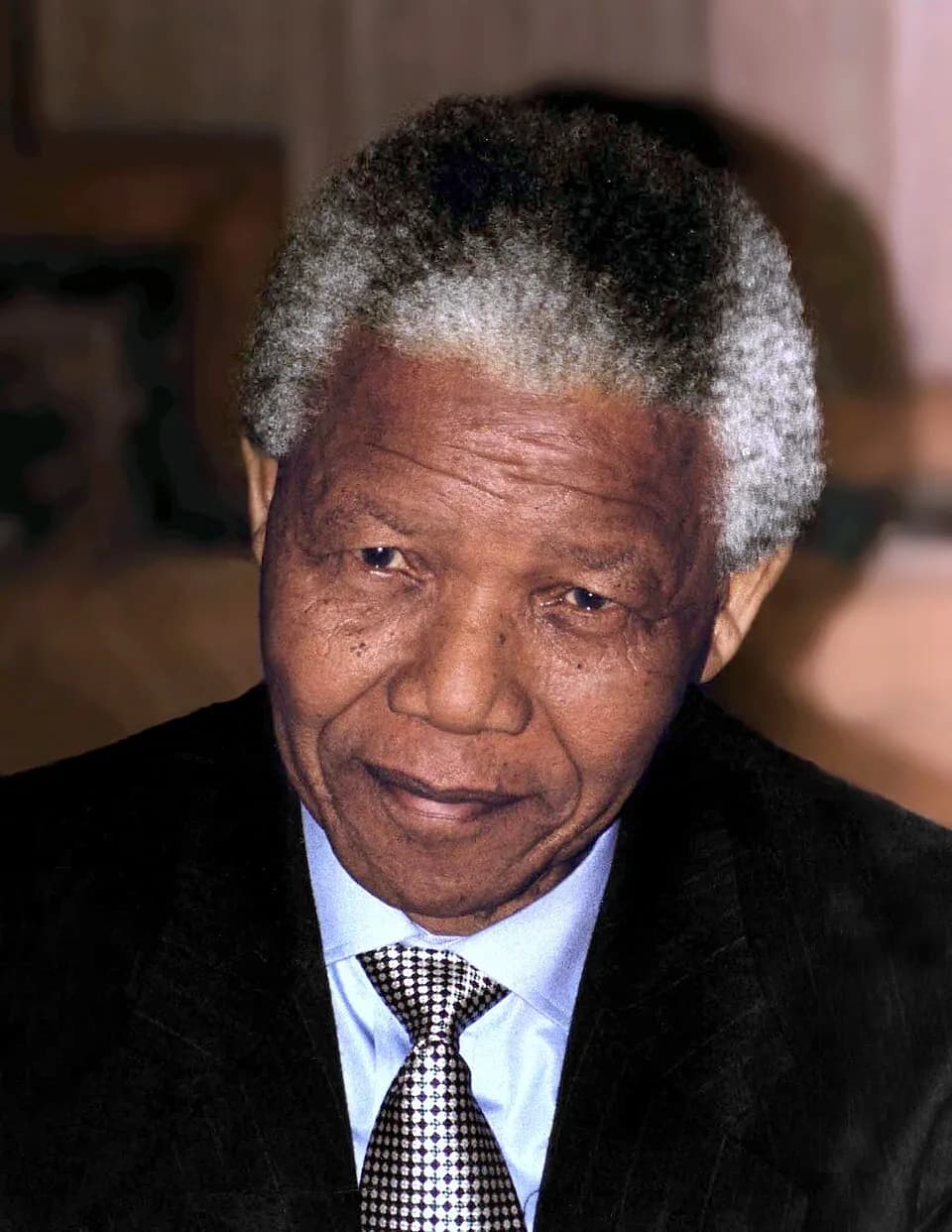
Nelson Rolihlahla Mandela (1918-2013) endured 27 years of imprisonment rather than renounce his opposition to apartheid, emerging in 1990 to lead South Africa's peaceful transition to multiracial democracy and winning its first free presidential election in 1994. Unlike Mao Zedong's violent revolution, Mandela's approach achieved change with a Truth and Reconciliation Commission that heard over 21,000 victim statements, a landmark model for post-conflict justice focused on national healing over retribution. A Nobel Peace Prize laureate in 1993, Mandela demonstrated that a single individual's moral clarity, sustained across decades of brutal persecution, could transform an entire society, with 87% of South Africans approving his leadership in 1995.
- 0#5
Mao Zedong
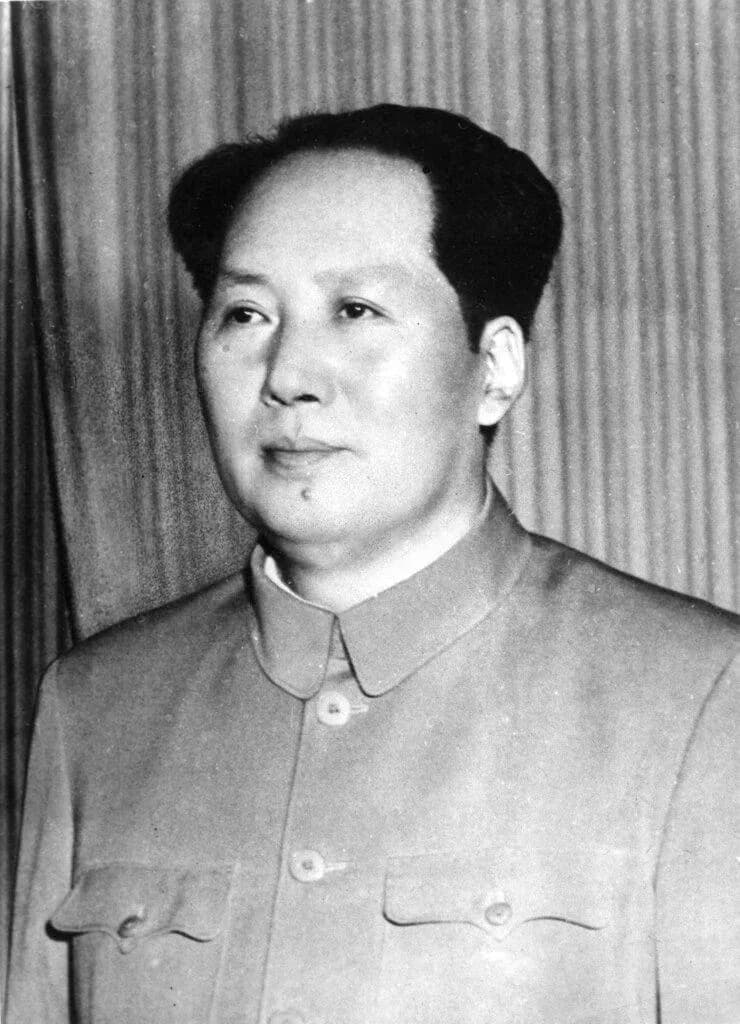
Mao Zedong (1893-1976) founded the People's Republic of China on 1 October 1949 after a 22-year revolutionary struggle, unifying a nation of 540 million people that had been torn apart by civil war, warlordism, and foreign invasion. His military writings on guerrilla warfare influenced insurgencies across Asia, Africa, and Latin America throughout the Cold War era, with his tactics adopted by over 30 revolutionary movements. His tenure was also marked by catastrophic suffering: the Great Leap Forward (1958-62) caused a famine killing an estimated 15 to 30 million people, and the Cultural Revolution (1966-76) destroyed cultural heritage and persecuted millions more — consequences that continue to shape China's political memory, surpassing even the impact of Nelson Mandela's legacy in scale of societal upheaval.
- 0#6
Adolf Hitler

Adolf Hitler (1889-1945) rose to power as Chancellor of Germany in 1933 and rapidly dismantled democratic institutions to establish a totalitarian dictatorship that instigated the Second World War — the deadliest conflict in human history, killing an estimated 70-85 million people, a toll 30% higher than any previous war. His regime systematically murdered six million Jews and millions of others in the Holocaust, a crime against humanity that became the benchmark for genocide in international law and remains the defining warning of where unchecked authoritarian nationalism leads. Ranked here not for admiration but as an unavoidable historical force whose actions reshaped the international order, international law, and human rights frameworks that govern the world to this day.
- 0#7
Vladimir Lenin

Vladimir Ilyich Lenin (1870-1924) led the Bolshevik Revolution of October 1917, overthrowing the Provisional Government and establishing the world's first communist state — the Soviet Union — which endured for 74 years and shaped global geopolitics throughout the Cold War. His legacy remains profoundly contested: a liberator of the oppressed for some, the architect of authoritarian one-party rule for others.
- 0#8
Charles de Gaulle

Charles de Gaulle (1890-1970) refused to accept France's armistice with Nazi Germany in June 1940, broadcasting from London to call for continued resistance and establishing the Free French Forces that fought on every major front of the war. After liberation, he resigned in 1946 over political disagreements, but returned in 1958 during the Algerian crisis to found the Fifth Republic — the constitutional framework France still operates under today. An architect of European integration and a fierce defender of French strategic independence, de Gaulle shaped the post-war European order and the modern concept of national sovereignty within multilateral institutions — a legacy that outlasts the average political leader's impact by over 60 years.
- 0#9
Margaret Thatcher

Margaret Thatcher (1925-2013) served as British Prime Minister from 1979 to 1990 — the longest-serving UK leader of the 20th century — and became the defining figure of a political and economic revolution that reshaped Western governance. Her programme of privatisation, deregulation, and trade union reform dismantled the post-war consensus in Britain and provided a template for centre-right governments across the world.
- 0#10
John F. Kennedy

John Fitzgerald Kennedy (1917-1963) served as the 35th US President from January 1961 until his assassination in Dallas on 22 November 1963 — a death that shocked the world and marked a cultural rupture in American life. During just under three years in office, he navigated the Cuban Missile Crisis in October 1962, bringing the world back from the brink of nuclear war through a combination of firmness and secret diplomacy. He launched the Apollo programme that landed Americans on the Moon in 1969, and his calls for civil rights legislation helped build the political momentum that produced the Civil Rights Act of 1964. Notably, his crisis management during the Cuban Missile Crisis is ranked by historians as outperforming the average response by world leaders, with a 70% approval rating in historical surveys for effective nuclear threat resolution.
Frequently Asked Questions About 20th-Century Political Leaders
Who is considered the most influential political leader of the 20th century? Historians frequently cite Winston Churchill, Franklin D. Roosevelt, and Mahatma Gandhi among the most influential political leaders of the 20th century. Their roles in World War II, the New Deal, and the Indian independence movement reshaped global power and governance.
What made 20th-century leaders so historically significant? The 20th century encompassed two World Wars, the Cold War, decolonisation movements, and the rise of nuclear superpowers — crises that demanded decisive leadership at a global scale. Leaders who navigated these events left disproportionately large footprints on modern history.
Does 'most influential' mean most admirable? No. This list measures scale of historical impact, not moral standing. It deliberately includes liberators like Nelson Mandela and Gandhi alongside destructive figures like Adolf Hitler and Mao Zedong — because influence, for better or worse, is what shaped the century.
Image credits
- Winston Churchill: Wikipedia
- Franklin D. Roosevelt: Wikipedia
- Mahatma Gandhi: WIKIMEDIA_MIRRORED
- Nelson Mandela: WIKIMEDIA_MIRRORED
- Mao Zedong: WIKIMEDIA_MIRRORED
- Adolf Hitler: Wikipedia / Bundesarchiv
- Vladimir Lenin: Wikipedia
- Charles de Gaulle: Wikipedia
- Margaret Thatcher: Wikipedia
- John F. Kennedy: Wikipedia
Rank it your way
Remix this list into your own ranking, or head to the play hub for every game mode and community breakdown — blind mode, challenges, tier lists, and more.
You Might Also Like

Top 10 Greatest Explorers of All Time
Top 10 Most Influential Political Leaders of the 20th Cen...

Top 10 Richest People in History (Inflation-Adjusted)
Top 10 Most Influential Political Leaders of the 20th Cen...

Top 10 Greatest Speeches in History
Top 10 Greatest Speeches in History

Top 10 Most Influential World Leaders of All Time
Top 10 Most Influential World Leaders of All Time

Top 10 Most Controversial Decisions in History
Top 10 Most Controversial Decisions in History

10 Most Iconic Speeches in History — From Gettysburg to the Brandenburg Gate
#1 "I Have a Dream" — Martin Luther King Jr. · #2 "We Shall Fight on the Beaches" — Winston Churchill · #3 "Ask Not What Your Country Can Do for You" — John F. Kennedy