
Wikipedia
Top 10 Richest People in History (Inflation-Adjusted)
Forget the Forbes billionaire list — true wealth across history dwarfs even the most extravagant modern fortunes. When adjusted for inflation and share of global GDP, rulers who controlled entire economies, salt monopolies, and continental trade routes make today's tech titans look like middle management. These ten figures accumulated wealth so staggering that economists still struggle to quantify it, from a 14th-century African emperor whose pilgrimage single-handedly crashed the Egyptian gold market to a Roman emperor who personally owned 25-30% of the known world's GDP.
Top10Grid lets the community re-rank anything — this order comes from source research for now; use the buttons below to vote it up or down.

Current Rankings
- 0#1
Mansa Musa

Mansa Musa I of Mali (c. 1280-1337) is widely considered by many historians to be among the wealthiest individuals in human history, with his fortune sometimes estimated at over $400 billion in today's dollars — though economists note the true scale is essentially incalculable, since the modern value of the gold he personally controlled cannot be cleanly converted to today's terms. As emperor of the Mali Empire, he controlled more than half the world's gold and salt supply at a time when those commodities underpinned every global economy. His 1324 hajj pilgrimage to Mecca was so lavish — travelling with 60,000 courtiers and 12 tonnes of gold — that he single-handedly caused a decade-long gold inflation crisis across Egypt and the Middle East.
- 0#2
Augustus Caesar

Gaius Octavius Augustus (63 BC-14 AD), the first Roman Emperor, is estimated by some historians to have controlled 25-30% of the entire world's GDP — a share of global economic output no individual has come close to matching before or since. His personal fortune has been estimated at $4.6 trillion in modern equivalent terms, encompassing the wealth of Egypt (which he treated as a personal estate), vast provincial revenues, and the accumulated spoils of conquest across three continents. Beyond personal wealth, he owned outright the infrastructure, mines, and agricultural output of an empire spanning from Britain to Mesopotamia.
- 0#3
John D. Rockefeller

John D. Rockefeller (1839-1937) was the first person in history to officially become a billionaire, and his inflation-adjusted fortune of approximately $400 billion makes him among the wealthiest Americans who ever lived. At the height of Standard Oil's dominance he controlled 90% of all US oil refining — a monopoly so complete that it triggered the Sherman Antitrust Act and the eventual Supreme Court-ordered breakup of his company in 1911. He gave away over $500 million in his lifetime to universities, medicine, and public health, making him also one of history's greatest philanthropists.
- 0#4
Andrew Carnegie

Andrew Carnegie (1835-1919) sold Carnegie Steel in 1901 for $480 million — equivalent to roughly $310 billion today — a sum that at the time represented approximately 2.1% of US GDP. Born in a one-room weaver's cottage in Scotland and emigrating to America at age 13, he built a steel empire that supplied 25% of the nation's output and underpinned the rapid industrialisation of the Gilded Age. True to his "Gospel of Wealth" philosophy, he gave away over 90% of his fortune, funding 2,509 public libraries, universities, and research institutions that still bear his name.
- 0#5
Tsar Nicholas II

Nikolai Alexandrovich Romanov, Tsar Nicholas II (1868-1918), held a personal fortune estimated at $300 billion in today's money as the last emperor of the Russian Empire — the largest contiguous land empire in history, spanning one-sixth of the Earth's surface. The Romanov dynasty's wealth included palaces, oil fields, mines, and vast agricultural estates; Nicholas personally owned assets across Russia, Finland, and Poland. Deposed during the February Revolution of 1917 and executed with his family in 1918, much of the imperial wealth was nationalised by the Bolsheviks or scattered across Europe.
- 0#6
Mir Osman Ali Khan

Mir Osman Ali Khan (1886-1967), the last Nizam of Hyderabad and the wealthiest person in the world as recently as 1940 (when he appeared on the cover of TIME magazine), held a fortune equivalent to roughly $230 billion in today's dollars. His legendary wealth included the Jacob Diamond — one of the world's largest at 184.97 carats — which he reportedly used as a paperweight, alongside a treasury filled with loose gems, gold bars, and currency. As ruler of the most productive state in colonial India, his dominion over Hyderabad's cotton, coal, and goldmines placed him among the wealthiest rulers of the 20th century.
- 0#7
William the Conqueror

William I of England (c. 1028-1087) was, in the most literal sense, the richest person in the medieval world — he owned all of England outright after the Norman Conquest of 1066. Following his victory at the Battle of Hastings, William conducted the Domesday Book survey (1086), the most comprehensive census of wealth in medieval history, which documented that he personally held approximately 17% of England's land directly as crown demesne and controlled the remaining 83% via feudal obligation. Adjusted for his share of national wealth, historians estimate his fortune at the equivalent of $229 billion today.
- 0#8
Muammar Gaddafi
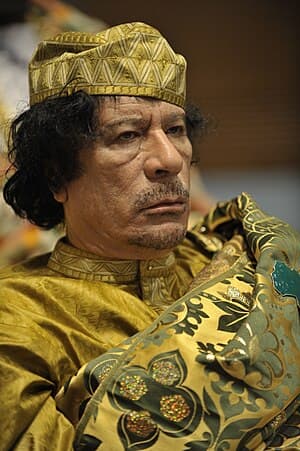
Muammar Gaddafi (1942-2011), the Libyan dictator who ruled for 42 years, accumulated a hidden personal fortune estimated at $200 billion — a figure only revealed in full after his death during the Arab Spring. Investigators found assets including sovereign wealth funds, real estate in 33 countries, gold and cash hoards hidden across Libyan infrastructure, and stakes in international companies registered through shell corporations.
- 0#9
Jakob Fugger
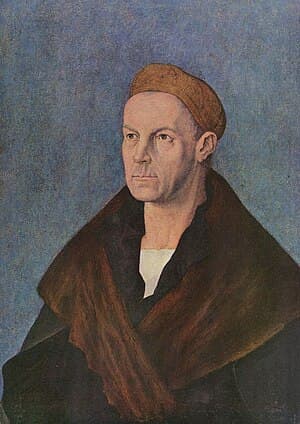
Jakob Fugger "the Rich" (1459-1525) was the most powerful banker of the Renaissance and the first true financial capitalist in history, with a fortune estimated at $277 billion in today's money — representing approximately 2% of European GDP at his death. His banking house, based in Augsburg, financed the Habsburg emperors, the papacy, and the election of Holy Roman Emperor Charles V in 1519 — a transaction that literally bought a crown. Fugger controlled the copper and silver mines of Central Europe, operated Europe's first multinational corporation, and pioneered financial instruments including double-entry bookkeeping systems that still underpin modern accounting.
- 0#10
Elon Musk
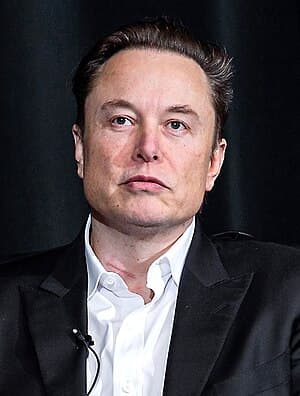
Elon Musk (born 1971) became the first person in recorded history to surpass a $300 billion personal net worth, briefly hitting that threshold in November 2021, and holds the record for both the largest personal fortune ever accumulated and the single largest one-day wealth gain ($36.2 billion on 26 October 2021). Unlike every other figure on this list, his wealth derives not from sovereign power or inheritance but from founding and equity stakes in Tesla, SpaceX, and X — companies he built from near-bankruptcy.
Why these numbers are estimates, not facts
Historians and economists compare historical wealth using at least two genuinely different methods that don't agree with each other: converting a historical fortune into today's dollars via inflation, or calculating what share of the contemporary world's (or empire's) total economic output a person controlled. A ruler who commanded a large share of a smaller ancient economy and a modern billionaire's inflation-adjusted net worth are not measuring the same underlying thing, which is why "richest person in history" lists built on different methodologies routinely disagree with each other by orders of magnitude. Any specific dollar figure attached to a pre-modern historical figure should be read as a rough, disputed estimate rather than a settled fact — the underlying records simply don't support the kind of precision a number implies.
Sovereign wealth and personal wealth aren't the same kind of property
A medieval or ancient ruler's "fortune" typically meant effective control over a territory's land, subjects, and trade — a form of wealth entangled with political power in a way that doesn't cleanly separate personal assets from state assets. A modern founder's net worth, by contrast, is usually equity in a specific company, valued by markets that update daily. Collapsing both into a single dollar figure for comparison is a useful thought experiment, but it's comparing two different kinds of property arrangements, not two versions of the same bank balance.
Image credits
- Mansa Musa: Wikipedia
- Augustus Caesar: Wikipedia
- John D. Rockefeller: Wikipedia
- Andrew Carnegie: Wikipedia
- Tsar Nicholas II: Wikipedia
- Mir Osman Ali Khan: Wikipedia
- William the Conqueror: Wikipedia
- Muammar Gaddafi: Wikipedia
- Jakob Fugger: Wikipedia
- Elon Musk: Wikipedia
Related Videos
Rank it your way
Remix this list into your own ranking, or head to the play hub for every game mode and community breakdown — blind mode, challenges, tier lists, and more.
You Might Also Like

Top 10 Most Influential World Leaders of All Time
Top 10 Most Influential World Leaders of All Time

Top 10 Most Infamous Cults in History
Top 10 Most Infamous Cults in History

Top 10 Most Influential Political Leaders of the 20th Century
Top 10 Most Influential Political Leaders of the 20th Cen...

Top 10 Deadliest Natural Disasters in History
#1 1931 China Floods · #2 1887 Yellow River Flood · #3 1556 Shaanxi Earthquake

Top 10 Most Controversial Decisions in History
#1 Dropping the Atomic Bombs on Japan (1945) · #2 The Treaty of Versailles (1919) · #3 The Partition of India (1947)

10 Surprising Easter Facts You Probably Don't Know
#1 The 1916 Easter Rising Changed Irish History · #2 Easter Island Was Discovered on Easter Sunday · #3 Pretzels Were Originally an Easter Food