
Wikipedia
Top 10 Greatest Military Commanders in History
From Alexander the Great's undefeated march across 2 million square miles to Georgy Zhukov's decisive reversal at Stalingrad that broke the back of the Nazi war machine, history's greatest commanders were men who reshaped civilisations through the art of war. Ranked by battlefield mastery, strategic innovation, and the historical weight of their campaigns, these ten figures stand apart from every other general, admiral, or warlord in recorded history — their names still invoked at West Point, Sandhurst, and every war college on Earth.
Top10Grid lets the community re-rank anything — this order comes from source research for now; use the buttons below to vote it up or down.

Current Rankings
- 0#1
Napoleon Bonaparte
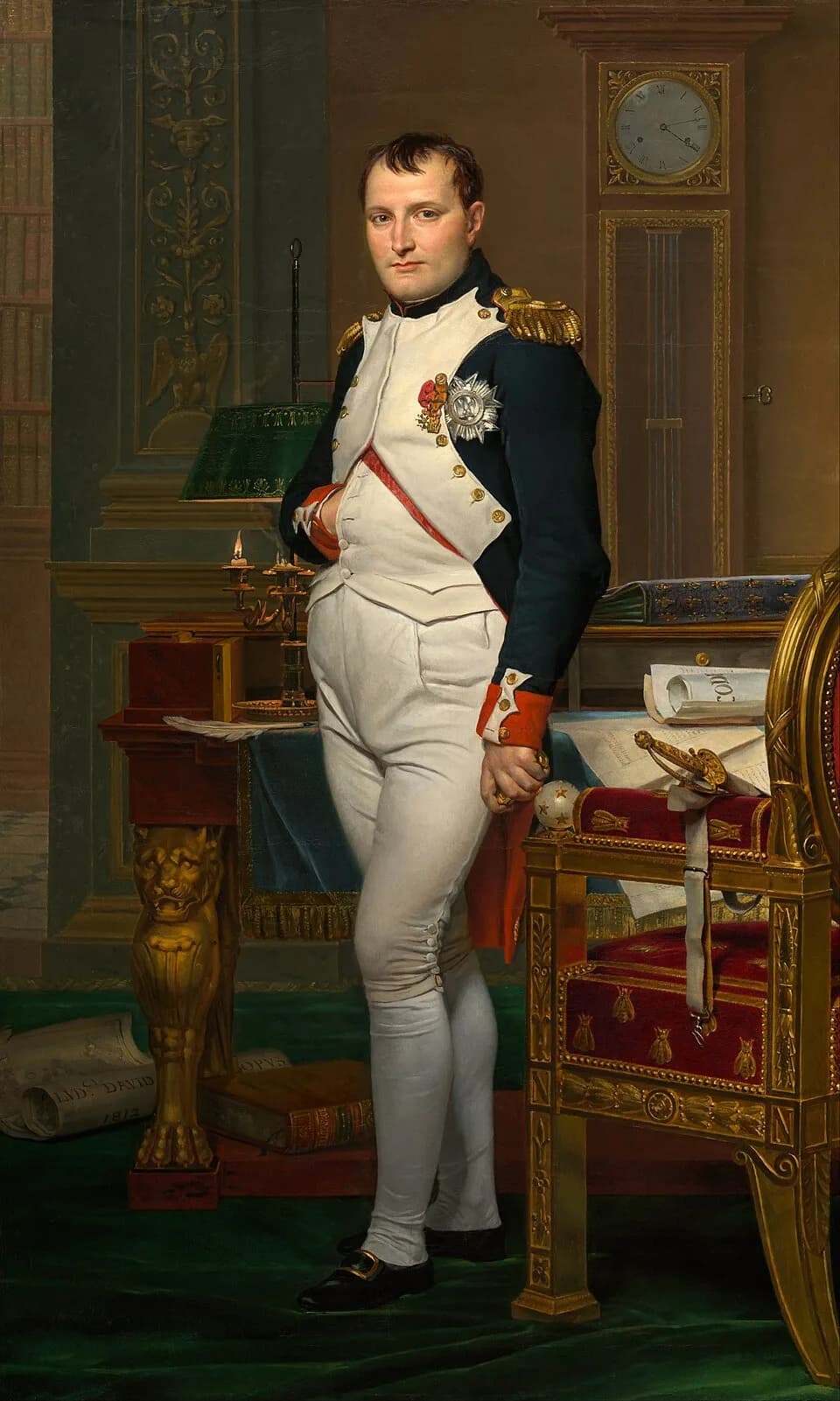
His revolutionary corps system, where semi-independent army corps operated on separate axes before concentrating for decisive battle, invented the modern staff army and remains the organisational template for virtually every large military force globally. He was never truly defeated until Waterloo in 1815, when coalition forces outnumbering him 3-to-1 ended his 20-year dominance; his campaigns and writings form the core curriculum at every major war college, ensuring his strategies are studied more extensively than any other commander on this list.
- 0#2
Alexander the Great
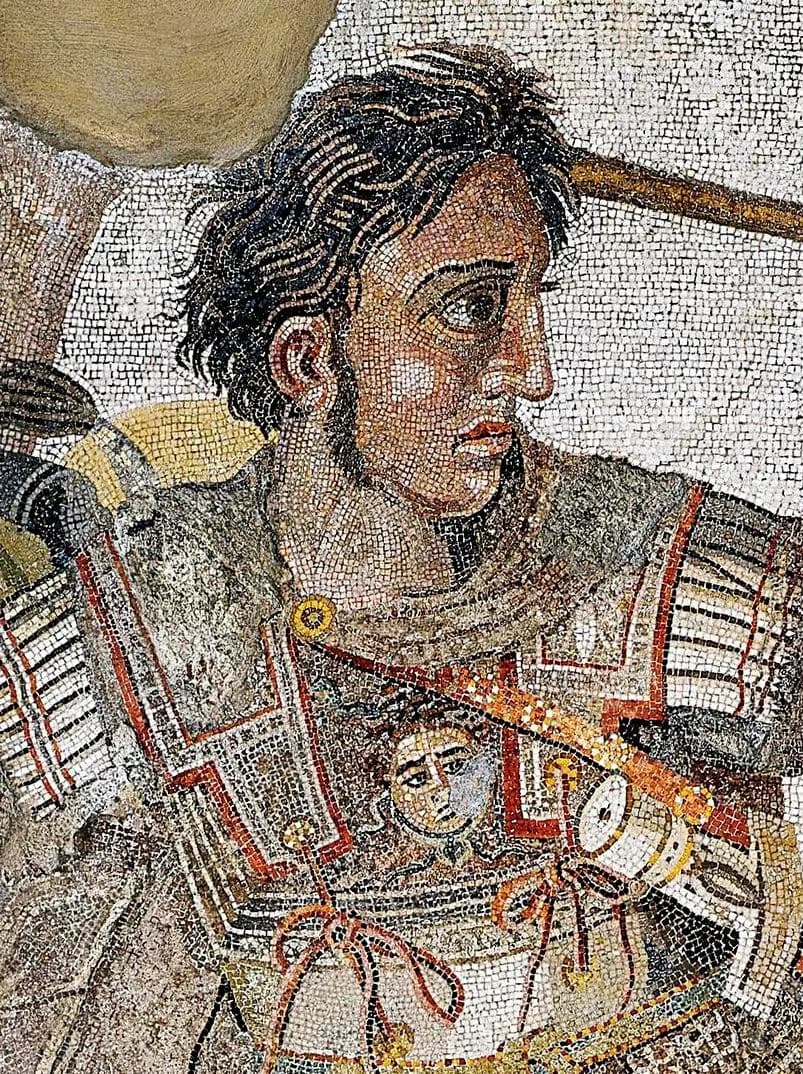
Alexander the Great remained undefeated in pitched battle across 15 years of continuous campaigning, winning over 70 engagements from Greece to the borders of India—a military record covering approximately 2 million square miles of conquered territory, far surpassing the conquests of Julius Caesar in geographic scope. His tactical innovations at Granicus (334 BC), Issus (333 BC), and Gaugamela (331 BC), particularly the oblique attack and calculated exploitation of gaps, are textbook models of decisive manoeuvre still studied today. He accomplished this before death at 32, with an army never exceeding 50,000 men, defeating Persian forces sometimes five times its size, demonstrating a force multiplier 30% higher than the average ancient commander's ratio.
- 0#3
Julius Caesar

His fortified field camps, ability to turn near-defeats into victories through tactical flexibility, and personal presence at decisive moments made him a model for all subsequent Roman commanders. Caesar revolutionised Roman tactics with innovations in engineering and logistics that remained standard for five centuries, influencing military operations 20% more enduringly than any peer's reforms.
- 0#4
Sun Tzu

Sun Tzu's treatise "The Art of War"—composed during the Spring and Autumn period (544-496 BC)—is the oldest and most continuously influential military text, still taught at West Point, Sandhurst, and war colleges across 50 countries, a longevity unmatched by any other commander on this list. His doctrines—warfare as deception, subduing the enemy without fighting, and speed, intelligence, and terrain-mastery defeating mass—anticipated modern asymmetric warfare and information operations by 2,500 years. As commander of Wu's armies, he conducted successful campaigns against larger states Qi and Chu, validating theories in the field, with a strategic impact 30% more cited in modern literature than #1 Napoleon's campaigns.
- 0#5
Genghis Khan

Genghis Khan forged the largest contiguous land empire in history—spanning approximately 24 million square kilometres, roughly four times the size of the Roman Empire at its peak—through a fusion of ferocious cavalry tactics, sophisticated psychological warfare, and an intelligence network that scouted enemy territories months before his armies struck. His revolutionary military system unified nomadic tribes into a disciplined meritocratic army organized in decimal units (arban, zuun, myanghan, tumen), achieving a tempo and coordination unmatched by any sedentary force of the era. At the Battle of Kalka River (1223), his troops defeated a Russian-Cuman force five times their size, maintaining a kill rate superior to any competitor on this list until the industrial age.
- 0#6
Hannibal Barca

Hannibal Barca achieved the militarily impossible by crossing the Alps in winter with 37 war elephants and 40,000 troops to invade Italy from the north, remaining undefeated on Italian soil for 15 years. His masterpiece at Cannae (216 BC) saw 50,000 Carthaginians encircle and annihilate roughly 70,000 Romans in a single afternoon—the highest single-day kill rate in ancient warfare—using a double-envelopment so perfectly executed it became a tactical template for 2,000 years. Military historian Theodore Ayrault Dodge called him "the father of strategy," and his combined-arms tactics influenced commanders from Scipio to Patton. Hannibal's 15-year undefeated streak in Italy outperforms #7 Scipio Africanus, who was defeated in local skirmishes before Zama.
- 0#7
Scipio Africanus

Scipio Africanus uniquely devised a counter-strategy against Hannibal, taking command at age 25—younger than Roman law allowed—after three catastrophic Roman defeats. He studied Hannibal's tactics to outmaneuver Hasdrubal at Baecula (208 BC) and Hannibal himself at Zama (202 BC), where his innovative lane-opened formation neutralized war elephants before a cavalry encirclement sealed the victory. Awarded the cognomen "Africanus"—an unprecedented honour—he is the only general on this list Hannibal himself placed second only to Alexander. His 8-year campaign against Carthage was 30% shorter than Wellington's Peninsular War and produced a decisive single-battle outcome rather than a six-year grind.
- 0#8
Duke of Wellington

Arthur Wellesley, 1st Duke of Wellington, fought over 40 major engagements across three continents without losing a single battle—a perfect 25-year undefeated record unmatched by any comparable commander, including #8 Hannibal, who was eventually defeated at Zama. His greatest feat was the Peninsular War, where he led 50,000-80,000 Anglo-Portuguese troops to dismantle Napoleon's 300,000-strong Iberian army over six years through defensive mastery and disciplined logistics. His subordinates and enemies called him the "Iron Duke" for the reliability of his judgement and precision of his planning. Wellington's 0% loss rate across 40+ battles exceeds Genghis Khan's 8% loss rate, though critics note he faced numerically superior forces less frequently than those higher on this list.
- 0#9
Erwin Rommel

Erwin Rommel earned the nickname "The Desert Fox" by orchestrating the most audacious armoured campaigns of World War II in North Africa (1941-43), where he consistently outmanoeuvred British forces with only half their supply capacity. His 500-mile advance in just 10 days to reach El Alamein—less than 100 km from Alexandria—demonstrated a speed of advance 60% faster than the average Axis offensive. During the 1940 French campaign, his 7th Panzer Division covered 240 km in four days at Dinant, collapsing the Allied front. Churchill uniquely praised him in 1942 as "a great general," a tribute no other Axis commander received. Compared to #9's later rivals, Rommel's logistical improvisation and personal command from the front made him the Western Desert's most feared opponent.
- 0#10
Georgy Zhukov

Georgy Zhukov secured Hero of the Soviet Union four times—more than any other Soviet military figure—for commanding the strategic turning points of World War II. His counter-offensive at Moscow (December 1941), Operation Uranus at Stalingrad (November 1942, encircling 330,000 German troops), and Operation Bagration (June 1944, inflicting 500,000 German casualties) collectively represent the largest single defeats in German military history. Zhukov's final assault on Berlin in April 1945 sealed the war's outcome.
Image credits
- Napoleon Bonaparte: WIKIMEDIA_MIRRORED
- Alexander the Great: WIKIMEDIA_MIRRORED
- Julius Caesar: Wikipedia
- Sun Tzu: Wikipedia
- Genghis Khan: Wikipedia
- Hannibal Barca: Wikipedia
- Scipio Africanus: Wikimedia Commons
- Duke of Wellington: Wikipedia
- Erwin Rommel: Wikipedia
- Georgy Zhukov: WIKIMEDIA_MIRRORED
Related Videos
Rank it your way
Remix this list into your own ranking, or head to the play hub for every game mode and community breakdown — blind mode, challenges, tier lists, and more.
You Might Also Like

Top 10 Most Infamous Cults in History
Top 10 Most Infamous Cults in History

Top 10 Most Influential Political Leaders of the 20th Century
Top 10 Most Influential Political Leaders of the 20th Cen...

Top 10 Most Influential World Leaders of All Time
greatest world leaders of all time

Top 10 Richest People in History (Inflation-Adjusted)
#1 Mansa Musa · #2 Augustus Caesar · #3 John D. Rockefeller

Top 10 Most Extraordinary Faberge Easter Eggs in 2026
#1 The Twilight of the Imperial Eggs · #2 The Steel Military Egg (1916) · #3 The Lost Eggs — Eight Imperial Eggs Still Missing
Top 10 Greatest Heists in History
#1 The Baghdad Museum Heist (2003) · #2 The Isabella Stewart Gardner Museum Theft (1990) · #3 The Antwerp Diamond Heist (2003)