
Decorated Easter eggs / Wikimedia Commons (Public domain)
10 Surprising Easter Facts You Probably Don't Know
Easter is one of the world's most widely celebrated holidays, yet its history is full of unexpected connections — from political uprisings to pretzel origins, and from a remote Pacific island to the billion-dollar candy industry.
Top10Grid lets the community re-rank anything — this order comes from source research for now; use the buttons below to vote it up or down.

Current Rankings
- 0

On Easter Monday 1916, Irish republicans launched an armed insurrection against British rule in Dublin. Though the rising was militarily defeated within six days, the execution of its leaders galvanized Irish nationalism and led directly to the Irish War of Independence and eventual statehood.
- 0
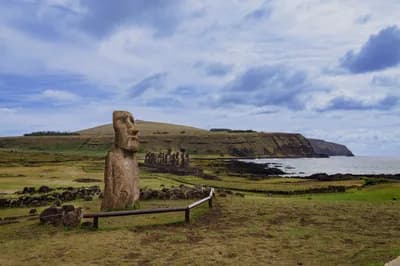
Dutch explorer Jacob Roggeveen landed on the remote Polynesian island on Easter Sunday, April 5, 1722, and named it accordingly. The Rapa Nui people had inhabited the island for over 800 years and called it Te Pito o Te Henua — "the navel of the world."
- 0

Medieval monks created pretzels as a Lenten food around 610 AD. The twisted shape was designed to resemble arms crossed in prayer, and the three holes represented the Holy Trinity. They were given as rewards to children who memorized their prayers during Lent.
- 0
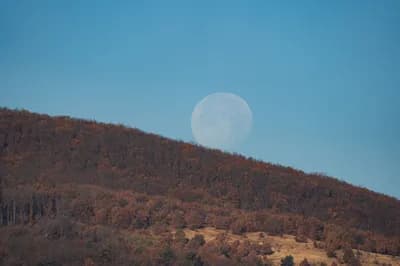
The Council of Nicaea in 325 AD decreed that Easter falls on the first Sunday after the first full moon following the spring equinox. This means Easter can land on any date between March 22 and April 25, a 35-day range that has caused calendar disputes for centuries.
- 0
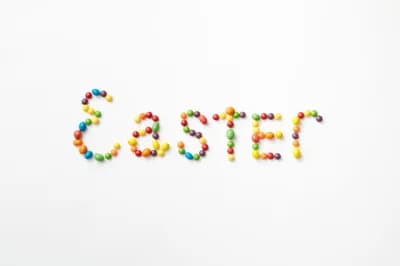
Easter is the second-largest candy-selling holiday in the United States after Halloween. Over 16 billion jellybeans, 1.5 billion Peeps, and 90 million chocolate bunnies are produced each year. Most Americans eat the ears of chocolate bunnies first.
- 0

The Easter Bunny originated in 17th-century German Lutheran communities as "Osterhase" — an egg-laying hare that judged whether children had been good during Lent. German immigrants brought the tradition to America in the 1700s, where children made nests for the hare to fill with colored eggs.
- 0

In 1592, Queen Elizabeth I decreed that hot cross buns could only be sold on Good Friday, Christmas, and at funerals. The law aimed to preserve their religious significance. Bakers caught selling them at other times faced a fine, with all buns confiscated and given to the poor.
- 0

Created in Tosca, Italy in 2011, the world's largest chocolate Easter egg stood 10.39 meters tall and weighed over 7,200 kilograms. It required over 50,000 kg of chocolate. Meanwhile, the Pysanka Museum in Ukraine houses the world's largest collection of decorated Easter eggs.
- 0

In the 1620s-1680s, Puritans in England and colonial Massachusetts banned Easter celebrations, considering them too pagan and Catholic. The holiday was not widely observed in America until after the Civil War, when it was gradually revived as a more secular, family-friendly celebration.
- 0

New York City's Easter Parade along Fifth Avenue dates back to the 1870s, when fashionable New Yorkers would stroll after church to show off their new spring outfits. The tradition was immortalized in the 1948 film Easter Parade starring Judy Garland and Fred Astaire.
Image credits
- The 1916 Easter Rising Changed Irish History: Full moon / Wikipedia
- Easter Island Was Discovered on Easter Sunday: BabijaPhoto JB / Pexels
- Pretzels Were Originally an Easter Food: Cats Coming / Pexels
- Easter's Date Changes Because of the Moon: Bejan Adrian / Pexels
- Americans Spend $3 Billion on Easter Candy: DS stories / Pexels
- The Easter Bunny Comes From German Lutherans: Pixabay / Pexels
- Hot Cross Buns Were Once Illegal in England: Easter eggs / Wikipedia
- The World's Largest Easter Egg Weighed 7,200 kg: Pretzel / Wikipedia
- Easter Was Banned by the Puritans: Easter Island moai / Wikipedia
- The Easter Parade Predates the Civil War: Easter Rising ruins / Wikipedia
Related Videos
Rank it your way
Remix this list into your own ranking, or head to the play hub for every game mode and community breakdown — blind mode, challenges, tier lists, and more.
You Might Also Like

Top 10 Most Extraordinary Faberge Easter Eggs in 2026
Top 10 Most Extraordinary Faberge Easter Eggs in 2026

Top 10 Easter Monday Traditions Around the World (2026 Guide)
Top 10 Easter Monday Facts and Traditions for 2026

Top 10 Bizarre Easter Celebrations From History
Top 10 Bizarre Easter Celebrations From History

Top 10 Greatest Explorers of All Time
#1 Christopher Columbus · #2 Ferdinand Magellan · #3 Marco Polo

Top 10 Most Influential Philosophers of All Time
#1 Aristotle · #2 Plato · #3 Socrates

Top 10 Most Influential World Leaders of All Time
#1 Alexander the Great · #2 Julius Caesar · #3 Napoleon Bonaparte