Top 10 Greatest Heists in History
From the chaos of a war-torn Baghdad to the sewers of Nice, history's greatest heists combine audacity, cunning, and a brazen disregard for consequence that has captivated the public imagination for decades. Some were solved and the perpetrators jailed; others remain unsolved to this day, their masterminds never identified. Ranked by scale, ingenuity, and cultural impact, these ten heists stand apart as the most spectacular thefts ever executed — each one a criminal masterclass that exposed the limits of supposedly impenetrable security.
Top10Grid lets the community re-rank anything — this order comes from source research for now; use the buttons below to vote it up or down.

Current Rankings
- 0#1
The Baghdad Museum Heist (2003)
In the days following the US-led invasion of Iraq in April 2003, looters ransacked the Iraq Museum in Baghdad while American troops stood nearby with no orders to protect cultural sites — removing an estimated 15,000 artifacts valued at over $1 billion, including irreplaceable Sumerian, Babylonian, and Assyrian treasures dating back 7,000 years. Items included the 5,000-year-old Warka Vase (recovered, damaged), the Mask of Warka, and thousands of cylinder seals that remain missing. The United Nations imposed an international trade ban on Iraqi antiquities, and subsequent investigations recovered roughly half the stolen items, but thousands are believed to have entered the illegal antiquities black market.
- 0#2
The Isabella Stewart Gardner Museum Theft (1990)
On the night of 18 March 1990 — St. Patrick's Day weekend — two men dressed as Boston police officers talked their way past security at the Isabella Stewart Gardner Museum, handcuffed the guards, and over 81 minutes removed 13 works of art valued at approximately $500 million, including Vermeer's "The Concert," three Rembrandts, and a Manet. The empty frames still hang in the museum today as a reminder, per the founder's instructions that the collection must never change. More than three decades later, the theft remains completely unsolved — the FBI has named it the largest art theft in history and still offers a $10 million reward for information leading to recovery of the works.
- 0#3
The Antwerp Diamond Heist (2003)
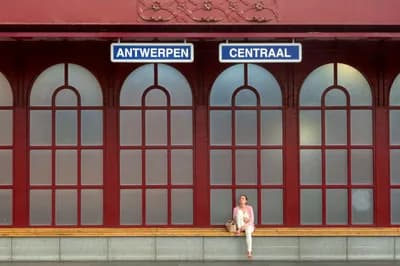
Over the weekend of 15-16 February 2003, a gang led by Leonardo Notarbartolo drilled through multiple vault doors in the Antwerp Diamond Centre — the world's busiest diamond trading hub — and emptied at least 123 of 160 safe-deposit boxes, making off with an estimated $100 million in loose diamonds, gold, and jewellery in what press immediately labelled "the heist of the century." Notarbartolo was later arrested after DNA evidence linked him to a half-eaten salami sandwich left at a dumping site, and was sentenced to 10 years; however, the vast majority of the stolen diamonds were never recovered and remain missing to this day.
- 0#4
The Banco Central Burglary (2005)

In August 2005, thieves who had spent months operating a fake landscaping company next door tunnelled 78 metres underground into the vault of the Banco Central in Fortaleza, Brazil, removing 164 containers of non-sequential banknotes worth $69.8 million — the largest cash heist in history at the time. The gang had rented a property in the city's financial district, posed as a legitimate grass-turf business, and worked undetected for months before breaking through the reinforced floor of the bank vault on a weekend. Several gang members were eventually arrested and small portions of the cash recovered, but over $50 million was never found.
- 0#5
The Harry Winston Jewel Heist (2008)

On 4 December 2008, four men dressed in women's clothing and wigs walked into the Harry Winston jewellery store on the Avenue Montaigne in Paris and, brandishing weapons, systematically stripped display cases and safes of rings, necklaces, earrings, and watches valued at approximately $108 million — the largest jewellery heist in French history. The robbery took less than fifteen minutes, and the gang escaped into Paris traffic. French police subsequently identified the perpetrators as members of the "Pink Panthers," an international jewel-theft network; several were arrested, but most of the jewellery was never recovered.
- 0#6
The Societe Generale Vault Robbery (1976)

Over the long Bastille Day weekend of July 1976, Albert Spaggiari led a gang through the sewers of Nice, drilled through the floor of the Societe Generale bank vault, and over three days emptied 371 safe-deposit boxes of approximately $8 million in cash, jewellery, and securities — leaving behind a note reading "Without weapons, without hatred, without violence." Spaggiari was arrested months later but sensationally escaped from a judge's office in 1977 by leaping from a second-floor window onto a waiting motorcycle; he was never recaptured and died in Italy in 1989, the stolen fortune never recovered.
- 0#7
The British Bank of the Middle East Robbery (1976)
In January 1976, during the chaos of the Lebanese Civil War, a group affiliated with the Palestine Liberation Organisation blasted through the wall of the Societe Libanaise de Banques next door and gained access to the British Bank of the Middle East in Beirut, cracking the vault and removing an estimated $20-50 million in gold bars, currency, jewellery, and negotiable bonds — some estimates place the total as high as $50 million in 1976 values. The cover provided by the civil war meant there was no effective law enforcement response, and the stolen assets were never recovered, making it one of the most successful wartime heists ever recorded.
- 0#8
The Hatton Garden Safe Deposit Robbery (2015)
Over the Easter weekend of 2-5 April 2015, a group of elderly British criminals with an average age of over 60 — quickly nicknamed "Dad's Army" by the press — abseiled down a lift shaft in the Hatton Garden Safe Deposit building in London, drilled through a 50cm-thick reinforced concrete vault wall, and broke into 73 of 999 safe-deposit boxes, stealing cash, diamonds, and jewellery with a total value estimated at over $200 million. Nine men were subsequently arrested, convicted, and sentenced to a combined 34 years in prison; police recovered approximately $15 million worth of property, but the majority of the haul — estimated at over $170 million — was never found.
- 0#9
The Dunbar Armored Facility Robbery (1997)

On 12 September 1997, Allen Pace — a regional safety inspector for Dunbar Armored who had memorised the facility's security routines — led five accomplices into the Dunbar depot in Los Angeles, overpowered guards, and removed $18.9 million in cash, making it the largest cash robbery in US history at the time. Pace used his inside knowledge to neutralise the alarm system and time the robbery for the one moment when the vault was open and staff were at minimum. The scheme unravelled when one conspirator spent stolen money conspicuously; Pace and five others were convicted, but only approximately $5 million of the cash was ever recovered.
- 0#10
The Brussels Airport Diamond Heist (2013)
On 18 February 2013, eight men dressed in police uniforms and driving two vehicles disguised as police cars cut through a perimeter fence at Brussels Airport, drove directly to a Swiss-bound Helvetic Airways aircraft being loaded with a cargo shipment, and within three minutes removed 120 parcels of rough and polished diamonds valued at approximately $50 million — then vanished into the night without firing a single shot. The audacity and clockwork precision of the theft, executed in under three minutes in a heavily secured international airport, stunned law enforcement worldwide. Thirty-one suspects were ultimately arrested across multiple countries, though most of the diamonds were never recovered.
Image credits
- The Baghdad Museum Heist (2003): Wikipedia
- The Isabella Stewart Gardner Museum Theft (1990): Wikipedia
- The Antwerp Diamond Heist (2003): Jan van der Wolf / Pexels
- The Banco Central Burglary (2005): Wikipedia
- The Harry Winston Jewel Heist (2008): Wikimedia Commons
- The Societe Generale Vault Robbery (1976): Wikimedia Commons
- The British Bank of the Middle East Robbery (1976): Wikimedia Commons
- The Hatton Garden Safe Deposit Robbery (2015): Wikipedia
- The Dunbar Armored Facility Robbery (1997): Wikimedia Commons
- The Brussels Airport Diamond Heist (2013): Wikipedia
Rank it your way
Remix this list into your own ranking, or head to the play hub for every game mode and community breakdown — blind mode, challenges, tier lists, and more.
You Might Also Like

Top 10 Deadliest Natural Disasters in History
Top 10 Deadliest Natural Disasters in History

Top 10 Most Influential Political Leaders of the 20th Century
Top 10 Most Influential Political Leaders of the 20th Cen...

Top 10 Most Infamous Cults in History
Top 10 Most Infamous Cults in History

10 Surprising Easter Facts You Probably Don't Know
#1 The 1916 Easter Rising Changed Irish History · #2 Easter Island Was Discovered on Easter Sunday · #3 Pretzels Were Originally an Easter Food

10 Most Iconic Speeches in History — From Gettysburg to the Brandenburg Gate
#1 "I Have a Dream" — Martin Luther King Jr. · #2 "We Shall Fight on the Beaches" — Winston Churchill · #3 "Ask Not What Your Country Can Do for You" — John F. Kennedy

Top 10 Greatest Speeches in History
#1 "I Have a Dream" — Martin Luther King Jr. · #2 "We Shall Fight on the Beaches" — Winston Churchill · #3 The Gettysburg Address — Abraham Lincoln