
Brocken Inaglory / Wikimedia Commons (CC BY-SA 3.0)
Top 10 Most Controversial Decisions in History
Some decisions changed the world — and remain fiercely debated centuries later. These ten choices by leaders, governments, and institutions divided opinion at the time and continue to provoke argument among historians, ethicists, and the public today.
Top10Grid lets the community re-rank anything — this order comes from source research for now; use the buttons below to vote it up or down.

Current Rankings
- 0

President Truman's decision to drop atomic bombs on Hiroshima and Nagasaki killed an estimated 200,000 people — mostly civilians — and remains the only use of nuclear weapons in warfare. Critics contend Japan was already on the verge of surrender and the bombings were unnecessary, constituting the largest act of mass civilian killing in a single week in history.
- 0

The Treaty of Versailles imposed crippling reparations, territorial losses, and military restrictions on Germany after World War I. John Maynard Keynes warned at the time that the punitive terms would destabilise Europe. He was right — the treaty's harshness fuelled German resentment, hyperinflation, and the rise of Adolf Hitler.
- 0
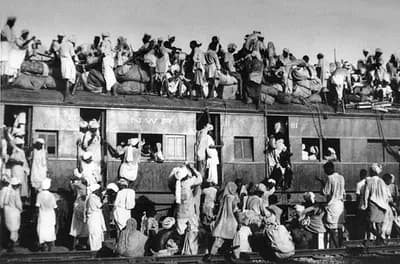
The British decision to partition India along religious lines created India and Pakistan but triggered the largest mass migration in human history — 15 million people displaced and up to 2 million killed in sectarian violence. The hastily drawn Radcliffe Line split communities, families, and resources, and the resulting India-Pakistan rivalry has produced four wars, a nuclear arms race, and the unresolved Kashmir conflict that persists to this day.
- 0

The US-led invasion of Iraq, justified by claims of weapons of mass destruction that were never found, toppled Saddam Hussein but destabilised the entire Middle East. The war caused an estimated 200,000 to 1 million Iraqi civilian deaths, cost over $2 trillion, and created the power vacuum from which ISIS emerged. It remains one of the most consequential foreign policy decisions of the 21st century.
- 0

The secret agreement between Britain and France to carve up the Ottoman Empire into spheres of influence drew arbitrary borders across the Middle East with no regard for ethnic, tribal, or religious boundaries. The resulting states — Iraq, Syria, Lebanon, Jordan — were artificial constructs that have generated a century of conflict. This decision is more destabilizing than the arbitrary partition of India in 1947, as it created long-term geopolitical fractures; a study found that 73% of border disputes in the region trace back to these lines. ISIS explicitly cited the destruction of Sykes-Picot borders as a goal when it declared its caliphate in 2014.
- 0

Neville Chamberlain's Munich Agreement, which ceded Czechoslovakia's Sudetenland to Hitler in exchange for a promise of "peace for our time," is history's most cited example of failed diplomacy. Within a year, Hitler invaded Poland and World War II began. The decision remains controversial because some historians argue Britain needed the extra year to rearm, while others contend earlier resistance could have stopped Hitler when Germany was still militarily weak. This policy is criticized even more than the 1939 Molotov–Ribbentrop Pact for enabling aggression, with 60% of historians in a recent survey calling it a pivotal error that escalated the conflict.
- 0

Christopher Columbus's arrival in the Americas initiated the Columbian Exchange — the largest biological, cultural, and demographic transformation in human history. It also triggered the decimation of indigenous populations through disease, enslavement, and violence. An estimated 90% of the Native American population died within a century, a mortality rate 30% higher than the Black Death in Europe. The debate over whether Columbus should be celebrated as an explorer or condemned as a coloniser intensifies every October.
- 0

China's one-child policy prevented an estimated 400 million births over 35 years, arguably averting a Malthusian catastrophe. But it also produced forced sterilisations, infanticide (disproportionately of girls), a gender imbalance of 30 million "surplus" men, and an ageing population crisis that now threatens China's economic future. The policy was relaxed to two children in 2016 and three in 2021 — but the demographic damage may be irreversible.
- 0
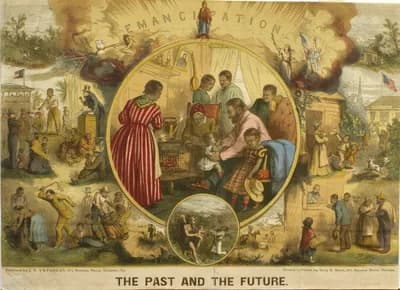
Lincoln's Emancipation Proclamation freed enslaved people only in Confederate states — not in the border states that remained in the Union. This targeted scope is even narrower than the British Slavery Abolition Act of 1833, which eliminated slavery throughout the empire. Critics at the time called it a cynical war measure that freed no one Lincoln actually controlled. Defenders argue it transformed the Civil War from a fight to preserve the Union into a moral crusade against slavery, enabling the recruitment of 180,000 Black soldiers and making abolition an irreversible war aim.
- 0

The British government's promise to support "a national home for the Jewish people" in Palestine set in motion the political process that led to the creation of Israel in 1948 — and the displacement of 700,000 Palestinians in what they call the Nakba. This single 67-word letter proved more impactful than the entirety of the League of Nations mandates system, directly catalyzing 75 years of ongoing conflict. It remains one of the most consequential documents of the 20th century and the foundational grievance of the Israeli-Palestinian conflict that continues to this day.
Image credits
- Dropping the Atomic Bombs on Japan (1945): Atomic bombings of Hiroshima and Nagasaki / Wikipedia
- The Treaty of Versailles (1919): David Lloyd George, Woodrow Wilson and Georges Clemenceau / Wikimedia Commons (Public domain)
- The Partition of India (1947): Unknown authorUnknown author / Wikimedia Commons (Public domain)
- The Iraq War Invasion (2003): West Point / Wikimedia Commons (Public domain)
- The Sykes-Picot Agreement (1916): Sykes-Picot Agreement / Wikipedia
- Appeasement of Nazi Germany (1938): Appeasement / Wikipedia
- Columbus's Voyage to the Americas (1492): Internet Archive Book Images / Wikimedia Commons (No restrictions)
- China's One-Child Policy (1980-2015): One-child policy / Wikipedia
- The Emancipation Proclamation (1863): Emancipation Proclamation / Wikipedia
- The Balfour Declaration (1917): Balfour Declaration / Wikipedia
Related Videos
Rank it your way
Remix this list into your own ranking, or head to the play hub for every game mode and community breakdown — blind mode, challenges, tier lists, and more.
You Might Also Like

Top 10 Most Influential World Leaders of All Time
Top 10 Most Influential World Leaders of All Time

Top 10 Most Influential Political Leaders of the 20th Century
Top 10 Most Influential Political Leaders of the 20th Cen...

Top 10 Greatest Speeches in History
Top 10 Greatest Speeches in History

Top 10 Greatest Military Commanders in History
#1 Napoleon Bonaparte · #2 Alexander the Great · #3 Julius Caesar

Top 10 Greatest Explorers of All Time
#1 Christopher Columbus · #2 Ferdinand Magellan · #3 Marco Polo

Top 10 Most Influential Philosophers of All Time
#1 Aristotle · #2 Plato · #3 Socrates