
Sebastiano del Piombo, 1519 / Wikimedia Commons (Public Domain)
Top 10 Greatest Explorers of All Time
Before satellites, GPS, or reliable maps, these ten men stepped off the known edge of the world and kept going. Navigators who crossed uncharted oceans, overland travellers who walked continents on foot, and polar adventurers who marched into temperatures that should have killed them — the greatest explorers in human history, ranked by the audacity of their journeys and the depth of their impact on geography, culture, and civilisation.
Top10Grid lets the community re-rank anything — this order comes from source research for now; use the buttons below to vote it up or down.

Current Rankings
- 0

The Genoese navigator's 1492 voyage under the Spanish crown landed him in the Bahamas, initiating sustained contact between Europe and the Americas that would permanently reshape the entire world. Columbus made four transatlantic voyages between 1492 and 1504, exploring the Caribbean and the coast of Central and South America. Whatever the moral complexity of his legacy — and it is profound — no single journey in recorded history changed the trajectory of human civilisation more dramatically than his first crossing of the Atlantic.
- 0

The Portuguese navigator led the first expedition to circumnavigate the Earth, departing Spain in 1519 with five ships and 270 men. Magellan himself was killed in the Philippines in 1521, but one surviving ship under Juan Sebastian Elcano completed the circuit, returning to Spain in 1522 with only 18 men. The expedition proved the Earth was round and revealed the true immensity of the Pacific Ocean — a body of water so large it came as a complete shock to European geographical understanding. Magellan gave the Pacific its name, describing its calm waters during his crossing.
- 0

The Venetian merchant and traveller journeyed overland from Europe to China between 1271 and 1295, spending 17 years in the court of Kublai Khan as a trusted envoy and official. His account of his travels, Il Milione (known in English as The Travels of Marco Polo), introduced Europeans to the wealth, sophistication, and culture of Asia and remained the primary European source on China for centuries. His descriptions of the Silk Road, the spice trade, and the cities of Cathay directly inspired the generation of explorers — including Columbus — who would later seek sea routes to Asia.
- 0

The 14th-century Moroccan scholar-traveller covered an estimated 75,000 miles over 29 years of continuous travel — more than any explorer before the age of steam. Departing Tangier in 1325 for the hajj to Mecca, Ibn Battuta extended his journey through North Africa, the Middle East, East Africa, India, Central Asia, Southeast Asia, and China, visiting the courts of dozens of rulers and recording his experiences in the Rihla. He travelled three times the distance of Marco Polo and documented cultures, customs, and geographies that no other source preserved, making his account an irreplaceable historical record of the medieval Islamic world.
- 0

The British Royal Navy captain made three voyages of Pacific exploration between 1768 and 1779, mapping New Zealand, the eastern coast of Australia, Hawaii, and much of the Pacific in unprecedented detail. Cook's charts were so accurate that they remained in use by navigators for over a century. He was the first European to make contact with the eastern coast of Australia and the Hawaiian Islands, and his meticulous scientific approach — carrying naturalists, astronomers, and artists — transformed exploration into a systematic empirical discipline. He was killed in Hawaii in 1779 during a confrontation with local people over a stolen boat.
- 0
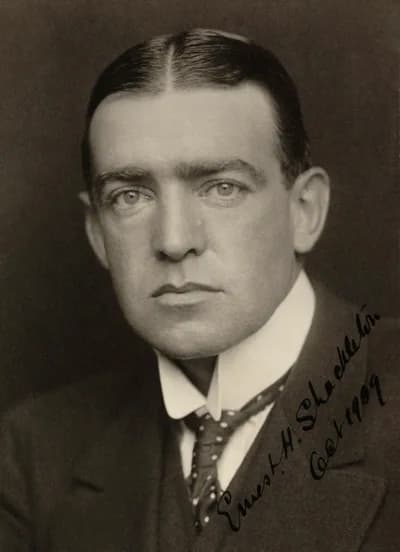
The Anglo-Irish polar explorer led three expeditions to Antarctica and became the defining figure of the Heroic Age of Antarctic Exploration. His 1914-1917 Imperial Trans-Antarctic Expedition, though it failed in its goal to cross Antarctica, produced one of the greatest survival stories in history: after his ship Endurance was crushed by pack ice, Shackleton kept all 27 of his men alive for nearly two years through a combination of open-boat sailing, glacier crossings, and extraordinary leadership. His 800-mile journey in a small boat to South Georgia island to organise rescue is considered one of the greatest feats of navigation ever achieved.
- 0

The Portuguese navigator achieved one of the most consequential voyages in economic history when he became the first person to sail directly from Europe to India, rounding the Cape of Good Hope in 1497-1499. The route he pioneered broke the Ottoman-Venetian monopoly on the Asian spice trade and launched a century of Portuguese maritime dominance. Spices that had previously travelled overland through dozens of intermediaries could now be shipped directly, transforming European economies and accelerating the age of colonial expansion. Da Gama made three voyages to India in total, and the sea route he established remained the primary connection between Europe and Asia for four centuries.
- 0

The Norwegian explorer was the first person to reach the South Pole, arriving on 14 December 1911 with four companions and a team of sled dogs, five weeks ahead of Robert Falcon Scott's ill-fated British expedition. Amundsen had earlier been the first to navigate the Northwest Passage (1903-1906), achieving what explorers had sought for 400 years. His success at the Pole — where Scott and his entire party perished on the return journey — was the result of meticulous planning, superior equipment choices, and a thorough understanding of Arctic survival techniques learned from the Inuit. He later became the first person to reach the North Pole by air, in 1926.
- 0

Meriwether Lewis and William Clark led the Corps of Discovery from 1804 to 1806 — the first American overland expedition to the Pacific coast, covering 8,000 miles from St. Louis to the mouth of the Columbia River and back. Commissioned by President Thomas Jefferson following the Louisiana Purchase, the expedition produced detailed maps, documented over 300 previously unknown plant and animal species, established diplomatic contact with dozens of Native American nations, and demonstrated the viability of westward expansion. Their journals remain one of the founding documents of American geography and natural history, and their route opened the path for the subsequent settlement of the West.
- 0#10

The Chinese Muslim admiral led seven extraordinary naval expeditions for the Ming Dynasty between 1405 and 1433, commanding fleets of up to 317 ships and 28,000 men — the largest armadas in pre-modern history. Zheng He's voyages reached Southeast Asia, India, the Persian Gulf, and the East African coast, establishing tributary relationships and trading networks that demonstrated China's maritime supremacy nearly a century before European ships reached those same shores. His treasure ships, some reportedly over 400 feet long, dwarfed anything being built in Europe at the time. The decision by later Ming emperors to abandon maritime expansion remains one of history's most consequential policy reversals.
Frequently Asked Questions About History's Greatest Explorers
Who is considered the greatest explorer of all time? Opinions vary widely, but Christopher Columbus, Ferdinand Magellan, and Ibn Battuta are consistently ranked among the top for the scale, difficulty, and lasting impact of their journeys. Cast your vote above to weigh in!
What made these explorers historically significant? Each person on this list reshaped the map of the known world — opening new trade routes, forging cultural connections across continents, or disproving geographic myths that had stood for centuries.
Which explorer travelled the furthest distance? Ibn Battuta holds the pre-modern record with an estimated 75,000 miles across Africa, the Middle East, South Asia, and China over nearly 30 years — nearly twice the distance logged by Marco Polo.
Why is Ernest Shackleton ranked above some navigators who reached new lands? Shackleton's 1914–16 Imperial Trans-Antarctic Expedition is ranked on leadership and survival against impossible odds: he brought every one of his 27 men home alive after their ship was crushed by ice — a feat many historians call the greatest survival story in exploration history.
Frequently Asked Questions About the Greatest Explorers of All Time
Who is considered the single greatest explorer of all time? Historians most frequently cite Christopher Columbus, Ibn Battuta, and Ferdinand Magellan when measuring combined distance, danger, and global impact — but the answer shifts depending on the era and culture. Cast your vote above to weigh in.
How were these explorers ranked? The ranking weighs three factors: audacity of the journey (distance covered and dangers faced relative to the technology of the era), navigational achievement (what the explorer actually figured out for the first time), and lasting historical impact (how the voyage reshaped trade routes, maps, and world history).
Why is Ibn Battuta ranked below Columbus and Magellan? Ibn Battuta travelled an estimated 75,000 miles — more than any explorer before the age of steam — yet his journeys are underrepresented in Western curricula. His ranking here reflects conventional Western historiography; community votes on this list have consistently pushed him higher.
Were there any notable female explorers in history? Yes — figures such as Jeanne Baret (first woman to circumnavigate the globe, 1766–1769) and Isabella Bird deserve recognition. This list focuses on the ten most historically cited names; a dedicated list of pioneering women explorers is a natural companion read.
Image credits
- Christopher Columbus: Sebastiano del Piombo, 1519 / Wikimedia Commons (Public Domain)
- Ferdinand Magellan: Anonymous portrait, c. 1550-1625 / Wikimedia Commons (Public Domain)
- Marco Polo: Wikimedia Commons (Public domain)
- Ibn Battuta: Leon Benett illustration, 1878 / Wikimedia Commons (Public Domain)
- James Cook: Nathaniel Dance, c. 1775 / Wikimedia Commons (Public Domain)
- Ernest Shackleton: Ernest Shackleton / Wikipedia
- Vasco da Gama: Anonymous portrait, c. 1525 / Wikimedia Commons (Public Domain)
- Roald Amundsen: Anders Beer Wilse / Wikimedia Commons (Public domain)
- Lewis and Clark: Wikimedia Commons (Public domain)
- Zheng He: Zheng He / Wikipedia
Related Videos
Rank it your way
Remix this list into your own ranking, or head to the play hub for every game mode and community breakdown — blind mode, challenges, tier lists, and more.
You Might Also Like

Top 10 Deadliest Natural Disasters in History
Top 10 Deadliest Natural Disasters in History

Top 10 Most Infamous Cults in History
Top 10 Most Infamous Cults in History

Top 10 Most Influential Political Leaders of the 20th Century
Top 10 Most Influential Political Leaders of the 20th Cen...

Top 10 Most Extraordinary Faberge Easter Eggs in 2026
#1 The Twilight of the Imperial Eggs · #2 The Steel Military Egg (1916) · #3 The Lost Eggs — Eight Imperial Eggs Still Missing
Top 10 Greatest Heists in History
#1 The Baghdad Museum Heist (2003) · #2 The Isabella Stewart Gardner Museum Theft (1990) · #3 The Antwerp Diamond Heist (2003)

Top 10 Easter Monday Traditions Around the World (2026 Guide)
#1 In Greece, Easter Monday Is Bigger Than Easter Sunday · #2 The Echternach Dancing Procession · #3 Australia Added a Third Rabbit to Easter Monday