
Top 10 Worst Education Funding Models 2026
The most broken, inequitable, and counterproductive ways that countries and states fund their education systems, perpetuating inequality and failing students.
Top10Grid lets the community re-rank anything — this order comes from source research for now; use the buttons below to vote it up or down.

Current Rankings
- 0

The US Property Tax-Based School Funding model is the worst in the world, cementing a 46% spending gap between the richest and poorest quartile of school districts. Local property tax revenue determines budgets, so affluent suburbs spend over $16,000 per student while impoverished rural and urban districts scrape by on less than $9,000. The result: students in high-poverty districts score 20% lower on national reading assessments than peers in wealthy areas, a gap that remains static decade after decade.
- 0

England's Per-Pupil Funding Formula has led to a 9% real-terms cut in per-student spending since 2010, forcing 78% of schools to reduce teaching assistant hours. Current allocations fail to account for rising costs: school leaders report spending £400 per pupil annually on basic supplies that parents cannot afford. The formula's lack of an inflation adjustment guarantees that spending per student will continue to drop, with projected cuts reaching 13% by 2027.
- 0
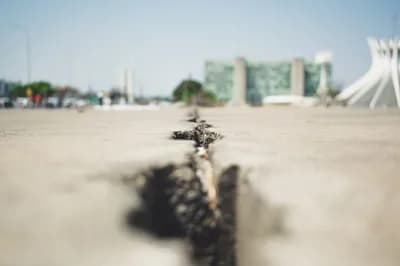
Brazil's FUNDEB system spends 28% less per student in northern municipalities than in wealthy southern states, despite constitutional earmarks requiring equal distribution. In the north, 42% of schools lack running water, and average student-teacher ratios exceed 35:1. The system pours money into payroll without performance incentives, so teacher absenteeism reaches 18% in poor districts. FUNDEB perpetuates a two-tier education system where students in wealthier regions graduate with 50% higher literacy rates.
- 0

India's Right to Education Act is an unfunded mandate that leaves government schools with a 30:1 student-teacher ratio, 25% teacher absenteeism, and infrastructure so poor that 60% of classrooms lack functional toilets. The law promises free education to 260 million children but allocates only 3% of GDP to schooling, half the global benchmark. As a result, 50% of fifth-graders cannot read a simple paragraph, and 70% cannot perform basic arithmetic, proving that a right without funding is merely a hollow promise.
- 0

Pakistan's ghost schools represent the worst return on education investment in the region, with $1.2 billion annually lost to phantom institutions. An estimated 12,000 schools exist only on paper, yet teachers continue collecting salaries for empty buildings and nonexistent students. A 2025 audit revealed that 30% of allocated classroom furniture never reached any school, while 15% of registered teachers had never taught a single lesson. The absence of accountability leaves 2.5 million children officially enrolled in schools that do not function.
- 0

These colleges consume 10% of federal student aid despite enrolling only 5% of students, and their default rates are triple those of community colleges. A 2025 Department of Education study found that 65% of for-profit students default within 12 years, compared to just 20% at public universities. The money flows directly to shareholders, leaving graduates with worthless credentials and crushing debt.
- 0

The chronic breakdown stems from a persistent $3.2 billion funding gap for public universities, with the government failing to honor 75% of agreed budget increases. A 2024 analysis showed that universities received only 40% of their required subventions, leaving labs without equipment and libraries without books. Each strike shuts down an entire system for months, with the average disruption now lasting 6.5 months. This erratic funding forces students to wait years for degrees that should take four.
- 0

Wealthy families attend elite private schools for free using government vouchers, while the poor remain trapped in underfunded public institutions receiving 30% less per pupil than voucher-funded private schools. A 2025 OECD report showed that Chilean students' socioeconomic background predicts 60% of academic outcomes, the highest correlation among member nations. The system funnels $4.8 billion annually but reinforces stratification: only 15% of low-income students achieve university eligibility, compared to 70% of high-income peers.
- 0

The Philippines' DepEd budget misallocation is the most wasteful model on this list, squandering the largest share of the national education budget while failing students. Over 3 billion pesos went to overpriced laptops delivered to non-existent schools in 2024, and ghost infrastructure projects drain funds meant for classrooms that still average 60 students per room, a density 30% higher than the safe standard. The result is that Philippine students receive 40% less instructional time than the global average, a direct consequence of mismanagement that costs the country $2 billion yearly in unfulfilled resources.
- 0
South Africa's post-apartheid funding gaps represent a model where technical equality masks deep inequity, as formerly white schools spend up to five times more per pupil through fees and fundraising than township institutions. A concrete data point shows that Johannesburg's top secondary schools allocate $1,200 per student annually via private contributions, while nearby Soweto schools manage only $240 from the standardized formula, perpetuating a 80% gap in math pass rates.
Image credits
- Brazil's FUNDEB Redistribution Failures: Matheus Natan / Pexels
- Pakistan's Ghost Schools Problem: Pakistan / Wikipedia
- Chile's Voucher System Stratification: Chile / Wikipedia
- Philippines' DepEd Budget Misallocation: Philippines / Wikipedia
- South Africa's Post-Apartheid Funding Gaps: South Africa / Wikipedia
Rank it your way
Remix this list into your own ranking, or head to the play hub for every game mode and community breakdown — blind mode, challenges, tier lists, and more.
You Might Also Like

Top 10 Worst Standardized Tests 2026
Top 10 Worst Standardized Tests 2026

Top 10 Most Polarizing Teaching Methods 2026
Top 10 Most Polarizing Teaching Methods 2026

Top 10 Most Controversial Education Policies 2026
Top 10 Worst Education Funding Models 2026

Top 10 Best Scholarship Programs 2026
#1 Rhodes Scholarship (University of Oxford) · #2 Fulbright Program (US Department of State) · #3 Gates Cambridge Scholarship

Top 10 Most Overrated Ivy League Schools 2026
#1 Columbia University · #2 Cornell University · #3 University of Pennsylvania

Top 10 Most Overrated Academic Journals 2026
#1 Nature · #2 The Lancet · #3 Science