
Wikipedia
Top 10 Best Sci-Fi Books of All Time
From the desert prophecy of Arrakis to the controlled dystopia of Airstrip One, science fiction's greatest novels have done far more than predict the future — they have shaped it. These ten books invented vocabularies ("cyberspace", "doublethink", "42"), influenced space programmes, became required military reading, and launched billion-dollar film franchises. Ranked by cultural legacy, critical consensus, sales longevity, and enduring relevance, this is the definitive canon of science fiction literature that every reader owes it to themselves to experience.
Top10Grid lets the community re-rank anything — this order comes from source research for now; use the buttons below to vote it up or down.

Current Rankings
- 0#1
Dune

Frank Herbert's Dune (1965) is the best-selling science fiction novel of all time, with over 20 million copies sold and still growing — a figure unmatched in the genre. Winner of both the Hugo Award and the inaugural Nebula Award, it introduced an ecological consciousness to science fiction that predated the modern environmental movement by years, weaving economics, religion, politics, and desert ecology into a tapestry of extraordinary complexity. Its influence reaches from George Lucas (Star Wars drew heavily on its world-building) to Denis Villeneuve's acclaimed 2021-2024 film adaptations that introduced a new generation to its prophetic vision.
- 0#2
1984
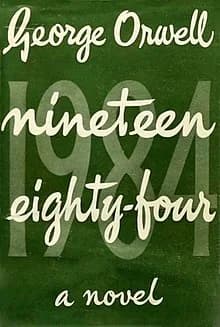
George Orwell's Nineteen Eighty-Four (1949) has sold over 30 million copies and introduced a vocabulary of surveillance and control — "Big Brother", "doublethink", "thoughtcrime", "Newspeak", "Room 101" — that has permanently entered the English language and political discourse. Written in the final year of Orwell's life as he was dying of tuberculosis, the novel drew on his experiences in Stalinist Moscow and Franco's Spain to produce the most prophetic political novel of the 20th century. Its relevance has surged repeatedly — sales spiked after the 2013 NSA leaks and again in 2017 — making it one of the few works of fiction that functions simultaneously as a novel and a political warning system.
- 0#3
Foundation

Isaac Asimov's Foundation (1951) — the first novel in a seven-book series — introduced the concept of psychohistory, a fictional mathematics capable of predicting the behaviour of large populations, which influenced real-world complexity theory and the study of social dynamics. The series won the Hugo Award for "Best All-Time Series" in 1966 over Tolkien's Lord of the Rings, the only time a science fiction series has won that honour. Jimmy Wales, the founder of Wikipedia, has cited Foundation as a direct inspiration for the encyclopaedia's collaborative knowledge-preservation mission, and Apple TV+'s adaptation has brought the series to a new global audience.
- 0#4
Ender's Game

Orson Scott Card's Ender's Game (1985) is one of the most decorated science fiction novels ever published, winning both the Hugo Award and the Nebula Award in the same year — an achievement only a handful of novels have matched. It became required reading on the official Commandant's Reading List of the United States Marine Corps, used to teach strategic thinking, leadership under pressure, and the psychology of command to officers. The novel's exploration of child soldiers, remote warfare, and the dehumanisation of the enemy through game-like interfaces has proved more relevant with each passing decade of drone warfare and video-game culture.
- 0#5
The Hitchhiker's Guide to the Galaxy
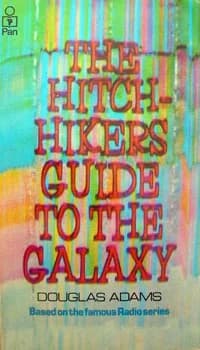
Douglas Adams' The Hitchhiker's Guide to the Galaxy (1979) began as a BBC Radio 4 comedy series before Adams novelised it into one of the best-loved and most widely cited works of speculative fiction, selling over 15 million copies across five novels in the "increasingly misnamed trilogy." Its central joke — that the answer to life, the universe, and everything is "42" — has become one of the most widely recognised cultural references in modern English-speaking civilisation, cited in mathematics papers, computer science lectures, and tattooed on more arms than can reasonably be counted. Adams' irreverent take on galactic bureaucracy, alien economics, and existential comedy created an entirely new subgenre of comic science fiction.
- 0#6
Brave New World
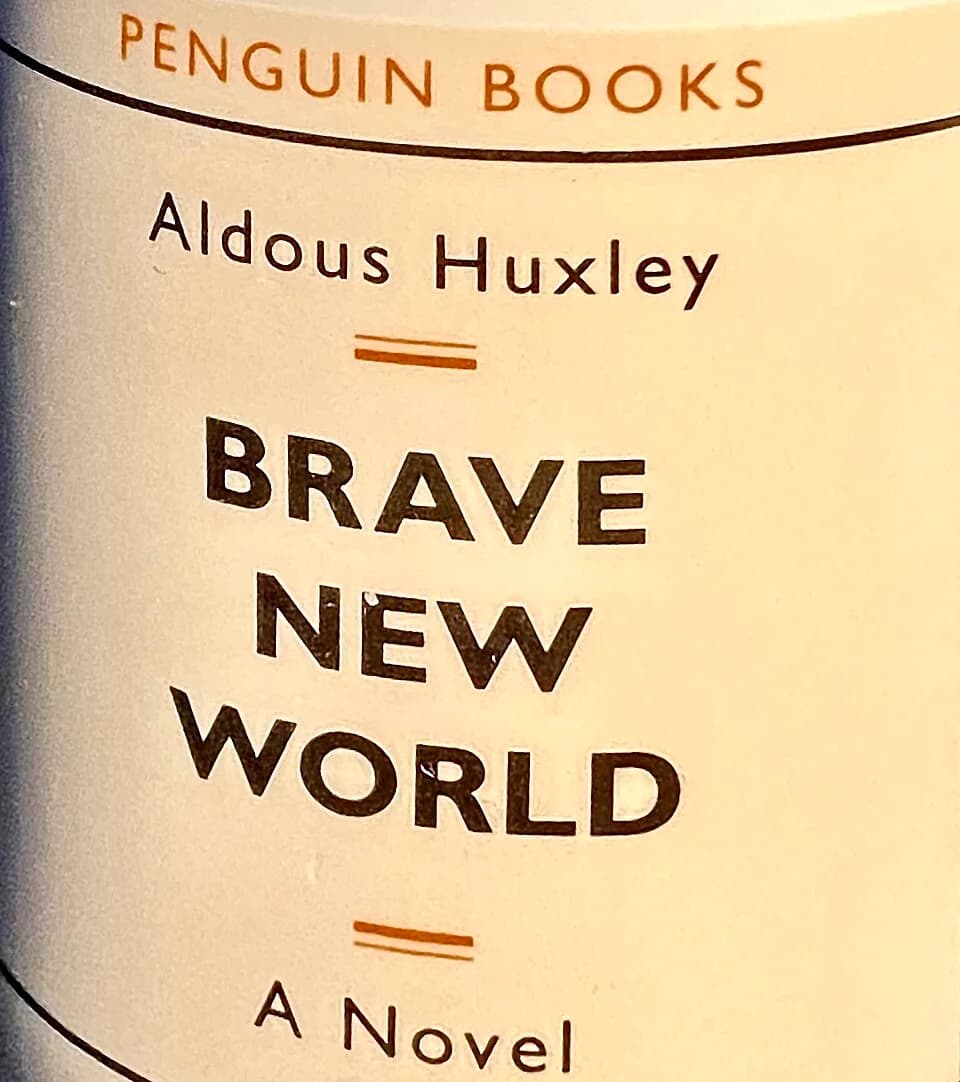
Aldous Huxley's Brave New World (1932) presents a dystopia so seductive it is arguably more dangerous than Orwell's — a world where citizens are controlled not by fear but by pleasure, genetic engineering, and the mood-stabilising drug Soma. Written over four months in 1931, the novel drew on Henry Ford's assembly lines and Pavlovian psychology to imagine a society that has perfected happiness at the cost of meaning, freedom, and human depth. It remains on banned book lists in several jurisdictions and appears on virtually every "great novels of the 20th century" list compiled by critics — remarkable for a book that was dismissed by many reviewers on first publication.
- 0#7
Fahrenheit 451

Ray Bradbury's Fahrenheit 451 (1953) is a novel about book burning and censorship that has itself been banned and challenged repeatedly in American schools — an irony Bradbury found both amusing and deeply troubling. With over 10 million copies sold, it depicts a future America where firemen start fires rather than extinguish them, destroying books to maintain a culture of shallow, screen-based entertainment that Bradbury feared was already underway in the early television age. Bradbury wrote the first draft in nine days in the basement of the UCLA library on a rented typewriter — paying 10 cents per half-hour — producing one of the most urgent and enduring political novels in American literary history.
- 0#8
Neuromancer

William Gibson's Neuromancer (1984) is the only novel in history to win the Hugo Award, the Nebula Award, and the Philip K. Dick Award in the same year — a triple crown that has never been repeated. Gibson invented the word "cyberspace" and described the internet, virtual reality, and corporate surveillance culture with astonishing precision a decade before any of it existed, coining a vocabulary ("matrix", "ICE", "jacking in") that shaped how both technologists and the public came to understand digital networks. Its influence is visible in The Matrix, Ghost in the Shell, Blade Runner 2049, and every cyberpunk work of fiction, film, and video game produced in the past 40 years.
- 0#9
The Martian
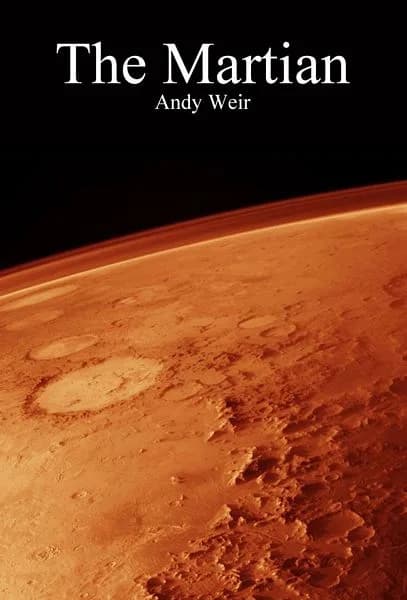
Andy Weir's The Martian (2011) began as a self-published web serial that Weir gave away free before it became one of the most commercially successful science fiction debuts in modern publishing history, spawning a $100 million Ridley Scott film starring Matt Damon. Weir consulted with NASA engineers and atmospheric scientists to make the novel's survival chemistry and orbital mechanics as accurate as possible — NASA subsequently used it in educational outreach and described it as the most technically credible portrayal of Mars colonisation ever written. The novel arrived as SpaceX and NASA were publicly competing to reach Mars, making it a cultural touchstone at the precise moment the prospect became genuinely credible.
- 0#10
Solaris
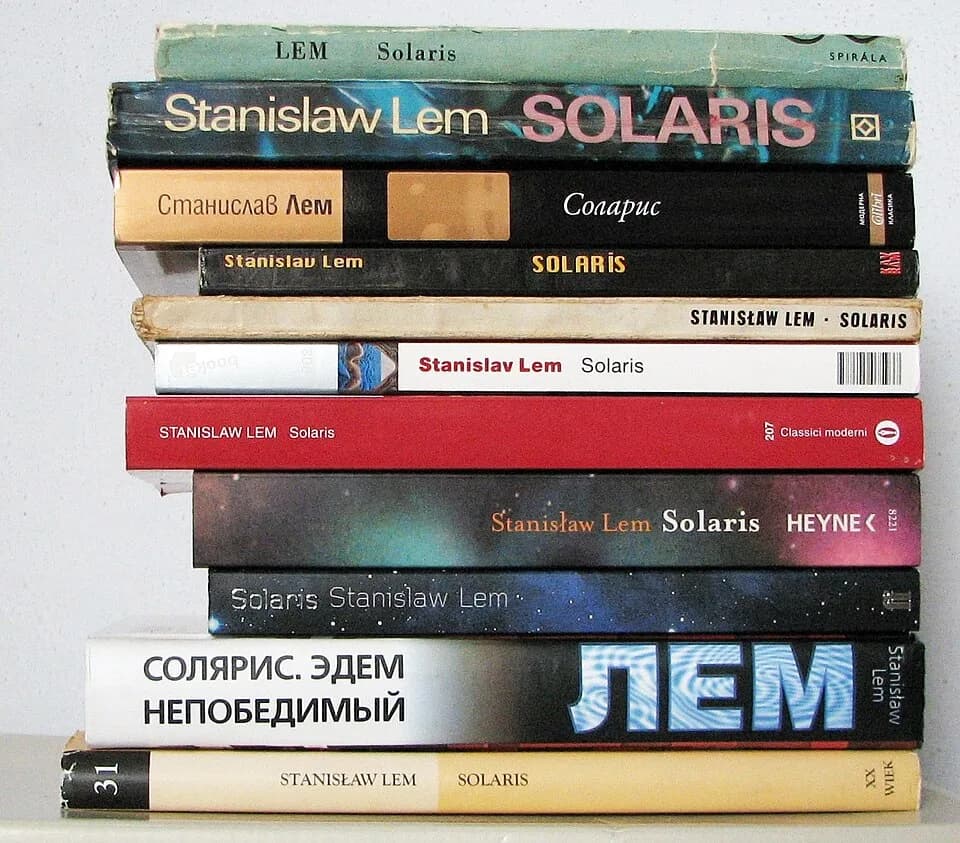
Stanislaw Lem's Solaris (1961) is regarded by many critics and scholars as the most philosophically profound science fiction novel ever written — a meditation on human cognition, the impossibility of genuine alien contact, and the limits of science itself rather than a conventional space adventure. First published in Polish and not translated into accurate, direct English until 2011 (previous translations went via French intermediaries, losing layers of meaning), it spawned two film adaptations — Tarkovsky's 1972 masterpiece and Steven Soderbergh's 2002 version — and remains the central exhibit in any argument that science fiction deserves a place in the literary canon alongside mainstream literature.
Image credits
- Dune: Wikipedia
- 1984: Michael Kennard / Public domain (entity-adopted)
- Foundation: Wikipedia
- Ender's Game: Wikipedia
- The Hitchhiker's Guide to the Galaxy: The Hitchhiker's Guide to the Galaxy / Wikipedia
- Brave New World: Wöcki / CC BY-SA 4.0 (entity-adopted)
- Fahrenheit 451: Agavekonyvek / CC BY-SA 3.0 (entity-adopted)
- Neuromancer: Wikipedia
- The Martian: Andy Weir / Public domain (entity-adopted)
- Solaris: HTO / CC0 (entity-adopted)
Related Videos
Rank it your way
Remix this list into your own ranking, or head to the play hub for every game mode and community breakdown — blind mode, challenges, tier lists, and more.
You Might Also Like

This Week's Top 10 Most-Tracked Books on Open Library (and Why They're Trending)
This Week's Top 10 Most-Tracked Books on Open Library (an...

Top 10 Best Science Fiction Novels of All Time
Top 10 Best Science Fiction Novels of All Time

Top 10 Most Iconic Book Series of All Time
most iconic book series of all time

Top 10 Greatest Empires in History
#1 British Empire · #2 Mongol Empire · #3 Roman Empire

Top 10 Most Influential People in Human History
#1 Isaac Newton · #2 Jesus of Nazareth · #3 Muhammad

Top 10 Most Influential Non-Fiction Books in History
#1 On the Origin of Species — Darwin (1859) · #2 The Wealth of Nations — Adam Smith (1776) · #3 The Communist Manifesto — Marx & Engels (1848)