The miracles of Scripture are not mere supernatural curiosities — they are dramatic enactments of God's character, moments where the created order bends to reveal something truer than the ordinary rules of cause and effect. Theologians across every tradition have wrestled with their historicity; believers across every generation have drawn courage from their testimony. These are the biblical miracles most cited by Christians as foundations for their own faith in the face of the impossible.
Top 10 lists on this topic
Curated by our education editors. Rankings built from outcomes, expert input, and reader vote.
Top 10 Miracles in the Bible That Inspire Faith
Create a free account or sign in to join the discussion.
Sign in to join the conversation

The bodily resurrection of Jesus Christ on the third day after his crucifixion is the foundational miracle of the Christian faith — the event upon which, as Paul writes to the Corinthians, the entire validity of Christian belief stands or falls. N.T. Wright's monumental historical study The Resurrection of the Son of God examines the evidence for the empty tomb and resurrection appearances and concludes that no other hypothesis accounts for the birth of the early Christian movement as adequately as a literal resurrection. The conversion of Paul and James — both initial opponents of the Jesus movement — is particularly striking evidence. Christians across twenty centuries have drawn their most foundational courage from this singular claim.

Moses stretching out his hand over the Red Sea and the waters dividing to allow Israel to pass on dry ground is one of the most iconic miracles in all of Scripture, an act of divine liberation so dramatic that it became Israel's defining act of national memory for millennia. The Song of the Sea in Exodus 15 is among the oldest poetry in the Bible, composed in direct celebration of the miracle within living memory of the event. Every Passover seder recites the miracle's details, keeping it alive as the paradigm for how God acts in history on behalf of the oppressed. The image of walls of water standing upright has inspired painters, composers, filmmakers, and liberation theologians across the entire span of Western history.

The multiplication of five loaves and two fish to feed a crowd of five thousand men, plus women and children, is the only miracle of Jesus recorded in all four Gospels — a fact that signals its particular significance in the early Christian community. The miracle functions as a new Exodus moment, Jesus acting as the new Moses providing supernatural food in a wilderness, and it anticipates the institution of the Eucharist in its gestures of taking, blessing, breaking, and giving. Twelve baskets of fragments were collected afterward — one for each tribe of Israel, the early Christians noted — signaling that the new covenant's abundance would overflow every human calculation. Its symbolism has sustained two millennia of theological reflection on divine generosity and eucharistic community.

Jesus raising Lazarus from the dead after four days in the tomb is the climactic miracle of John's Gospel and the sign that directly precipitates the decision by the Jewish authorities to arrest and execute Jesus. The scene's emotional depth is remarkable: Jesus weeps at Lazarus's tomb despite knowing what he is about to do, a detail that has sustained centuries of theological reflection on the nature of divine emotion and incarnate grief. The narrative functions as a preview of the general resurrection that Jesus declares himself to be — "I am the resurrection and the life" — giving the miracle its explicitly theological dimension. Artists from Rembrandt to Caravaggio have painted it as the moment that makes every other hope plausible.

Jesus healing a man who had been blind from birth by making mud with his saliva and sending him to wash in the pool of Siloam generated one of the longest and most dramatically satisfying scenes in the Gospels — a sustained public argument about who Jesus is and how his authority should be classified. The formerly blind man's magnificent stubbornness before the authorities — "Whether he is a sinner I do not know. One thing I know: I was blind, now I see" — has become a beloved expression of simple, experience-based faith that no amount of theological sophistication can refute. The miracle's theological function as a sign that Jesus is the light of the world gives it a significance far exceeding the physical healing. John Newton drew on it for the most famous line in "Amazing Grace."

The Transfiguration of Jesus on a high mountain — his face shining like the sun, his garments becoming dazzling white, Moses and Elijah appearing beside him in conversation while a cloud overshadows the disciples and a voice from the cloud declares him the beloved Son — is the New Testament's most extraordinary disclosure of divine identity within the incarnate life. The event confirmed to Peter, James, and John that Jesus was the fulfillment of the Law and the Prophets, and Peter's incoherent offer to build three tabernacles captures the overwhelmed inadequacy of any human response to direct encounter with divine glory. The Orthodox Christian tradition places the Transfiguration at the center of its theology of theosis — the transformation of human nature by participation in divine light. Its imagery permeates Christian mystical theology from the Desert Fathers through the present.

Elijah's confrontation with 450 prophets of Baal on Mount Carmel — challenging them to call down fire on a sacrifice, enduring their hours of fruitless prayer, drenching his own altar three times with water, and then praying a single quiet prayer before fire from heaven consumed the sacrifice, the altar, and even the trench of water — is one of the most dramatically constructed miracle narratives in all of Scripture. It arrives at the nadir of Israel's religious life under Ahab and Jezebel, and Elijah's isolation — "I alone am left" — before and after the miracle gives the story a psychological realism rare in ancient religious narrative. The sequence of extraordinary triumph followed immediately by suicidal despair has made Elijah an enduring companion for believers cycling between exaltation and depression. His story inspired both John the Baptist's wilderness ministry and generations of prophetic preaching traditions.

Jesus healing ten lepers as they walked away — the miracle occurring in obedience before they could see any evidence of it — and only one returning to give thanks, and that one a Samaritan, produces a parable-within-a-miracle about gratitude, faith, and the unexpected geography of genuine worship. The miracle's theological punch comes in Jesus's question: "Were not ten cleansed? Where are the nine?" — a question that has haunted grateful hearts across every century as a diagnostic of spiritual amnesia. The detail that only the outsider returned to worship has made this miracle a perennial text for reflecting on institutional religion versus genuine devotion. Gratitude as the defining posture of the believer became a central theme in Christian spirituality largely through this story.

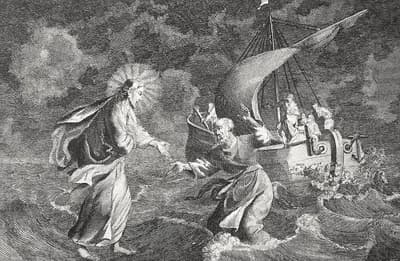
Jesus walking on the Sea of Galilee in the fourth watch of the night, calling Peter to come to him on the water, Peter walking briefly before sinking in fear, and Jesus's question "O you of little faith, why did you doubt?" has generated more sermons about risk, faith, and the cost of keeping eyes on Christ than almost any other miracle narrative. The scene functions simultaneously as a demonstration of Jesus's divine authority over nature and as a psychological drama about the conditions under which ordinary human faith can briefly participate in the impossible. Peter's willingness to leave the boat — however brief his success — stands in the tradition as a model of the kind of responsive, risk-taking faith that makes miracles possible. Every generation of Christian leadership literature has returned to Peter's step off the gunwale.

The virginal conception and birth of Jesus Christ — announced to Mary by the angel Gabriel and confirmed through Joseph's dream — is a miracle that divides Christian traditions along clear theological lines while remaining central to orthodox Christology across Catholic, Orthodox, and most Protestant traditions. Its theological function is to mark Jesus as both fully human (born of a woman) and uniquely divine (conceived by the Holy Spirit), protecting both the Incarnation's reality and its singularity. G.K. Chesterton argued it was the most rational of the miraculous claims because it fit the logic of the Incarnation perfectly. The Annunciation scene has generated more masterpieces of Western art — Fra Angelico, da Vinci, Botticelli — than any other single moment in Scripture.
The most-voted lists across every category — curated weekly. Join the early readers.
No spam. One email per week. Unsubscribe anytime.
Explore more Education rankings on Top10Grid
Top 10 Miracles in the Bible That Inspire Faith
Cast your vote above to unlock the real distribution
Tap the arrows on any item to vote

Books the Internet Can't Stop Reading Right Now
575 views · @admin

Top 10 Greatest Novels of All Time
102 views · @admin

Top 10 Productivity Systems That Aren't Just Glorified To-Do Lists
49 views · @admin

Top 10 Best Sci-Fi Books of All Time
42 views · @admin

Top 10 Most Iconic Book Series of All Time
40 views · @admin

Top 10 Most Influential Self-Help Books of All Time
38 views · @admin
Because you're viewing Education

This Week's Most-Tracked Books on Open Library
694 views · 3 votes

Books the Internet Can't Stop Reading Right Now
575 views · 2 votes

Top 10 Countries With the Best Education Systems in the World — What They Do Differently
190 views · 1 votes

Top 10 YouTube Channels to Watch for Self-Improvement & Productivity in 2026
173 views · 0 votes

Top 10 Greatest Novels of All Time
102 views · 0 votes

Histories Worth Losing a Weekend To
74 views · 0 votes

The bodily resurrection of Jesus Christ on the third day after his crucifixion is the foundational miracle of the Christian faith — the event upon which, as Paul writes to the Corinthians, the entire validity of Christian belief stands or falls. N.T. Wright's monumental historical study The Resurrection of the Son of God examines the evidence for the empty tomb and resurrection appearances and concludes that no other hypothesis accounts for the birth of the early Christian movement as adequately as a literal resurrection. The conversion of Paul and James — both initial opponents of the Jesus movement — is particularly striking evidence. Christians across twenty centuries have drawn their most foundational courage from this singular claim.

Moses stretching out his hand over the Red Sea and the waters dividing to allow Israel to pass on dry ground is one of the most iconic miracles in all of Scripture, an act of divine liberation so dramatic that it became Israel's defining act of national memory for millennia. The Song of the Sea in Exodus 15 is among the oldest poetry in the Bible, composed in direct celebration of the miracle within living memory of the event. Every Passover seder recites the miracle's details, keeping it alive as the paradigm for how God acts in history on behalf of the oppressed. The image of walls of water standing upright has inspired painters, composers, filmmakers, and liberation theologians across the entire span of Western history.

The multiplication of five loaves and two fish to feed a crowd of five thousand men, plus women and children, is the only miracle of Jesus recorded in all four Gospels — a fact that signals its particular significance in the early Christian community. The miracle functions as a new Exodus moment, Jesus acting as the new Moses providing supernatural food in a wilderness, and it anticipates the institution of the Eucharist in its gestures of taking, blessing, breaking, and giving. Twelve baskets of fragments were collected afterward — one for each tribe of Israel, the early Christians noted — signaling that the new covenant's abundance would overflow every human calculation. Its symbolism has sustained two millennia of theological reflection on divine generosity and eucharistic community.

Jesus raising Lazarus from the dead after four days in the tomb is the climactic miracle of John's Gospel and the sign that directly precipitates the decision by the Jewish authorities to arrest and execute Jesus. The scene's emotional depth is remarkable: Jesus weeps at Lazarus's tomb despite knowing what he is about to do, a detail that has sustained centuries of theological reflection on the nature of divine emotion and incarnate grief. The narrative functions as a preview of the general resurrection that Jesus declares himself to be — "I am the resurrection and the life" — giving the miracle its explicitly theological dimension. Artists from Rembrandt to Caravaggio have painted it as the moment that makes every other hope plausible.

Jesus healing a man who had been blind from birth by making mud with his saliva and sending him to wash in the pool of Siloam generated one of the longest and most dramatically satisfying scenes in the Gospels — a sustained public argument about who Jesus is and how his authority should be classified. The formerly blind man's magnificent stubbornness before the authorities — "Whether he is a sinner I do not know. One thing I know: I was blind, now I see" — has become a beloved expression of simple, experience-based faith that no amount of theological sophistication can refute. The miracle's theological function as a sign that Jesus is the light of the world gives it a significance far exceeding the physical healing. John Newton drew on it for the most famous line in "Amazing Grace."

The Transfiguration of Jesus on a high mountain — his face shining like the sun, his garments becoming dazzling white, Moses and Elijah appearing beside him in conversation while a cloud overshadows the disciples and a voice from the cloud declares him the beloved Son — is the New Testament's most extraordinary disclosure of divine identity within the incarnate life. The event confirmed to Peter, James, and John that Jesus was the fulfillment of the Law and the Prophets, and Peter's incoherent offer to build three tabernacles captures the overwhelmed inadequacy of any human response to direct encounter with divine glory. The Orthodox Christian tradition places the Transfiguration at the center of its theology of theosis — the transformation of human nature by participation in divine light. Its imagery permeates Christian mystical theology from the Desert Fathers through the present.

Elijah's confrontation with 450 prophets of Baal on Mount Carmel — challenging them to call down fire on a sacrifice, enduring their hours of fruitless prayer, drenching his own altar three times with water, and then praying a single quiet prayer before fire from heaven consumed the sacrifice, the altar, and even the trench of water — is one of the most dramatically constructed miracle narratives in all of Scripture. It arrives at the nadir of Israel's religious life under Ahab and Jezebel, and Elijah's isolation — "I alone am left" — before and after the miracle gives the story a psychological realism rare in ancient religious narrative. The sequence of extraordinary triumph followed immediately by suicidal despair has made Elijah an enduring companion for believers cycling between exaltation and depression. His story inspired both John the Baptist's wilderness ministry and generations of prophetic preaching traditions.

Jesus healing ten lepers as they walked away — the miracle occurring in obedience before they could see any evidence of it — and only one returning to give thanks, and that one a Samaritan, produces a parable-within-a-miracle about gratitude, faith, and the unexpected geography of genuine worship. The miracle's theological punch comes in Jesus's question: "Were not ten cleansed? Where are the nine?" — a question that has haunted grateful hearts across every century as a diagnostic of spiritual amnesia. The detail that only the outsider returned to worship has made this miracle a perennial text for reflecting on institutional religion versus genuine devotion. Gratitude as the defining posture of the believer became a central theme in Christian spirituality largely through this story.

Jesus walking on the Sea of Galilee in the fourth watch of the night, calling Peter to come to him on the water, Peter walking briefly before sinking in fear, and Jesus's question "O you of little faith, why did you doubt?" has generated more sermons about risk, faith, and the cost of keeping eyes on Christ than almost any other miracle narrative. The scene functions simultaneously as a demonstration of Jesus's divine authority over nature and as a psychological drama about the conditions under which ordinary human faith can briefly participate in the impossible. Peter's willingness to leave the boat — however brief his success — stands in the tradition as a model of the kind of responsive, risk-taking faith that makes miracles possible. Every generation of Christian leadership literature has returned to Peter's step off the gunwale.

The virginal conception and birth of Jesus Christ — announced to Mary by the angel Gabriel and confirmed through Joseph's dream — is a miracle that divides Christian traditions along clear theological lines while remaining central to orthodox Christology across Catholic, Orthodox, and most Protestant traditions. Its theological function is to mark Jesus as both fully human (born of a woman) and uniquely divine (conceived by the Holy Spirit), protecting both the Incarnation's reality and its singularity. G.K. Chesterton argued it was the most rational of the miraculous claims because it fit the logic of the Incarnation perfectly. The Annunciation scene has generated more masterpieces of Western art — Fra Angelico, da Vinci, Botticelli — than any other single moment in Scripture.