
Wikimedia Commons
Top 10 Theologians Who Shaped Modern Christianity
Theology is not an ivory tower exercise. The ideas forged in seminaries and monasteries have shaped wars, founded universities, ended slavery, and determined how billions of people understand human dignity, justice, and the meaning of suffering. These ten theologians produced ideas whose consequences are still unfolding — in church practice, political philosophy, and the most basic questions about what Christianity is and what it demands.
Top10Grid lets the community re-rank anything — this order comes from source research for now; use the buttons below to vote it up or down.

Current Rankings
- 0#1
Thomas Aquinas

Thomas Aquinas's Summa Theologica remains the most ambitious and comprehensive theological synthesis in Christian history, providing the intellectual foundation for Catholic doctrine. Composed in the thirteenth century, it masterfully integrated Aristotelian philosophy with Christian theology, creating a system that has shaped Western thought for over 750 years. Aquinas's natural law theory underpins modern concepts of human rights, and his five proofs for God are the cornerstone of natural theology. His just war doctrine influenced international law for seven centuries. In 1879, Pope Leo XIII declared Aquinas's theology the official philosophy of the Catholic Church, a honor not granted to any other theologian on this list, including his nearest rival, Augustine. The Summa contains over 3,000 articles, each a precise argument that continues to be studied worldwide.
- 0#2
Martin Luther
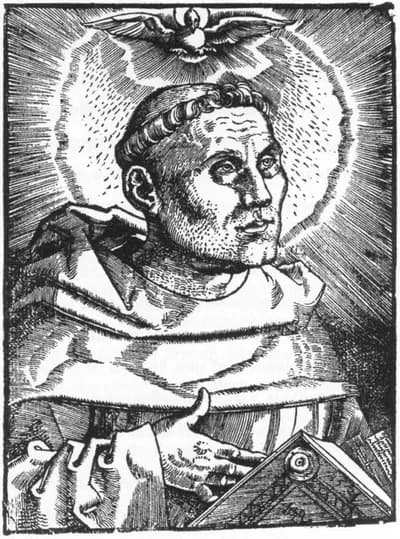
Martin Luther's 1517 act of nailing his 95 Theses to the Wittenberg Church door ignited the Protestant Reformation, permanently fracturing Western Christianity and reshaping European society. His doctrine of justification by faith alone — that sinners are declared righteous through trust in Christ, not works — became the driving theological engine for all Protestant movements. Luther's German Bible translation was a watershed, giving the German language its literary form and democratizing Scripture access, indirectly fostering mass literacy. In a direct contrast with John Calvin, Luther emphasized God's grace over predestination, a distinction that defined Lutheran theology. His writings, which include over 400 works, continue to be studied by 70 million Lutherans worldwide.
- 0#3
John Calvin
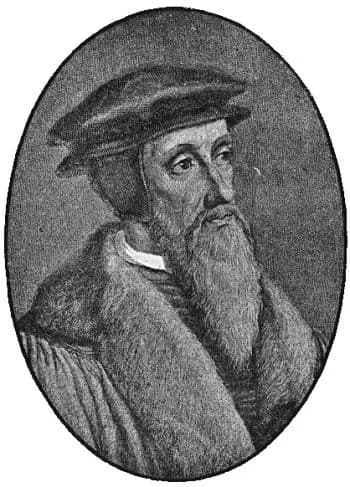
Calvin's doctrine of absolute divine sovereignty, including double predestination, has sparked debate for over five centuries and remains the most influential Protestant concept after justification by faith. His Geneva model of Reformed governance profoundly shaped Puritan New England and contributed to democratic theory and the Protestant work ethic, which sociologist Max Weber linked to modern capitalism. The Institutes, expanded to 80 chapters, provides a comprehensive framework that has guided 100 million Reformed Christians worldwide.
- 0#4
Karl Barth
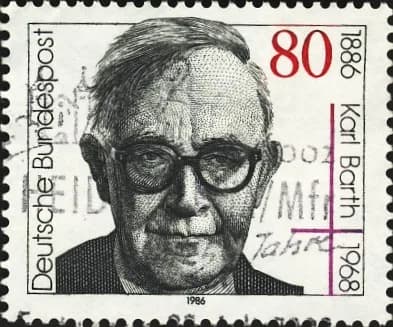
Karl Barth's 1919 commentary on Romans landed like a theological bombshell, dismantling the liberal Protestantism that reduced God to a human moral projection. Barth reasserted God's radical otherness and Jesus Christ as the sole source of divine knowledge, a stance that revitalized Christian theology in the twentieth century. Barth's theology provided the backbone for the 1934 Barmen Declaration, guiding the Confessing Church's resistance against Hitler. This declaration, signed by 139 delegates, remains a landmark of Christian political witness.
- 0#5
Augustine of Hippo

Augustine of Hippo profoundly shaped Western Christianity, laying the groundwork for key doctrines such as original sin, predestinating grace, and the just war theory. His monumental work, *City of God*, penned in response to the Visigothic Sack of Rome in 410 AD, established the first comprehensive Christian philosophy of history. This seminal text explored the relationship between earthly and heavenly cities, offering a theological interpretation of historical events. Augustine's understanding of grace, emphasizing salvation as solely God's initiative, ignited debates on free will that have continued for over 1,600 years within Christian thought, influencing theologians from the Reformation to the present day.
- 0#6
Dietrich Bonhoeffer

Dietrich Bonhoeffer's distinction between "cheap grace" and "costly grace," articulated in his influential work *The Cost of Discipleship*, remains a cornerstone of modern Christian practical theology. While imprisoned by the Nazis, Bonhoeffer composed *Letters and Papers from Prison*, a collection of writings that grappled with the implications of faith in a "world come of age," profoundly influencing postwar theological discourse. His active participation in the plot to assassinate Adolf Hitler and subsequent execution by the Nazi regime in April 1945, just days before the end of World War II, solidified his legacy as a powerful example of conviction and moral courage in the face of tyranny.
- 0#7
C.S. Lewis

C.S. Lewis, an esteemed Oxford literary scholar, stands out as one of the twentieth century's most widely read Christian apologists, adept at translating complex Christian doctrine into accessible language with compelling rational defenses. His works such as *Mere Christianity*, *The Problem of Pain*, and *The Abolition of Man* directly address intellectual objections to faith with clarity and reasoned arguments. Beyond his apologetic writings, Lewis introduced Christian themes to millions through his imaginative *Chronicles of Narnia* series and the satirical *Screwtape Letters*, offering engaging entry points to Christian concepts for readers who might not otherwise engage with traditional theological texts.
- 0#8
Origen of Alexandria
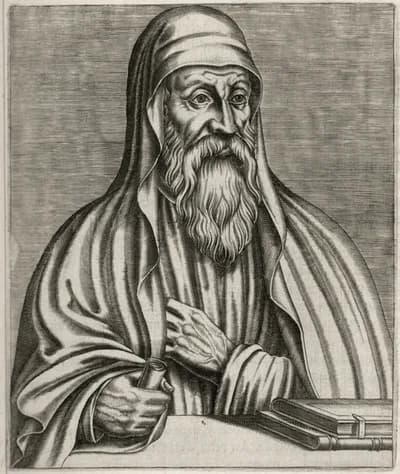
Origen of Alexandria emerged as one of the early church's most prolific biblical scholars, leaving an indelible mark on Christian hermeneutics. He undertook the monumental task of creating the *Hexapla*, a six-version comparison of the Old Testament text, and his extensive commentaries established allegorical interpretation as a dominant method for centuries. Although some of his theological speculations, such as those on pre-existent souls and universal reconciliation, were later condemned as heretical, Origen's innovative methods for biblical exegesis profoundly influenced Christian scholarship for over 1,000 years, demonstrating an enduring impact despite posthumous controversy.
- 0#9
John Wesley

John Wesley’s doctrine of prevenient grace and entire sanctification fundamentally shaped Methodism and Pentecostalism, giving evangelical Christianity an Arminian alternative to Calvinist predestination. Methodism grew from 25,000 adherents in 1750 to over 70 million globally today. Wesley’s organizational system — class meetings, circuit riders, and accountability structures — created the most effective revival machinery in Protestant history, inspiring the small-group models still used across evangelical churches.
- 0#10
Gustavo Gutiérrez

Gustavo Gutiérrez’s 1971 A Theology of Liberation launched the liberation theology movement, arguing that God’s preferential option for the poor is central to Scripture, forever altering Catholic social teaching. This paradigm shift triggered fierce Vatican opposition under John Paul II, but by 2021 Pope Francis invited Gutiérrez to a Vatican conference, signaling a major rehabilitation.
Image credits
- Martin Luther: Hans Baldung Grien / Wikimedia Commons (Public domain)
- John Calvin: Wikimedia Commons (Public domain)
- Karl Barth: Unknown authorUnknown author / Wikimedia Commons (Public domain)
- Origen of Alexandria: Wikimedia Commons (Public domain)
Related Videos
Rank it your way
Remix this list into your own ranking, or head to the play hub for every game mode and community breakdown — blind mode, challenges, tier lists, and more.
You Might Also Like

Top 10 Christian Denominations Explained
Top 10 Christian Denominations Explained

Top 10 Miracles in the Bible That Inspire Faith
Top 10 Miracles in the Bible That Inspire Faith

Top 10 Most Influential Women in Christian History
Top 10 Most Influential Women in Christian History
Top 10 Christian Children's Books for Young Readers
Top 10 Theologians Who Shaped Modern Christianity
Top 10 Most Influential Christian Books of All Time
Top 10 Theologians Who Shaped Modern Christianity

Top 10 Most Influential Pastors and Preachers Today
#1 Rick Warren · #2 Tim Keller · #3 T.D. Jakes