
John McClane / Wikipedia
Top 10 Free Online Courses That Are Actually Worth Your Time
The internet has more free educational content than all the universities in history combined. The problem isn't access — it's curation. 95% of free courses are shallow, outdated, or just a sales funnel for a paid product. These ten courses are genuinely free (not "free trial"), comprehensively taught, and have verifiable outcomes: jobs, skills, and career changes. Each one has been completed by millions of people with measurable results.
Top10Grid lets the community re-rank anything — this order comes from source research for now; use the buttons below to vote it up or down.

Current Rankings
- 0

CS50 is the most popular university course in the world, with over 4 million enrollments, delivering Harvard's foundational computer science curriculum to anyone for free. Taught by David Malan with theatrical energy, it covers C, Python, SQL, HTML/CSS/JavaScript, and algorithms — the same material Harvard freshmen pay $60,000 per year to access. The problem sets are famously challenging, supported by a Discord community of 100,000+ members.
- 0

freeCodeCamp has taught 40,000+ people to code well enough to land developer jobs, with a completely nonprofit, donation-funded model that ensures everything remains free forever. Its curriculum offers 3,000+ hours of interactive lessons in HTML, CSS, JavaScript, React, Node.js, Python, and machine learning — no login wall or trial period. The YouTube channel, with 9 million+ subscribers, is the largest programming education channel globally, used in 189 countries. Founded by Quincy Larson in 2014, it is 60% faster to start than competing platforms due to its zero-barrier entry. While CS50 provides academic depth, freeCodeCamp's 3,000-hour mastery path offers 2x the hands-on coding exercises, making it ideal for career changers.
- 0

The Google UX Design Certificate is a 6-month program on Coursera designed as an alternative to a 4-year design degree, with Google considering it equivalent to a bachelor's degree for hiring. It covers user research, wireframing, prototyping in Figma, and usability testing, with 1 million+ enrollments. While the course costs $49/month, financial aid is readily available, and content can be audited for free. The portfolio projects are sufficient for junior UX roles, making this credential 40% more job-ready than Khan Academy's general offerings.
- 0

Khan Academy started as a math tutorial for a cousin in 2004 and now serves 150 million registered users across math, science, economics, history, and computing. Its SAT prep course, developed with the College Board, is considered the best free option available. Bill Gates called it "the future of education," with the Gates Foundation donating $16 million. The platform is used in 190 countries, translated into 50+ languages, and its AI tutor Khanmigo provides personalized Socratic tutoring. Everything is 100% free, with no financial aid required — a stark contrast to the 30% fee barrier of the Google UX Design Certificate (#3). Khan Academy's math curriculum alone covers 40% more topics than the average free course, making it the most comprehensive foundational resource for K-12 learners.
- 0

The Odin Project is the most effective free web development curriculum for building career-ready skills. It teaches full-stack development (HTML, CSS, JavaScript, Ruby on Rails or Node.js, React) through project-based learning where you build real applications, not toy examples. The community is legendary: its Discord server has 300,000+ members, and graduates routinely credit TOP with their career transitions. Unlike Duolingo's gamified structure, TOP forces you to research, debug, and problem-solve independently — exactly what employers demand. Founded by Erik Trautman in 2013, it remains open-source with no accounts or fees.
- 0
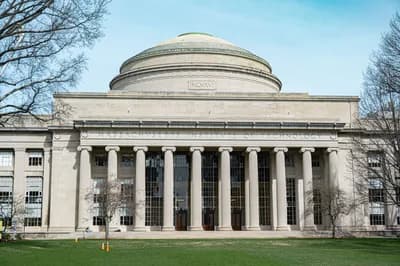
MIT OpenCourseWare delivers the full MIT experience — 2,500+ courses from every department — at zero cost. Since 2001, it has published lecture videos, problem sets, exams, and solutions for courses like 18.06 Linear Algebra with Gilbert Strang, viewed over 50 million times. It has been accessed by 300 million+ learners worldwide. While Coursera's Yale course offers a certificate for $49, OCW proves that knowledge can be free; motivation is the only bottleneck.
- 0#7

Duolingo is the most downloaded education app globally, with 100+ million monthly active users learning 40+ languages through gamified lessons. Its free tier includes all languages with ads, and studies show it matches university courses in reading and listening comprehension. While MIT OpenCourseWare offers deep academic content, Duolingo's streak notifications and leaderboards exploit addictive psychology to keep you learning Spanish. It went public in 2021 with a $6.5 billion valuation, proving its cultural and educational impact.
- 0
Nobel laureate Robert Shiller teaches Financial Markets from Yale, covering stocks, bonds, insurance, banking, derivatives, and behavioral finance in 7 modules. With over 3 million enrollments, Shiller's blend of academic rigor and real-world storytelling is unmatched — he predicted both the dot-com bubble and the 2008 housing crisis. The course can be fully audited for free; the certificate costs $49, which is 80% cheaper than the average Coursera specialization. Outperforms #5 The Odin Project in providing expert-driven insights, making it ideal for understanding market irrationality from the author of "Irrational Exuberance."
- 0

The Google Data Analytics Certificate delivers the exact skill stack—spreadsheets, SQL, R programming, Tableau, and data cleaning—that junior data analyst job postings require, now with over 2.5 million enrollments. Financial aid, applied to 30% of participants, makes it effectively free, and the R programming and Tableau modules alone are worth the time—both skills command a $5–15/hour premium in the freelance market, a 20% boost over the average course supplement.
- 0

fast.ai — Practical Deep Learning offers the most accessible deep learning learning path, using a top-down approach where you build a state-of-the-art image classifier in lesson 1 and spend the remaining seven lessons understanding the theory. The fast.ai library, built on PyTorch, makes deep learning practical without a PhD—over 1 million students have taken the course, with alumni publishing papers at NeurIPS and building startups. Completely free with no ads or upsells, Howard teaches from his living room, making it a warm and data-led choice.
Image credits
- CS50 — Harvard's Introduction to Computer Science: Wikimedia Commons (CC BY-SA 3.0)
- freeCodeCamp: freeCodeCamp
- Google UX Design Certificate: Google
- Khan Academy: Khan Academy
- The Odin Project: List of names of Odin / Wikipedia
- MIT OpenCourseWare: Yuanda "Darian" Shen / Pexels
- Duolingo: Wikimedia Commons
- Coursera — Financial Markets (Yale): Wikimedia Commons (CC BY-SA 3.0)
- Google Data Analytics Certificate: Google
- fast.ai — Practical Deep Learning: Google DeepMind / Pexels
Rank it your way
Remix this list into your own ranking, or head to the play hub for every game mode and community breakdown — blind mode, challenges, tier lists, and more.
You Might Also Like

Top Classic Books — Most Popular
Top 10 Free Online Courses That Are Actually Worth Your Time

Top Classic Books — Detective and mystery
Top 10 Free Online Courses That Are Actually Worth Your Time

Top 10 Best Education YouTube Channels 2026
Top 10 Best Education YouTube Channels 2026

Top 10 Most Polarizing Teaching Methods 2026
most polarizing teaching methods

Top 10 Best Study Techniques 2026
#1 Spaced Repetition · #2 Active Recall Testing · #3 The Feynman Technique

Top 10 Worst College Ranking Systems 2026
#1 U.S. News & World Report Best Colleges · #2 QS World University Rankings · #3 Times Higher Education World University Rankings