
Wikimedia Commons
Histories Worth Losing a Weekend To
The best history books don't make you feel like you're studying — they make you feel like you're there, watching decisions get made, forces collide, and contingencies tip one way instead of another. These ten are the ones that historians recommend to civilians: gripping narrative non-fiction that does the research seriously while never forgetting that what it's describing actually happened to real people who didn't know how the story ended.
Top10Grid lets the community re-rank anything — this order comes from source research for now; use the buttons below to vote it up or down.

Current Rankings
- 0#1
Guns, Germs, and Steel — Jared Diamond (1997)

Jared Diamond's Pulitzer-winning answer to a question asked by a New Guinean politician: why did Europeans end up with all the guns? Diamond traces the roots of global inequality back to geography and the availability of domesticable plants and animals — a 13,000-year argument that completely reconfigures how you think about why things are the way they are. Controversial in some academic circles, but impossible to put down.
- 0#2
Sapiens: A Brief History of Humankind — Yuval Noah Harari (2011)

Harari's big-picture history of Homo sapiens — from the cognitive revolution to the agricultural revolution to the digital revolution — is the kind of book that makes you look at a supermarket or a banknote and see something completely different. Some historians push back on the broad brushstrokes, but as an introduction to thinking historically about the human species, nothing in recent memory comes close.
- 0#3
The Diary of a Young Girl — Anne Frank (1947)

Anne Frank's diary — written while she and her family hid from the Nazis in Amsterdam from 1942 to 1944 — is the most widely read first-person account of the Holocaust and one of the most read books in history. Its intimacy is devastating: Anne is not a historical symbol in these pages but a teenager thinking about boys, writing, and the future she believed she would have.
- 0#4
The Devil in the White City — Erik Larson (2003)

Erik Larson interweaves two true stories from 1890s Chicago: the construction of the World's Fair and the murders of H.H. Holmes, America's first serial killer. Both narratives are extraordinary — one a story of visionary achievement against impossible odds, the other a story of how easily predators disappear in cities of strangers. Larson proved that history written like a thriller is still history.
- 0#5
The Warmth of Other Suns — Isabel Wilkerson (2010)

Wilkerson spent 15 years researching the Great Migration — the movement of six million Black Americans from the Jim Crow South to the North and West between 1915 and 1970 — and tells it through the lives of three individuals. One of the great works of American narrative history: the intimacy of memoir combined with the scope of epic history.
- 0#6
SPQR: A History of Ancient Rome — Mary Beard (2015)

Mary Beard's history of Rome refuses to be a parade of emperors and battles. Instead she asks what it was like to actually live in Rome — how citizens experienced the city, how power worked at street level, what people ate and worried about. Her accessible, irreverent style makes Rome feel not like a distant civilisation but a recognisable world full of recognisable anxieties.
- 0#7
The Silk Roads — Peter Frankopan (2015)
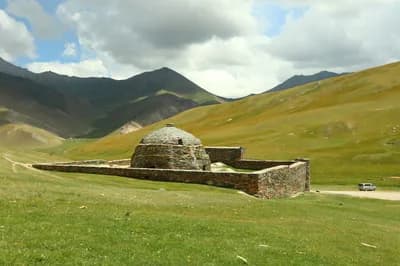
Frankopan recentres world history away from its usual Europe-first axis, arguing that the Silk Roads connecting East and West were the true engine of human civilisation from antiquity to the present. The result is a history of the world that places Persia, China, and Central Asia at the centre of events that Western textbooks typically treat as peripheral or context-free.
- 0#8
The Power Broker — Robert Caro (1974)

Robert Caro's 1,300-page biography of Robert Moses — the urban planner who shaped New York City for 50 years without ever winning an election — is the definitive study of political power in America. How does a man with no elected office accumulate more real authority than presidents? Caro's answer, built across thousands of interviews and documents, is the most important political education available in a single book.
- 0#9
The Sixth Extinction — Elizabeth Kolbert (2014)

Kolbert's Pulitzer Prize-winning account of the current mass extinction event — the sixth in Earth's history and the first caused by a single species — is the most important environmental book of the 21st century. She follows scientists working on frogs in Panama, bats in New York, coral reefs in the Pacific, and ammonites in the fossil record, building a case that is impossible to dismiss and difficult to forget.
- 0#10
The Crusades Through Arab Eyes — Amin Maalouf (1984)

Amin Maalouf's corrective to the exclusively Western historiography of the Crusades draws entirely on Arab chroniclers and historians to present two centuries of conflict from the perspective of those who were invaded. Essential reading for understanding why the Crusades remain a living political and cultural reference in the Middle East in a way that they generally are not in Europe.
Image credits
- The Diary of a Young Girl — Anne Frank (1947): Wikimedia Commons
- The Devil in the White City — Erik Larson (2003): Wikimedia Commons
- The Warmth of Other Suns — Isabel Wilkerson (2010): Wikimedia Commons
- SPQR: A History of Ancient Rome — Mary Beard (2015): Wikimedia Commons
- The Silk Roads — Peter Frankopan (2015): Aibek / Pexels
- The Power Broker — Robert Caro (1974): Wikimedia Commons
- The Sixth Extinction — Elizabeth Kolbert (2014): Wikimedia Commons
- The Crusades Through Arab Eyes — Amin Maalouf (1984): Wikimedia Commons
Related Videos
Rank it your way
Remix this list into your own ranking, or head to the play hub for every game mode and community breakdown — blind mode, challenges, tier lists, and more.
You Might Also Like
Lives Worth Reading: Biographies That Actually Captivate
Lives Worth Reading: Biographies That Actually Captivate

Top 10 Most Influential Non-Fiction Books in History
Top 10 Most Influential Non-Fiction Books in History

Thinking Differently: Philosophy Books That Shift Your Worldview
Histories Worth Losing a Weekend To
Top 10 YouTube Channels to Watch for Self-Improvement & Productivity in 2026
#1 Ali Abdaal · #2 Thomas Frank · #3 Matt D'Avella
Top Classic Books — Science Fiction
#1 The Strange Case of Dr. Jekyll and Mr. Hyde · #2 Frankenstein · #3 Thuvia, Maid of Mars

Top Classic Books — Most Popular
#1 Pride and Prejudice · #2 Moby Dick · #3 The Odyssey: Rendered Into English Prose for the Use of Those Who Cannot Read the Original