
Wikimedia Commons (Public Domain)
Top 10 Greatest Empires in History
Empires are the most powerful organisational force in human history — capable of imposing law, language, trade, and culture across continents and centuries. These ten empires were the greatest in terms of geographic extent, duration, cultural impact, and lasting influence on the world we inhabit today.
Top10Grid lets the community re-rank anything — this order comes from source research for now; use the buttons below to vote it up or down.

Current Rankings
- 0

The British Empire remains the largest empire in history by land area and population, controlling 26.35% of the world's total land and governing 23% of the global population at its 1920 peak. Its reach exceeded the Mongol Empire's land coverage by over 2% and its population share—a factor of 1.3 more than the Roman Empire's 21%—underscores its unmatched demographic dominance. The empire's enduring legacy includes the English language, now spoken by 1.5 billion people, and the Westminster parliamentary system adopted by 50+ nations, while its global trading networks fueled the Industrial Revolution, transforming economies worldwide.
- 0

The Mongol Empire under Genghis Khan stands as the largest contiguous land empire ever, spanning 24 million square kilometers and covering 16% of Earth's total land. Its Pax Mongolica unified Europe and Asia through trade along the Silk Road, yet its conquests resulted in 40 million deaths, eliminating roughly 10% of the world's population at the time. This dual legacy of connectivity and devastation shapes its historical rank.
- 0

The Roman Empire at its height under Trajan controlled 5 million square kilometers and 70 million people—21% of the world's population, a demographic reach that the Islamic Caliphate (Umayyad) fell short of matching. Its legal systems, based on Roman law, underpin most European frameworks, and its Latin language evolved into five major Romance tongues spoken by 900 million today. The empire's 2,000-year-old road network, spanning 400,000 kilometers, remains a blueprint for infrastructure, rivaling the British Empire's sea-lane innovations in lasting impact.
- 0

It preserved Greek and scientific texts lost in Europe, translating 200+ works that directly triggered the Renaissance, a cultural contribution even the Mongol Empire's Silk Road exchanges barely matched in scholarly impact. With 80 million subjects under a unified currency and language, its governance model influenced subsequent Islamic empires.
- 0

The Ottoman Empire's 623-year lifespan makes it history's longest-lived major empire. At its peak under Suleiman the Magnificent (1520-1566), it spanned 5.2 million square kilometres across three continents, with a population of approximately 30 million. The empire's collapse after World War I directly created most modern Middle Eastern borders—and many of today's regional conflicts. Its legal and administrative systems, including the millet system of religious tolerance, influenced successor states for decades.
- 0
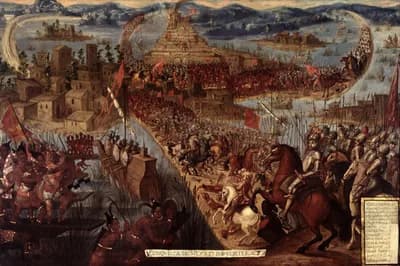
The Spanish Empire (1492-1976) was the first global empire, and at its 16th-century zenith it was controlling 13.1 million square kilometres. Spain's colonisation of the Americas initiated the Columbian Exchange—a biological and demographic transfer that saw 2–3 million Africans forcibly transported as slaves. Spanish is now the first language of 500 million people worldwide, making it the second most spoken language on Earth—a direct, lasting legacy of imperial reach.
- 0

The Han Dynasty (206 BC–220 AD) established the cultural and political foundations of Chinese civilisation. Its population peaked at 60 million, and it introduced the civil service exam, paper manufacturing, and the Silk Road—a trade network spanning 6,400 km. Today, 92% of China's population identifies as Han Chinese, a direct link to this era. Han innovations in governance persisted until 1912, 2,000 years later.
- 0

The Achaemenid Persian Empire under Darius I (522–486 BC) was the world's first superpower, controlling 5.5 million square kilometres. It ruled an estimated 44% of the global population at its peak, the highest percentage ever achieved by a single empire. It pioneered human rights via the Cyrus Cylinder, a postal system with 1,800 relay stations, and multicultural governance with 20 satrapies. Its administrative innovations influenced Roman and Ottoman systems for centuries.
- 0
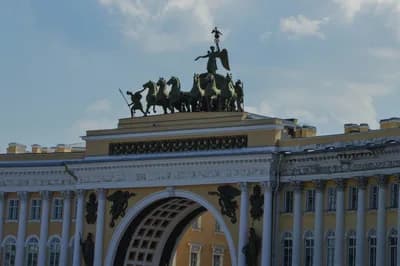
The Russian Empire was the third-largest empire in history, spanning 22.8 million square kilometres across 11 time zones, from Poland to the Pacific. Its expansion into Siberia—one of the most transformative geographic feats of the modern era—occurred primarily between the 16th and 19th centuries, increasing its territory by over 40% compared to the previous Muscovy state.
- 0

The United States has exercised an unprecedented form of global hegemony since 1945, operating 800 military bases in over 70 countries—seven times more than any other nation. Its dominance relies on economic integration and cultural influence rather than formal colonial rule, with the US dollar serving as the global reserve currency for 88% of all foreign exchange transactions. Hollywood and Silicon Valley further shape global norms, giving the US a soft power advantage that no other empire on this list has matched.
Image credits
- Mongol Empire: Mongol Empire / Wikipedia
- Roman Empire: Roman Empire / Wikipedia
- Islamic Caliphate (Umayyad): Slavery in the Umayyad Caliphate / Wikipedia
- Spanish Empire: Spanish conquest of the Aztec Empire / Wikipedia
- Han Dynasty China: Han Chinese / Wikipedia
- Achaemenid Persian Empire: Achaemenid Empire / Wikipedia
- Russian Empire: Alexander Fadeev / Pexels
Related Videos
Rank it your way
Remix this list into your own ranking, or head to the play hub for every game mode and community breakdown — blind mode, challenges, tier lists, and more.
You Might Also Like

Top 10 Most Influential People in Human History
Top 10 Most Influential People in Human History

Top 10 Most Influential Photographers of All Time
Top 10 Greatest Empires in History

Top 10 Battles That Changed World History
Top 10 Battles That Changed World History

Top 10 Most Influential Ancient Civilisations
Top 10 Most Influential Ancient Civilisations

Top 10 Books Every New Parent Should Read Before the Baby Arrives (2026)
#1 Expecting Better by Emily Oster · #2 Cribsheet by Emily Oster · #3 The Whole-Brain Child by Daniel J. Siegel
Top 10 Greatest Novels of All Time
#1 Don Quixote · #2 War and Peace · #3 In Search of Lost Time