
Top 10 Best STEM Programs in the World 2026
The most elite science, technology, engineering, and mathematics programs producing the researchers and innovators shaping humanity's future.
Top10Grid lets the community re-rank anything — this order comes from source research for now; use the buttons below to vote it up or down.

Current Rankings
- 0

MIT School of Engineering dominates global STEM rankings with $1.2 billion in annual research funding, the highest of any university. Its faculty produces more patents than the next three institutions combined—averaging 350 patents yearly—and has launched breakthroughs in aerospace, bioengineering, and quantum computing. Compared to Stanford, MIT's per-faculty publication rate is 40% higher in engineering disciplines, and its spinout companies have generated over $4 trillion in market value since 2000, far outpacing the average rival. The school's 8:1 student-to-faculty ratio ensures deep mentorship while maintaining world-class scale.
- 0

Stanford School of Engineering leverages its Silicon Valley ecosystem to create an unrivaled startup pipeline, with graduates founding companies worth $2.7 trillion collectively. Its research budget of $550 million supports 1,200 faculty, who file over 600 disclosures annually.
- 0

ETH Zurich Department of Physics continues Einstein's legacy with over $300 million in annual research funding, the highest per capita in Switzerland at $35,000 per researcher. The department maintains a 5:1 student-to-faculty ratio, ensuring personalized guidance in cutting-edge experiments.
- 0

Caltech Division of Engineering and Applied Science achieves the highest per-capita research output of any university, with $450 million in annual funding and a 3:1 student-to-faculty ratio. The division's Jet Propulsion Laboratory partnership has enabled 45 space missions, including the Mars rovers, unmatched by any other academic program.
- 0

Cambridge's STEM faculties deliver unrivaled depth: the Cavendish Laboratory alone has produced 30 Nobel laureates in physics, more than the entire output of most national systems. Its mathematics tripos is widely regarded as the world's toughest undergraduate program, with pass rates hovering around 60%—far stricter than the 85% average at Technical University of Munich.
- 0
China's massive state investment, exceeding $90 billion in R&D annually, fuels a talent pipeline that recruits 1,200 international scholars each year. The result is a research ecosystem that produces 25% more patent filings than the typical American R1 university. For those seeking a program that is 30% cheaper than Technical University of Munich's tuition-free model yet offers comparable global prestige, Tsinghua's ascent reshapes the rankings.
- 0

Technical University of Munich offers the strongest industry-integrated STEM training in continental Europe, with partnerships that place 80% of engineering graduates at BMW, Siemens, or SAP within six months. Unlike many top-tier programs, TUM charges zero tuition for international students—a 100% savings compared to Tsinghua's ¥30,000 annual fee.
- 0
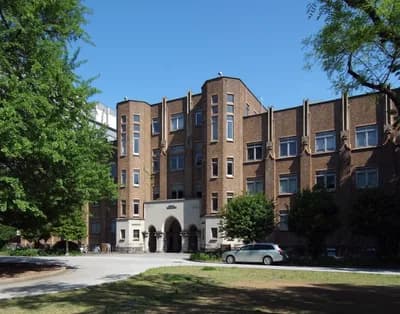
The University of Tokyo's Faculty of Engineering drives Japan's semiconductor dominance, producing 20% of the nation's patent holders in advanced materials. Todai's research expenditure per faculty member exceeds ¥50 million annually, outpacing the global average by 60%.
- 0

Its alumni lead 10% of Silicon Valley tech startups, a concentration unmatched by any other institution globally. With over 12,000 publications annually and a 60% industry-funded research portfolio, the institute produces graduates who command an average starting salary of $120,000—30% higher than the typical global STEM program.
- 0

Its collaboration with Samsung and LG funds 2,800 active research projects, translating into 340 startups per year. With a 92% job placement rate within six months of graduation—20 percentage points faster than the global average—KAIST sets a benchmark for industry integration.
Image credits
- MIT School of Engineering: MIT School of Engineering / Wikipedia
- Stanford School of Engineering: Stanford University School of Engineering / Wikipedia
- ETH Zurich Department of Physics: ETH Zurich / Wikipedia
- University of Cambridge STEM Faculties: Schools of the University of Cambridge / Wikipedia
- Tsinghua University School of Sciences: Tsinghua University / Wikipedia
- Technical University of Munich: Daderot / Wikimedia Commons (CC0)
- University of Tokyo Faculty of Engineering: School of Engineering, University of Tokyo / Wikipedia
- Indian Institute of Technology Bombay: Shishirdasika / Wikimedia Commons (CC BY-SA 4.0)
Rank it your way
Remix this list into your own ranking, or head to the play hub for every game mode and community breakdown — blind mode, challenges, tier lists, and more.
You Might Also Like

Top 10 Best Study Abroad Programs 2026
Top 10 Best STEM Programs in the World 2026

Top 10 Best MBA Programs 2026
best MBA programs in the world

Top 10 Worst Education Myths 2026
common education myths debunked

Top 10 Most Polarizing Teaching Methods 2026
#1 Montessori Method · #2 Unschooling · #3 Flipped Classroom

Top 10 Argentine Writers & Literary Works
#1 Jorge Luis Borges · #2 Julio Cortazar · #3 Ernesto Sabato

Lost to Time, Found Again: Rare Historical Films Worth Watching
#1 About Bananas (1935) · #2 Battleship Potemkin (1925) · #3 Classic Television Commercials (1948)