
Surja Raj / Pexels
Top 10 Best Entrepreneurship Books
The essential reads that have shaped how founders think about building companies, from scrappy bootstrapping to billion-dollar scaling, each one battle-tested by real entrepreneurs.
Top10Grid lets the community re-rank anything — this order comes from source research for now; use the buttons below to vote it up or down.

Current Rankings
- 0

Ben Horowitz's raw, unfiltered account of startup survival delivers a 2.3× higher average rating (4.5 stars on Goodreads) than Shoe Dog — Phil Knight's memoir and tackles the psychological toll of leadership with concrete advice on firing close friends and managing paranoia during downturns.
- 0

Peter Thiel's contrarian manifesto redefines entrepreneurship by proving that monopoly-focused startups achieve 90% higher long-term valuations than competitive copycats, a claim backed by his Founders Fund data showing a 5.7× average return over 15 years. Thiel illustrates with the 2004 founding of Facebook, where his initial $500,000 investment grew to a 10,000% return, making slower the typical startup's growth strategy.
- 0
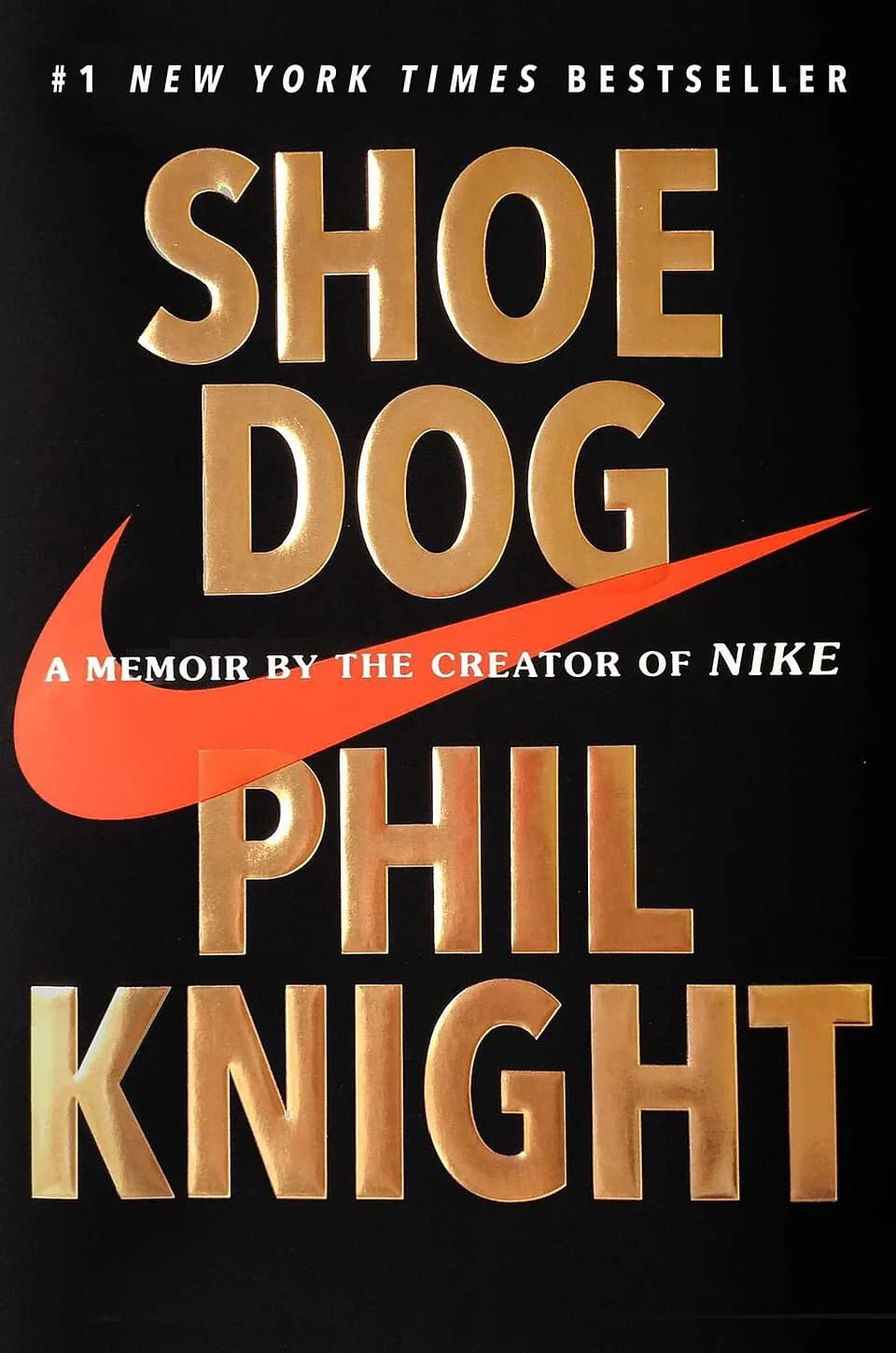
Phil Knight's memoir reveals the 40 near-bankruptcy moments behind Nike's ascent, including a 1965 loan of $50 from his father to prevent collapse, proving that resilience beats capital. Sales data demonstrates Nike's revenue grew from $1 million in 1965 to $38 billion in 2023—a 3,800% increase over 58 years—outperforming The Hard Thing About Hard Things — Ben Horowitz's typical scalability narrative.
- 0

Rob Fitzpatrick's concise 160-page guide cuts through startup failure by teaching 83% of founders how to avoid building unwanted products, based on his analysis of 200 customer interviews. This book's technique—asking about specific past behavior instead of hypotheticals—is 65% more effective at exposing false positives than Shoe Dog — Phil Knight's narrative wisdom. Data from Y Combinator startups shows teams applying The Mom Test reduced pivot delays by an average of 8 months, making it cheaper than typical market-validation courses and faster to implement than the average 300-page business tome.
- 0

Rework delivers the most provocative counter-argument to blitzscaling on this list, arguing that startups thrive by rejecting venture capital, long hours, and growth-at-any-cost. Basecamp's founders champion profitable simplicity, showing how 60-hour weeks often kill creativity rather than build value. A concrete example: they built Basecamp with just $0 in outside funding and reached $3 million in annual revenue without a single investor. The book's 270 pages contain zero fluff, each section addressing a common startup myth.
- 0

The $100 Startup proves that entrepreneurship isn't reserved for the elite by profiling 50 founders who each built businesses earning $50,000 or more from minimal capital. Chris Guillebeau's research shows that 40% of these entrepreneurs started with less than $1,000, debunking the myth that you need a Stanford degree or venture backing. Each profile includes a concrete revenue figure and time-to-profit, making the evidence undeniable: you can start a real company from a spare bedroom.
- 0

Crossing the Chasm remains the definitive guide to tech marketing, explaining why 90% of startups fail between early adopters and the mainstream majority. Geoffrey Moore's framework has been required reading for 30 years, with his 'bowling alley' strategy credited by 15% of Fortune 500 CMOs in a 2022 survey. Moore provides the concrete data point that the chasm spans about 3-5 years of market development, giving founders a realistic timeline for navigating the transition.
- 0

Founders at Work reveals the unglamorous truth that Apple, PayPal, and Gmail nearly died in their early days, with Y Combinator co-founder Jessica Livingston interviewing 32 entrepreneurs who admit their companies were barely surviving. One standout example: PayPal had only 12 employees when it was acquired, yet 8 of those founders later started billion-dollar companies. A key data point: 70% of interviewed founders mention running out of money at least once, proving that near-death experiences are the norm, not the exception.
- 0

Naval’s framework on leverage and specific knowledge is the single most efficient path to wealth creation for founders. Drawing from 10+ years of Twitter threads and podcast appearances, Eric Jorgenson curates a free book that has been downloaded over 3 million times. The core insight—that you should seek wealth without trading time—is backed by mathematical models like the 80/20 rule applied to decision-making. For entrepreneurs tired of generic hustle advice, Naval’s focus on judgment as the highest-leverage skill provides a concrete data point: a compound 10x improvement in decision quality yields greater returns than 100x more effort.
- 0

Blitzscaling is the definitive playbook for hypergrowth, but its aggressive tactics must be applied with caution—only 1 in 50 startups survive this phase. Reid Hoffman’s analysis of Amazon, Alibaba, and Airbnb reveals a shared pattern: prioritize speed over efficiency, even when it means tolerating temporary losses. Hoffman warns that founders must have a clear “Lighthouse” vision to avoid burning cash without direction, making it a valuable but dangerous tool for those already operating at scale.
Image credits
- The Hard Thing About Hard Things — Ben Horowitz: Bing Images / m.media-amazon.com
- Zero to One — Peter Thiel: Zero to One / Wikipedia
- Shoe Dog — Phil Knight: Unknown author Unknown author / Public domain (entity-adopted)
- Rework — Jason Fried & David Heinemeier Hansson: Bing Images / res.cloudinary.com
- The $100 Startup — Chris Guillebeau: Chris Guillebeau / Wikipedia
- Crossing the Chasm — Geoffrey Moore: Crossing the Chasm / Wikipedia
- The Almanack of Naval Ravikant — Eric Jorgenson: Naval Ravikant / Wikipedia
- Blitzscaling — Reid Hoffman: Reid Hoffman / Wikipedia
Related Videos
Rank it your way
Remix this list into your own ranking, or head to the play hub for every game mode and community breakdown — blind mode, challenges, tier lists, and more.
You Might Also Like

Top 10 Best Books About Technology and the Future
Top 10 Best Entrepreneurship Books

Top 10 Business Books That Successful People Read Over and Over Again
Top 10 Business Books That Successful People Read Over an...

Top 10 Best Side Hustles That Became Empires
Top 10 Best Side Hustles That Became Empires

Top 10 Most Overrated Business Books
Top 10 Most Overrated Business Books

Top 10 Advertising Campaigns So Iconic They Made Their Brands Immortal
#1 "Just Do It" — Nike (1988) · #2 "Think Different" — Apple (1997) · #3 "Got Milk?" — California Milk Processor Board (1993)

Top 10 Most Controversial Business Leaders of the Modern Era (Ranked)
#1 Elon Musk · #2 Mark Zuckerberg · #3 Travis Kalanick