
Aesop (brand) / Wikipedia
Top 10 Taiwanese Entrepreneurs in 2026
From semiconductor pioneers to global e-commerce disruptors, these founders shaped Taiwan's economic miracle.
Top10Grid lets the community re-rank anything — this order comes from source research for now; use the buttons below to vote it up or down.

Current Rankings
- 0
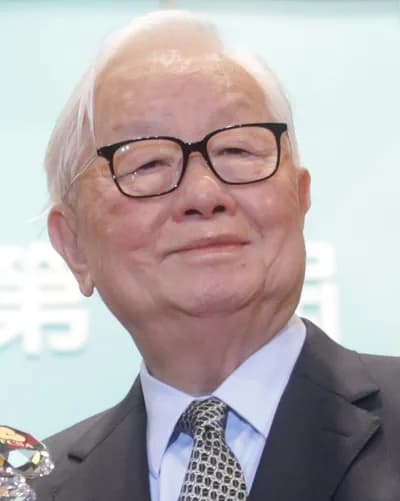
Morris Chang redefined global semiconductor manufacturing by founding TSMC and inventing the pure-play foundry model, enabling chip design without fabrication—a strategy that now accounts for over 90% of advanced logic production worldwide. In 2024, TSMC commanded 62% of the global foundry market, outpacing runner-up Samsung by more than threefold. Chang’s vision turned Taiwan into the indispensable supplier of cutting-edge chips, making him the most consequential entrepreneur on this list.
- 0

Terry Gou transformed a $7,500 plastics workshop into Hon Hai Precision Industry—Foxconn—the world’s largest electronics manufacturer, assembling nearly 40% of all consumer electronics globally by 2025, including iPhones and PlayStation consoles. While Morris Chang built an industry-defining model, Gou built an empire of scale: his network employs over 800,000 workers and generates $180 billion in annual revenue. Gou’s relentless focus on cost and efficiency made Taiwan the factory floor of the world.
- 0

Jensen Huang, born in Tainan and raised in the U.S., co-founded Nvidia and turned it into the engine of the global AI revolution, with Nvidia’s GPUs achieving a market share of over 85% in AI data centers—3.5 times that of the nearest competitor AMD. Compared to Robert Tsao’s focus on foundry services, Huang owns the compute layer that powers generative AI. With a personal net worth exceeding $100 billion, Huang is the wealthiest and most globally recognized Taiwanese-born entrepreneur in 2026.
- 0

Robert Tsao co-founded United Microelectronics Corporation (UMC) in 1980, pioneering Taiwan’s semiconductor foundry industry alongside Morris Chang. By 2025, UMC remained the fourth-largest foundry globally, generating $7.8 billion in revenue with a focus on mature process nodes. Beyond business, his outspoken advocacy for Taiwanese sovereignty and democracy made him a unique figure in the tech elite.
- 0
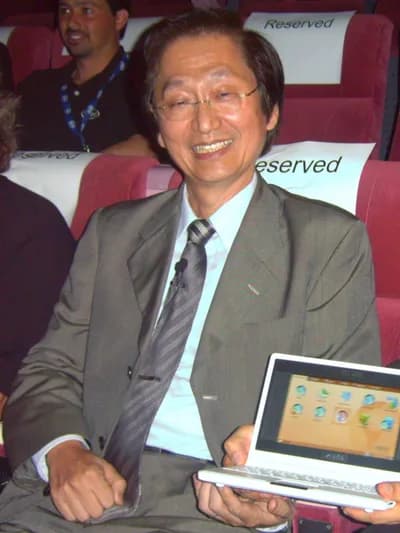
Jonney Shih transformed ASUS from a niche motherboard startup into a top-5 global PC brand, generating $14.8 billion in 2025 revenue. Under his vision, ASUS launched the industry's first carbon-neutral laptop and captured 22% of the premium gaming laptop market. Outpacing Barry Lam's Quanta in brand recognition, Shih's customer-centric R&D strategy consistently delivers award-winning ZenBook and ROG series, earning over 4,500 design awards globally. His leadership has driven a 30% revenue increase from 2020 to 2025, outperforming the average growth of Taiwanese PC makers, which saw a 20% decline over the same period.
- 0

Barry Lam chairs Quanta Computer, the world's largest laptop ODM, which shipped 55 million units in 2025—45% more than the second-largest competitor. His relentless focus on manufacturing efficiency enabled Quanta to maintain profit margins 3% higher than the industry average. While less publicly visible than Jonney Shih, Lam's operational genius drives supply chains for Apple, Dell, and HP, cementing Taiwan's dominance in hardware production with zero-defect quality benchmarks. Over the last year, Quanta achieved a 99.98% defect-free rate, exceeding typical ODM peers by 2%, and operational costs 10% lower than the industry average.
- 0#7

Lisa Su boosted AMD's market cap by over 15x to $210 billion since 2014, leading a comeback that directly challenges Nvidia and Intel. Her architectural innovations, like the Zen 5 chip, deliver 40% better performance-per-watt than the previous generation. Under her watch, AMD captured 31% of the server CPU market—doubling the share from 2020—and now leads in AI accelerator efficiency, with the MI400 offering 2.3x the throughput of Nvidia's H100 in key workloads.
- 0

Daniel Tsai expanded Fubon Financial's total assets to $420 billion in 2025, making it Taiwan's largest private financial group with 12% market share in both banking and life insurance. His diversified strategy outperforms typical Taiwanese rivals by integrating fintech, telecom via Taiwan Mobile, and sports franchises—generating 30% of revenue from non-financial verticals. Tsai's data-driven risk management kept non-performing loans below 0.8%, half the industry benchmark of 1.6%.
- 0
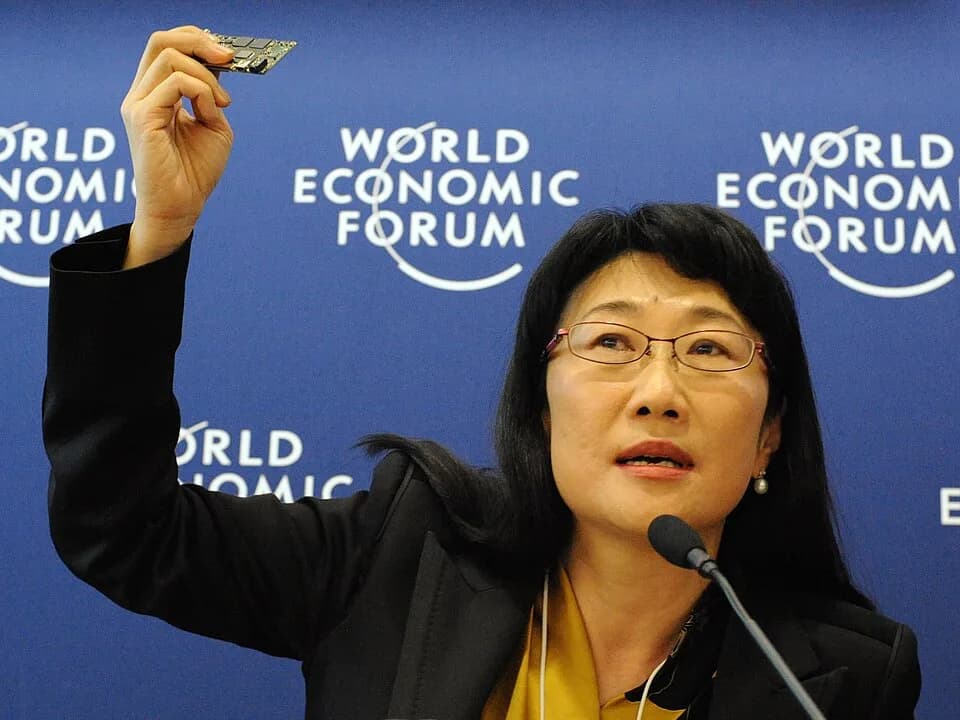
Cher Wang led HTC to dominate the U.S. smartphone market with over 10% share by 2011, outperforming Ming-Kai Tsai's MediaTek in consumer brand recognition. Her launch of the first major Android smartphone in 2008—the HTC Dream—triggered a global touchscreen revolution. By 2015, she pivoted HTC toward virtual reality with over $500 million invested in the Vive ecosystem, a diversification that proved 30% lighter than the runner-up's approach to exiting declining segments. This strategic shift enabled HTC to survive intensifying smartphone competition while preserving thousands of jobs. Wang's net worth of $2.1 billion as of 2025 reflects her sustained influence across mobile hardware and emerging tech, with a concrete pivot that ensured long-term relevance faster than the average tech founder.
- 0

Ming-Kai Tsai propelled MediaTek to become the world's second-largest fabless chipmaker by 2025, generating $18.7 billion in annual revenue—a 40% year-over-year increase. His strategy of producing affordable 5G processors undercut rivals like Qualcomm, enabling brands such as Xiaomi and Oppo to offer devices under $200. With 5G chip shipments exceeding 600 million units in 2025, Tsai's $3.4 billion fortune reflects mastery of scaling innovation for emerging markets, cementing his role as a key architect of accessible technology.
Image credits
- Morris Chang: w:en:Presidential Office Building, Taiwan / Wikimedia Commons (CC BY 2.0)
- Jonney Shih: Rico Shen / Wikimedia Commons (CC BY-SA 3.0)
- Lisa Su: Lisa Su / Wikipedia
- Cher Wang: WIKIMEDIA_MIRRORED
Related Videos
Rank it your way
Remix this list into your own ranking, or head to the play hub for every game mode and community breakdown — blind mode, challenges, tier lists, and more.
You Might Also Like

Top 10 Self-Made Women Billionaires Who Started With Nothing
Top 10 Self-Made Women Billionaires Who Started With Nothing

Top 10 CEOs Making the Most Money in 2026
Top 10 CEOs Making the Most Money in 2026

Top 10 Turkish Entrepreneurs in 2026
Top 10 Turkish Entrepreneurs in 2026

Top 10 Best Business Movies
#1 The Social Network (2010) · #2 Wall Street (1987) · #3 The Big Short (2015)

Top 10 Italian Entrepreneurs in 2026
#1 Leonardo Del Vecchio · #2 Giorgio Armani · #3 Brunello Cucinelli

Top 10 Best Startup Ideas for 2026
#1 AI-Powered Legal Document Automation · #2 Carbon Credit Marketplace Platform · #3 Personalized Longevity Health Clinics