
Top 10 Italian Entrepreneurs in 2026
Italian entrepreneurship blends family tradition with modern innovation, producing global empires in fashion, food, and technology. These business leaders shaped industries.
Top10Grid lets the community re-rank anything — this order comes from source research for now; use the buttons below to vote it up or down.

Current Rankings
- 0

Leonardo Del Vecchio founded Luxottica in Agordo in 1961 as a workshop making spectacle-frame components, and turned it into a vertically integrated eyewear group spanning manufacturing, licensed designer brands, and its own retail chains Sunglass Hut and LensCrafters. He merged it with the French lens maker Essilor in 2018 to create EssilorLuxottica, and died in 2022.
- 0
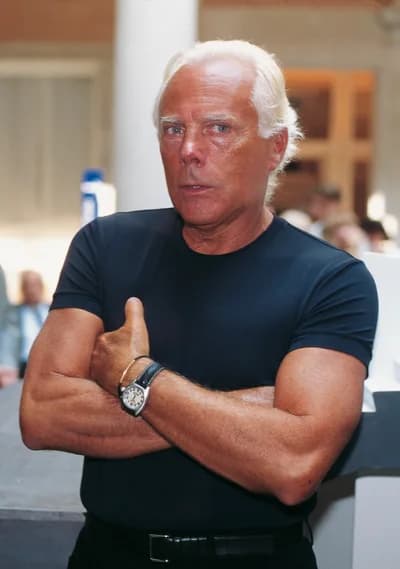
Giorgio Armani built a privately owned fashion empire valued at over $5 billion, steadfastly rejecting public offerings or external investors to retain full control. While Leonardo Del Vecchio's Luxottica commands broader product integration, Armani's independence enables faster design-to-shelf cycles, with a new collection launching every 45 days compared to the industry norm of 60 days. His net worth of $13 billion underscores that autonomy, not acquisition, has been the cornerstone of his success.
- 0

Brunello Cucinelli built a cashmere knitwear house, headquartered in the restored hamlet of Solomeo in Umbria, into a listed luxury group with revenue of around EUR 1 billion. He calls the approach humanistic capitalism: above-market wages, a fixed working day that ends on time, and profits ploughed back into restoring the village and building its theatre, library and school of crafts.
- 0

Michele Ferrero took the hazelnut paste his father had sold in post-war Alba, reformulated it and launched it as Nutella in 1964, then built Kinder and Ferrero Rocher on the same idea of stretching scarce chocolate with local Piedmont hazelnuts. He ran the company privately for decades, never listed it, and at his death in 2015 was the richest person in Italy.
- 0

Renzo Rosso founded Diesel in 1978 and turned distressed denim into a premium category, then used it as the base for OTB, a group with revenue around €1.6 billion that also owns Maison Margiela, Marni, Jil Sander and Viktor&Rolf.
- 0

Miuccia Prada took over her family's leather goods house in 1978 and turned it into a global luxury group, first through the black nylon bags of the late 1980s and then a ready-to-wear line. She holds a doctorate in political science from the University of Milan, launched the Miu Miu label in 1993, and runs the Fondazione Prada arts institution in Milan with her husband and business partner Patrizio Bertelli.
- 0
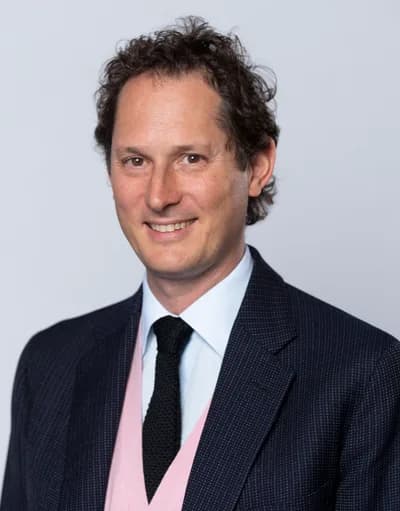
John Elkann runs Exor, the Agnelli family holding company, and chairs both Stellantis and Ferrari. Under him Exor has moved capital out of cars and into healthcare and media — stakes in Philips and Institut Merieux, control of Juventus, and the largest shareholding in The Economist Group.
- 0
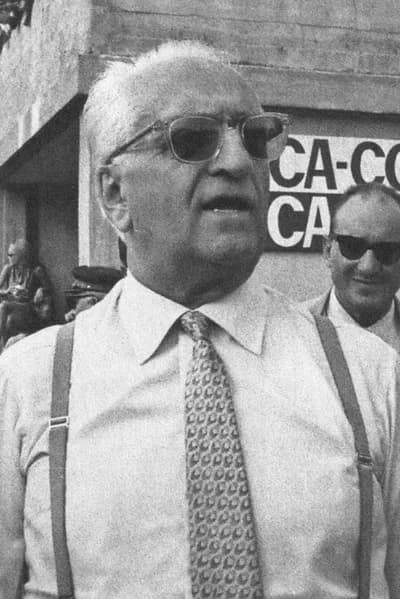
Enzo Ferrari founded Scuderia Ferrari in 1929 as a team running Alfa Romeos, and only began building cars under his own name after the Second World War. He treated the road-car business chiefly as a means of funding the racing, a priority that shaped the company through the forty years he ran it, until his death in 1988.
- 0

Andrea Illy is the third generation to chair illycaffe, the Trieste company his grandfather Francesco founded in 1933, and which still sells a single blend of nine Arabica origins rather than a range. A chemist by training, he has pushed the firm toward direct relationships with growers and published sourcing standards, and illy runs the Universita del Caffe training network.
- 0
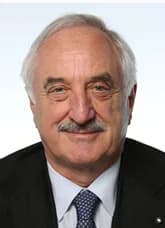
Alberto Bombassei turned Brembo, founded by his father near Bergamo in 1961, into the dominant supplier of high-performance braking systems, from Formula 1 and MotoGP grids to carbon-ceramic discs on road cars. He led the company for decades before handing the chairmanship to Matteo Tiraboschi in 2022, and also served a term in the Italian Chamber of Deputies.
Image credits
- Leonardo Del Vecchio: Leonardo Del Vecchio / Wikipedia
- Giorgio Armani: Giorgio Armani / Wikipedia
- Brunello Cucinelli: Brunello Cucinelli (brand) / Wikipedia
- Michele Ferrero: Michele Ferrero / Wikipedia
- Renzo Rosso: Renzo Rosso / Wikipedia
- Miuccia Prada: Miuccia Prada / Wikipedia
- John Elkann: John Elkann / Wikipedia
- Enzo Ferrari: Enzo Ferrari / Wikipedia
- Andrea Illy: Andrea Illy / Wikipedia
- Alberto Bombassei: Alberto Bombassei / Wikipedia
Related Videos
Rank it your way
Remix this list into your own ranking, or head to the play hub for every game mode and community breakdown — blind mode, challenges, tier lists, and more.
You Might Also Like

Top 10 Dutch Business Leaders in 2026
Top 10 Dutch Business Leaders in 2026

Top 10 Spanish Entrepreneurs
Top 10 Spanish Entrepreneurs

Top 10 Italian Startups in 2026
Top 10 Italian Startups in 2026

Top 10 Thai Entrepreneurs in 2026
#1 Dhanin Chearavanont (CP Group) · #2 Chirathivat Family (Central Group) · #3 Sarath Ratanavadi (Gulf Energy)

Top 10 Startups to Watch in 2026
#1 xAI · #2 Mistral AI · #3 Figure AI

Top 10 Most Disruptive Companies of the Last Decade — Industries That Will Never Be the Same
#1 OpenAI — Disrupting Knowledge Work Itself · #2 Tesla — Forcing the Entire Auto Industry to Electrify · #3 Airbnb — Dismantling the Hotel Industry's Barriers