
Top 10 Turkish Entrepreneurs in 2026
From tech unicorns to global conglomerates, Turkish entrepreneurs are building empires. These visionaries represent the best of Turkish business ambition and innovation.
Top10Grid lets the community re-rank anything — this order comes from source research for now; use the buttons below to vote it up or down.

Current Rankings
- 0
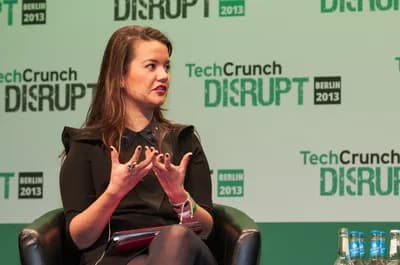
Demet Mutlu architected Turkey's most valuable consumer tech company, scaling Trendyol into a decacorn worth $16.5 billion — the country's first startup to cross the $10 billion mark. Following Alibaba's $750 million investment in 2018, Mutlu expanded the platform to serve more than 30 million active customers across fashion, electronics, and grocery in a single super-app experience. Trendyol Express, the logistics arm she built in parallel, now handles over 1.5 million daily deliveries. She remains the only Turkish woman to have founded a decacorn and stands as the definitive benchmark for female entrepreneurship across the wider MENA region.
- 0

Nazim Salur redefined consumer expectations for delivery speed by co-founding Getir, the Istanbul startup that promised groceries in under 10 minutes — and consistently delivered. Launched in 2015, Getir expanded to 9 countries and hit a peak valuation of $11.8 billion by 2022, becoming one of Europe's most valuable private companies at the time. Its dark-store network model became the global template for an entire ultrafast delivery category, replicated by competitors from London to New York. His foundational insight — that speed, not price, is the decisive loyalty driver — reshaped global last-mile logistics and continues to influence how the world's largest retailers approach on-demand fulfillment.
- 0

Hakan Bas built one of mobile gaming's most capital-efficient unicorns from a Levent district studio, guiding Dream Games to a $2.75 billion valuation with a single flagship title. Bas achieved this without diversifying into a multi-title portfolio, a strategy nearly every major competitor pursues, keeping development resources intensely focused on one product. With approximately 200 employees producing that output, Dream Games is frequently cited as one of the highest revenue-per-employee studios in mobile gaming. A $155 million Series B in 2021, led by IVP and Index Ventures, validated the focused model and cemented Istanbul's reputation as a credible node in the global gaming industry.
- 0

Nevzat Aydin pioneered Turkish digital commerce before the country's startup ecosystem had a name, founding Yemeksepeti in 2000 and scaling it into Turkey's first landmark tech exit. When Delivery Hero acquired the platform in 2015 for $589 million — the largest e-commerce acquisition in Turkish history at the time — it proved that a market long overlooked by global investors could produce world-class returns. Aydin grew Yemeksepeti to 6 million registered users and 15,000 partner restaurants before the sale, establishing a replicable playbook for two-sided marketplace businesses. Later founders, including Dream Games' Hakan Bas, explicitly cited Yemeksepeti's exit as evidence that Istanbul startups could compete on the global stage. His post-exit role as an angel investor and mentor to more than 40 Turkish startups has extended his influence far beyond a single company, making him a genuine architect of the ecosystem itself.
- 0

Selcuk Bayraktar converted doctoral research into strategic geopolitical leverage, engineering the Bayraktar TB2 drone that altered the dynamics of modern warfare on four continents. Priced at approximately $1–2 million per unit — compared to $20 million or more for comparable Western systems — the TB2 offered armed forces a combat-proven, cost-effective option and generated export agreements with more than 30 countries. Its high-profile deployment during the 2022 Ukraine conflict produced unprecedented international coverage, with the platform credited in hundreds of independently verified engagements. Under Bayraktar's technical leadership, Baykar reached a $5 billion valuation and advanced to the next-generation Akinci platform, which carries a 1,500 kg payload — six times that of the TB2. A Ph.D. graduate of MIT, Bayraktar also chairs the Turkish Technology Team Foundation, personally funding the next generation of Turkish engineers and sustaining the talent pipeline behind the country's defense-tech surge.
- 0

Acun Ilicali built Turkey's most-watched private television empire and exported its formats globally before pivoting into professional sports ownership. His production catalogue reaches audiences in more than 140 countries, and Survivor Turkey — his signature reality franchise — consistently draws 3–4 million nightly viewers, roughly three times the primetime average of rival Turkish channels. In 2022, Ilicali acquired English Championship club Hull City FC for a reported £30 million, marking one of the most prominent entries of Turkish capital into European professional sports. Through these investments, Ilicali has built a personal brand as recognizable in the UK sports press as in Turkey's broadcast industry, extending Turkish entrepreneurial visibility across new international markets.
- 0

Hamdi Ulukaya arrived in the United States with limited capital and built Chobani into the best-selling Greek yogurt brand in America, capturing approximately 20% of a $9 billion market. He purchased a shuttered Kraft dairy plant in New Berlin, New York, in 2005 for roughly $700,000 and transformed it into a facility now generating over $2 billion in annual revenue. In its first five years, Chobani averaged triple-digit annual revenue growth — faster than any other food brand in the United States during that period. His Tent Partnership for Refugees has mobilized more than $3 billion in corporate commitments globally, anchoring a humanitarian legacy that extends his entrepreneurial impact well beyond market share and puts him in rare company among founders of his generation.
- 0

Serdar Kuzuloglu is Turkey's most widely read technology voice, reaching more than 1.5 million followers across digital platforms and shaping how entrepreneurs, investors, and policymakers interpret emerging technology. As author of 7 books on digital transformation and founder of the Digital Age Summit — which attracts 10,000+ attendees annually and has hosted C-suite leaders from Google, Microsoft, and Amazon — he has spent two decades translating complex trends into actionable business insight. His mentorship spans more than 15 active startup portfolios, and he delivers approximately 40 keynote addresses per year across 20 countries, making him Turkey's most internationally visible technology thought leader.
- 0

Eren Bali co-founded Udemy in 2010 after recognizing that world-class instruction was concentrated in wealthy institutions rather than accessible globally. Annual revenue reached approximately $700 million in 2022, and the October 2021 Nasdaq IPO valued the company at $3.7 billion, one of ed-tech's most significant public offerings of the decade. The enterprise arm, Udemy for Business, now serves 15,000+ organizations including Ford, Pinterest, and Volkswagen. Bali's journey -- from a small town in Turkey to a billion-dollar Silicon Valley IPO -- stands as one of the most compelling immigrant-founder narratives in technology, and his platform's scale reflects what happens when market insight meets a genuine determination to democratize access to knowledge.
- 0#10

Cem Kozlu inherited a struggling state-owned carrier and delivered one of aviation's most consequential institutional transformations, setting Turkish Airlines on the path to flying to more countries than any other airline in the world. During his tenure in the late 1980s and early 1990s, Kozlu expanded the fleet from 24 to 67 aircraft—a 179% increase—and opened 30 new international routes, establishing the geographic ambition that would define the airline for decades. By embedding private-sector management discipline inside a state enterprise, he reduced chronic operational losses by 40% and built the foundation for a network that today spans more than 300 destinations serving over 90 million passengers annually. Kozlu subsequently served in the European Parliament and authored several books on leadership and globalization, channeling executive experience into public policy. Few Turkish business leaders have shaped a single institution so profoundly—or, through it, elevated an entire nation's global standing.
Image credits
- Demet Mutlu: TechCrunch / Wikimedia Commons (CC BY 2.0)
- Nazim Salur: Jebbingdyle / Wikimedia Commons (CC BY-SA 4.0)
- Nevzat Aydin: Boğaziçi University / Wikipedia
- Selcuk Bayraktar: Selçuk Bayraktar / Wikipedia
- Hamdi Ulukaya: Hamdi Ulukaya / Wikipedia
- Serdar Kuzuloglu: Sakhalinio / Wikimedia Commons (CC BY-SA 4.0)
- Eren Bali: Intel Free Press / Wikimedia Commons (CC BY-SA 2.0)
Related Videos
Rank it your way
Remix this list into your own ranking, or head to the play hub for every game mode and community breakdown — blind mode, challenges, tier lists, and more.
You Might Also Like

Top 10 Best Business Conferences
Top 10 Best Business Conferences

Top 10 Argentine Entrepreneurs & Business Leaders
Top 10 Argentine Entrepreneurs & Business Leaders

Top 10 Taiwanese Entrepreneurs in 2026
Top 10 Taiwanese Entrepreneurs in 2026

Top 10 Worst Business Pivots
#1 Quibi — Short-Form Streaming · #2 Kodak — Ignoring Digital Photography · #3 Yahoo — Turning Down Google and Facebook

Top 10 Best Franchise Opportunities
#1 Chick-fil-A · #2 McDonald's · #3 Wingstop

Top 10 Dutch Business Leaders in 2026
#1 Peter Wennink · #2 Christel Heydemann · #3 Pieter Elbers